












New insights on the ESIPT process based on solid-state data and state-of-the-art computational methods
Literature Information
Publication Date
2020-12-14
DOI
10.1039/D0CP05502F
Impact Factor
3.676
Authors
Jean Nunes Laner, Henrique de Castro Silva Junior, Fabiano Severo Rodembusch, Eduardo Ceretta Moreira
View Original
Abstract
Benzothiazole derivatives were used as models to study the excited-state intramolecular proton transfer (ESIPT) from an experimental and theoretical point of view. The experimental electronic and vibrational results were compared with a comprehensive selection of state-of-the-art computational methods in a workflow approach. The latter were performed based on modern techniques, such as DLPNO-CCSD(T), which gives the reference energies and current methodologies for ESIPT analysis, such as molecular dynamics and charge density difference testing. The theoretical vibrational results were focused on the stretch vibrational-mode of the hydroxyl group, which indicated a large increase in the intramolecular hydrogen bond strength, which facilitates the ESIPT process. Theoretically, the optimization of a large number of molecules shows that π-stacking plays a fundamental role in benzothiazole stabilization, with a remarkably strong intramolecular hydrogen bond. The potential energy surface of the ESIPT reactive benzothiazole (4HBS) has a clear transition state where ESIPT is easily observed with a large difference in energy between the enol and keto tautomer. Additionally, molecular dynamics showed that the ESIPT process occurs very fast. The tautomer appears around 8.7 fs and the enolic form is regenerated in just 24 fs, closing the Förster cycle. The calculated Stokes shift could be related to the ESIPT process and the experimental solid-state emission spectrum matched almost perfectly with the theoretical one. In contrast, for the non-ESIPT benzothiazole (4HBSN), the agreement between theory and experiment was limited, probably due to intermolecular interaction effects that are not considered in these calculations.
Recommended Journals
Related Literature
Pyrene modification leads to increased catalytic activity in minimal hammerhead ribozymes
Verena Looser, Simon M. Langenegger, Robert Häner, Jörg S. Hartig
2007-08-14
Communication
DOI: 10.1039/B711170C
A new functionalization strategy for pentacene
John E. Anthony, Johannes Gierschner, Chad A. Landis, Sean R. Parkin, Jes B. Sherman, Ronald C. Bakus II
2007-09-06
Communication
DOI: 10.1039/B711296C
Supramolecular single-walled carbon nanotubes (SWCNTs) network polymer made by hybrids of SWCNTs and water-soluble calix[8]arenes
Tomoki Ogoshi, Tada-aki Yamagishi, Yoshiaki Nakamoto
2007-09-13
Communication
DOI: 10.1039/B711800G
Highly selective R,S-coordination of non racemic (1R,2R)-(1,2-dialkyl)-1,2-diamine cyclohexane derivatives to palladium dichloride
Esfandiar Rafii, Benjamin Dassonneville, Andreas Heumann
2007-01-12
Communication
DOI: 10.1039/B613961B
Preparation of single-crystalline platinum nanowires with small diameters under mild conditions
Zhongrong Shen, Mami Yamada, Mikio Miyake
2006-11-27
Communication
DOI: 10.1039/B613895K
Synthesis of poly(para-phenylene)(2-isocyano-2-tosylpropane-1,3-diyl), poly(para-phenylene)(2-oxopropane-1,3-diyl) and oligo(cyclopentadienones) via carbonylative coupling of α,α′-dibromoxylene
Robert G. Potter, Thomas S. Hughes
2007-09-24
Communication
DOI: 10.1039/B706807G
Empirical determination of the absolute configuration of small chiral molecules using natural abundance 2H NMR in chiral liquid crystals
Latifa Ziani, Philippe Lesot, Abdelkhrim Meddour, Jacques Courtieu
2007-08-30
Communication
DOI: 10.1039/B711493A
A novel reaction of 7,7,8,8-tetracyanoquinodimethane (TCNQ): charge-transfer chromophores by [2 + 2] cycloaddition with alkynes
Milan Kivala, Corinne Boudon, Jean-Paul Gisselbrecht, Paul Seiler, Maurice Gross, François Diederich
2007-10-24
Communication
DOI: 10.1039/B713683H
Hexafluorotitanate salts containing organic cations: use as a reaction medium and precursor to the synthesis of titanium dioxide
David Gutiérrez-Tauste, Xavier Domènech, Concepción Domingo, José A. Ayllón
2007-10-10
Communication
DOI: 10.1039/B709578C
You might also like
Compound Q&A
How is Ethyl 4-chlorothieno[2,3-b]pyridine-5-carboxylate (CAS: 59713-58-5) typically synthesized?
Ethyl 4-chlorothieno[2,3-b]pyridine-5-carboxylate (CAS: 59713-58-5) can be synth...
59713-58-5Ethyl 4-chlorothieno...
Compound Q&A
What regulatory guidelines apply to 5-Methyl-1H-indole-3-carbaldehyde (CAS: 52562-50-2)?
5-Methyl-1H-indole-3-carbaldehyde (CAS: 52562-50-2) is subject to various regula...
52562-50-25-Methyl-1H-indole-3...
Compound Q&A
What are the physical and chemical properties of (1,3-Dimethyl-2,4-dioxo-1,2,3,4-tetrahydro-5-pyrimidinyl)boronic acid (CAS: 223418-73-3)?
(1,3-Dimethyl-2,4-dioxo-1,2,3,4-tetrahydro-5-pyrimidinyl)boronic acid is a white...
223418-73-3(1,3-Dimethyl-2,4-di...
Compound Q&A
How should waste containing Sulfocostunolide A (CAS: 1016983-51-9) be handled?
Waste containing Sulfocostunolide A (CAS: 1016983-51-9) should be handled with c...
1016983-51-9Sulfocostunolide A
Compound Q&A
What precautions should be taken when handling Murraxocin (CAS: 88478-44-8)?
When handling Murraxocin (CAS: 88478-44-8), ensure proper personal protective eq...
88478-44-8Murraxocin
Compound Q&A
What are the physical and chemical properties of Formvar (CAS: 63148-64-1)?
Formvar (CAS: 63148-64-1) is an alkyd resin characterized by a high molecular we...
63148-64-1Formvar(R)
Compound Q&A
Is (S)-4-benzyl-2-((benzyloxy)methyl)morpholine (CAS: 205242-66-6) safe?
(S)-4-benzyl-2-((benzyloxy)methyl)morpholine is generally safe when handled with...
205242-66-6(S)-4-benzyl-2-((ben...
Compound Q&A
What industries use Methyl 1-(5-bromo-2-pyrimidinyl)cyclopropanecarboxylate (CAS: 1447607-69-3)?
Methyl 1-(5-bromo-2-pyrimidinyl)cyclopropanecarboxylate (CAS: 1447607-69-3) is p...
1447607-69-3Methyl 1-(5-bromo-2-...
Compound Q&A
Is 2-Methyl-1-phenyl-1-propanamine hydrochloride (CAS: 24290-47-9) safe?
2-Methyl-1-phenyl-1-propanamine hydrochloride (CAS: 24290-47-9) is generally con...
24290-47-92-Methyl-1-phenyl-1-...
Compound Q&A
How is 3-(4-Bromophenyl)-2-methylpropanoic acid (CAS: 66735-01-1) typically synthesized?
3-(4-Bromophenyl)-2-methylpropanoic acid is synthesized through a multi-step pro...
66735-01-13-(4-Bromophenyl)-2-...
Source Journal
Physical Chemistry Chemical Physics

CiteScore:
5.5
Self-citation Rate:
10.3%
Articles per Year:
3036
Physical Chemistry Chemical Physics (PCCP) is an international journal co-owned by 19 physical chemistry and physics societies from around the world. This journal publishes original, cutting-edge research in physical chemistry, chemical physics and biophysical chemistry. To be suitable for publication in PCCP, articles must include significant innovation and/or insight into physical chemistry; this is the most important criterion that reviewers and Editors will judge against when evaluating submissions. The journal has a broad scope and welcomes contributions spanning experiment, theory, computation and data science. Topical coverage includes spectroscopy, dynamics, kinetics, statistical mechanics, thermodynamics, electrochemistry, catalysis, surface science, quantum mechanics, quantum computing and machine learning. Interdisciplinary research areas such as polymers and soft matter, materials, nanoscience, energy, surfaces/interfaces, and biophysical chemistry are welcomed if they demonstrate significant innovation and/or insight into physical chemistry. Joined experimental/theoretical studies are particularly appreciated when complementary and based on up-to-date approaches.
Recommended Compounds
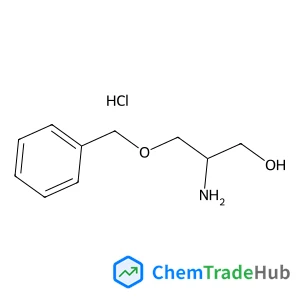
(R)-2-amino-3-(benzyloxy)propan-1-ol hydrochloride
CAS Number:
58577-95-0
Molecular Formula:
C10H16ClNO2
![9H-Fluoren-9-ylmethyl [(2S)-1-hydroxy-3-(1H-indol-3-yl)-2-propanyl]carbamate structure](https://static.chemtradehub.com/structs/153/153815-60-2-a67d.webp "9H-Fluoren-9-ylmethyl [(2S)-1-hydroxy-3-(1H-indol-3-yl)-2-propanyl]carbamate structure")
9H-Fluoren-9-ylmethyl [(2S)-1-hydroxy-3-(1H-indol-3-yl)-2-propanyl]carbamate
CAS Number:
153815-60-2
Molecular Formula:
C26H24N2O3
Recommended Suppliers





Disclaimer
This page provides academic journal information for reference and research purposes only. We are not affiliated with any journal publishers and do not handle publication submissions. For publication-related inquiries, please contact the respective journal publishers directly.
If you notice any inaccuracies in the information displayed, please contact us at support@chemtradehub.com. We will promptly review and address your concerns.