


![Sodium 6-amino-3-[(E)-{4-[(E)-(4-aminophenyl)diazenyl]-2-methoxy-5-methylphenyl}diazenyl]-4-hydroxy-2-naphthalenesulfonate structure](https://static.chemtradehub.com/structs/294/2945-96-2-092f.webp "Sodium 6-amino-3-[(E)-{4-[(E)-(4-aminophenyl)diazenyl]-2-methoxy-5-methylphenyl}diazenyl]-4-hydroxy-2-naphthalenesulfonate structure")
Sodium 6-amino-3-[(E)-{4-[(E)-(4-aminophenyl)diazenyl]-2-methoxy-5-methylphenyl}diazenyl]-4-hydroxy-2-naphthalenesulfonate
CAS Number:
2945-96-2
Molecular Formula:
C24H21N6NaO5S
Dat Tien Hoang, Selim Alayoglu, Zhi Liu
Bimetallic 15 nm Rh1−xPdxnanoparticle catalysts of five different compositions and supported on Si wafers have been synthesized, characterized using TEM, SEM, and XPS, and studied in CO oxidation by O2 in two pressure regimes: atmospheric pressure and 100–200 mTorr. The RhPd bimetallic nanocrystals exhibited similar synergetic effect of increased reaction activity at both atmospheric (760 Torr) and moderate (100–200 mTorr) pressures compared with pure Pd or Rh. The magnitude of the effect depends on the relative pressures of the CO and O2 reactant gases and the reaction temperature. The catalytic activity of the nanocrystals measured at moderate pressure is directly correlated to the APXPS studies, which were carried out in the same pressure. The APXPS studies suggest that the Pd–Rh interfaces are important for the enhanced activity of the bimetallic nanoparticles.

New Journal of Chemistry

Russian Chemical Bulletin

Russian Journal of General Chemistry

Chemistry Education Research and Practice

Journal of Peptide Science

Current Opinion in Colloid & Interface Science

Journal of Natural Medicines

Russian Journal of Bioorganic Chemistry

Acta Materialia

Russian Journal of Organic Chemistry
María B. Martini, Claudia G. Adam
DOI: 10.1039/D0CP05674J
Silviya Ninova, Osman Barış Malcıoğlu, Philipp Auburger, Matthias Franke, Ole Lytken, Hans-Peter Steinrück
DOI: 10.1039/D0CP04859C
Min Yan
DOI: 10.1039/D0CP03732J
Mohammad R. Momeni, Zeyu Zhang, David Dell'Angelo, Farnaz A. Shakib
DOI: 10.1039/D0CP05923D
F. Batalioto, A. F. C. Campos, A. M. Figueiredo Neto
DOI: 10.1039/D0CP05865C
Xing Yang, Yuwei Wang, Ruining Xiao, Tao Wen, Yulin Shen, Huanxiang Liu, Yongfu Wang
DOI: 10.1039/D0CP04547K
Kyoungmin Min, Young-Han Shin
DOI: 10.1039/D0CP04974C
J. Pereira-da-Silva, M. Mendes, F. Kossoski, A. I. Lozano, R. Rodrigues, N. C. Jones, S. V. Hoffmann, F. Ferreira da Silva
DOI: 10.1039/D0CP05626J
Bing Yin, Lan Luo
DOI: 10.1039/D0CP05470D
Raúl Quintero-Monsebaiz, Luis Ignacio Perea-Ramírez, Alberto Vela
DOI: 10.1039/D0CP05430E
Ethyl 4-chlorothieno[2,3-b]pyridine-5-carboxylate (CAS: 59713-58-5) can be synth...
5-Methyl-1H-indole-3-carbaldehyde (CAS: 52562-50-2) is subject to various regula...
(1,3-Dimethyl-2,4-dioxo-1,2,3,4-tetrahydro-5-pyrimidinyl)boronic acid is a white...
Waste containing Sulfocostunolide A (CAS: 1016983-51-9) should be handled with c...
When handling Murraxocin (CAS: 88478-44-8), ensure proper personal protective eq...
Formvar (CAS: 63148-64-1) is an alkyd resin characterized by a high molecular we...
(S)-4-benzyl-2-((benzyloxy)methyl)morpholine is generally safe when handled with...
Methyl 1-(5-bromo-2-pyrimidinyl)cyclopropanecarboxylate (CAS: 1447607-69-3) is p...
2-Methyl-1-phenyl-1-propanamine hydrochloride (CAS: 24290-47-9) is generally con...
3-(4-Bromophenyl)-2-methylpropanoic acid is synthesized through a multi-step pro...

Physical Chemistry Chemical Physics (PCCP) is an international journal co-owned by 19 physical chemistry and physics societies from around the world. This journal publishes original, cutting-edge research in physical chemistry, chemical physics and biophysical chemistry. To be suitable for publication in PCCP, articles must include significant innovation and/or insight into physical chemistry; this is the most important criterion that reviewers and Editors will judge against when evaluating submissions. The journal has a broad scope and welcomes contributions spanning experiment, theory, computation and data science. Topical coverage includes spectroscopy, dynamics, kinetics, statistical mechanics, thermodynamics, electrochemistry, catalysis, surface science, quantum mechanics, quantum computing and machine learning. Interdisciplinary research areas such as polymers and soft matter, materials, nanoscience, energy, surfaces/interfaces, and biophysical chemistry are welcomed if they demonstrate significant innovation and/or insight into physical chemistry. Joined experimental/theoretical studies are particularly appreciated when complementary and based on up-to-date approaches.
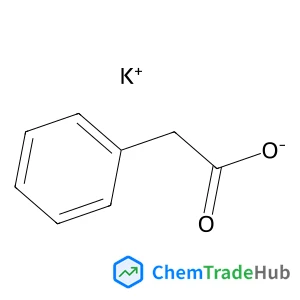
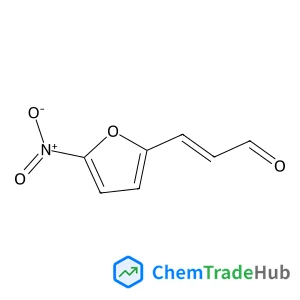
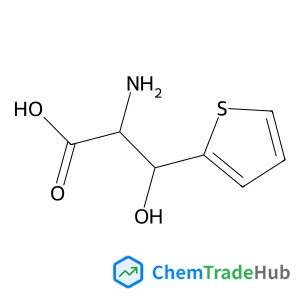
![Imidazo[1,5-a]pyrazine structure](https://static.chemtradehub.com/structs/274/274-49-7-d749.webp "Imidazo[1,5-a]pyrazine structure")



