












Spectroscopic properties of open shell diatomic molecules using Piris natural orbital functionals
Literature Information
Publication Date
2021-01-14
DOI
10.1039/D0CP05430E
Impact Factor
3.676
Authors
Raúl Quintero-Monsebaiz, Luis Ignacio Perea-Ramírez, Alberto Vela
View Original
Abstract
Spectroscopic properties such as equilibrium distances, vibrational constants, rotational constants, dissociation energies, and excitation energies are calculated for nine heteronuclear diatomic molecules (PH, NF, NH, NO, CS, AlF, ClF, BeO and CF) using an interactive pair model (PNOF7s), that has been generalized for spin multiplet states, and its second order perturbation variant, NOF-MP2, which was also generalized for multiplets. The results obtained are compared with Complete Active Space (CASSCF) and Complete Active Space Perturbation Theory (CASPT2). It is shown that the potential energy curves provided by the PNOF functional for open shell diatomic molecules are in acceptable agreement with those from CASSCF and CASPT2. The spectroscopic constants depending at most on the second derivative of the potential energy are in good agreement with experiment, while those requiring the evaluation of the third and fourth derivatives show larger deviations from experiment and from those predicted by CASPT2. Thus, it is shown that the PNOF functional extension to multiplets is an alternative approach in predicting spectroscopic constants of molecules where static correlation plays an important role, like the open shell heteronuclear diatomic molecules studied in this work.
Related Literature
Apollony photonic sponge based photoelectrochemical solar cells
Fernando Ramiro-Manzano, Pedro Atienzar, Isabelle Rodriguez, Francisco Meseguer, Hermenegildo Garcia, Avelino Corma
2006-10-27
Communication
DOI: 10.1039/B613422J
Development of a pharmaceutical cocrystal of a monophosphate salt with phosphoric acid
Alex M. Chen, Martha E. Ellison, Andrey Peresypkin, Robert M. Wenslow, Narayan Variankaval, Cecile G. Savarin, Theresa K. Natishan, David J. Mathre, Peter G. Dormer, Danielle H. Euler, Richard G. Ball, Zhixiong Ye, Yaling Wang, Ivan Santos
2006-11-01
Communication
DOI: 10.1039/B612353H
Selective binding of cucurbit[7]uril and β-cyclodextrin with a redox-active molecular triad Ru(bpy)3–MV2+–naphthol
Dapeng Zou, Samir Andersson, Rong Zhang, Shiguo Sun, Björn Åkermark, Licheng Sun
2007-10-23
Communication
DOI: 10.1039/B712980G
Extensive spectral tuning of the proton transfer emission from 550 to 675 nm via a rational derivatization of 10-hydroxybenzo[h]quinoline
Kew-Yu Chen, Cheng-Chih Hsieh, Yi-Ming Cheng, Chin-Hung Lai, Pi-Tai Chou
2006-09-15
Communication
DOI: 10.1039/B610274C
Single-template synthesis of zeolite ZSM-5 composites with tunable mesoporosity
Jia Wang, Johan C. Groen, Wenbo Yue, Wuzong Zhou
2007-10-10
Communication
DOI: 10.1039/B708822A
Synthesis of poly(para-phenylene)(2-isocyano-2-tosylpropane-1,3-diyl), poly(para-phenylene)(2-oxopropane-1,3-diyl) and oligo(cyclopentadienones) via carbonylative coupling of α,α′-dibromoxylene
Robert G. Potter, Thomas S. Hughes
2007-09-24
Communication
DOI: 10.1039/B706807G
Sensitive detection of protein by an aptamer-based label-free fluorescing molecular switch
Shaojun Dong
2006-11-22
Communication
DOI: 10.1039/B612080F
Separation distance dependent fluorescence enhancement of fluorescein isothiocyanate by silver nanoparticles
Daming Cheng, Qing-Hua Xu
2006-11-14
Communication
DOI: 10.1039/B612401A
Reversible photochromism of a ferrocenylazobenzene monolayer controllable by a single green light source
Kosuke Namiki, Aiko Sakamoto, Masaki Murata, Shoko Kume, Hiroshi Nishihara
2007-10-16
Communication
DOI: 10.1039/B713107K
An unprecedented heterotrimetallic Fe/Cu/Co core for mild and highly efficient catalytic oxidation of cycloalkanes by hydrogen peroxide
Dmytro S. Nesterov, Volodymyr N. Kokozay, Viktoriya V. Dyakonenko, Oleg V. Shishkin, Julia Jezierska, Andrew Ozarowski, Alexander M. Kirillov, Maximilian N. Kopylovich, Armando J. L. Pombeiro
2006-09-22
Communication
DOI: 10.1039/B608790F
You might also like
Compound Q&A
How is Ethyl 4-chlorothieno[2,3-b]pyridine-5-carboxylate (CAS: 59713-58-5) typically synthesized?
Ethyl 4-chlorothieno[2,3-b]pyridine-5-carboxylate (CAS: 59713-58-5) can be synth...
59713-58-5Ethyl 4-chlorothieno...
Compound Q&A
What regulatory guidelines apply to 5-Methyl-1H-indole-3-carbaldehyde (CAS: 52562-50-2)?
5-Methyl-1H-indole-3-carbaldehyde (CAS: 52562-50-2) is subject to various regula...
52562-50-25-Methyl-1H-indole-3...
Compound Q&A
What are the physical and chemical properties of (1,3-Dimethyl-2,4-dioxo-1,2,3,4-tetrahydro-5-pyrimidinyl)boronic acid (CAS: 223418-73-3)?
(1,3-Dimethyl-2,4-dioxo-1,2,3,4-tetrahydro-5-pyrimidinyl)boronic acid is a white...
223418-73-3(1,3-Dimethyl-2,4-di...
Compound Q&A
How should waste containing Sulfocostunolide A (CAS: 1016983-51-9) be handled?
Waste containing Sulfocostunolide A (CAS: 1016983-51-9) should be handled with c...
1016983-51-9Sulfocostunolide A
Compound Q&A
What precautions should be taken when handling Murraxocin (CAS: 88478-44-8)?
When handling Murraxocin (CAS: 88478-44-8), ensure proper personal protective eq...
88478-44-8Murraxocin
Compound Q&A
What are the physical and chemical properties of Formvar (CAS: 63148-64-1)?
Formvar (CAS: 63148-64-1) is an alkyd resin characterized by a high molecular we...
63148-64-1Formvar(R)
Compound Q&A
Is (S)-4-benzyl-2-((benzyloxy)methyl)morpholine (CAS: 205242-66-6) safe?
(S)-4-benzyl-2-((benzyloxy)methyl)morpholine is generally safe when handled with...
205242-66-6(S)-4-benzyl-2-((ben...
Compound Q&A
What industries use Methyl 1-(5-bromo-2-pyrimidinyl)cyclopropanecarboxylate (CAS: 1447607-69-3)?
Methyl 1-(5-bromo-2-pyrimidinyl)cyclopropanecarboxylate (CAS: 1447607-69-3) is p...
1447607-69-3Methyl 1-(5-bromo-2-...
Compound Q&A
Is 2-Methyl-1-phenyl-1-propanamine hydrochloride (CAS: 24290-47-9) safe?
2-Methyl-1-phenyl-1-propanamine hydrochloride (CAS: 24290-47-9) is generally con...
24290-47-92-Methyl-1-phenyl-1-...
Compound Q&A
How is 3-(4-Bromophenyl)-2-methylpropanoic acid (CAS: 66735-01-1) typically synthesized?
3-(4-Bromophenyl)-2-methylpropanoic acid is synthesized through a multi-step pro...
66735-01-13-(4-Bromophenyl)-2-...
Source Journal
Physical Chemistry Chemical Physics

CiteScore:
5.5
Self-citation Rate:
10.3%
Articles per Year:
3036
Physical Chemistry Chemical Physics (PCCP) is an international journal co-owned by 19 physical chemistry and physics societies from around the world. This journal publishes original, cutting-edge research in physical chemistry, chemical physics and biophysical chemistry. To be suitable for publication in PCCP, articles must include significant innovation and/or insight into physical chemistry; this is the most important criterion that reviewers and Editors will judge against when evaluating submissions. The journal has a broad scope and welcomes contributions spanning experiment, theory, computation and data science. Topical coverage includes spectroscopy, dynamics, kinetics, statistical mechanics, thermodynamics, electrochemistry, catalysis, surface science, quantum mechanics, quantum computing and machine learning. Interdisciplinary research areas such as polymers and soft matter, materials, nanoscience, energy, surfaces/interfaces, and biophysical chemistry are welcomed if they demonstrate significant innovation and/or insight into physical chemistry. Joined experimental/theoretical studies are particularly appreciated when complementary and based on up-to-date approaches.
Recommended Compounds
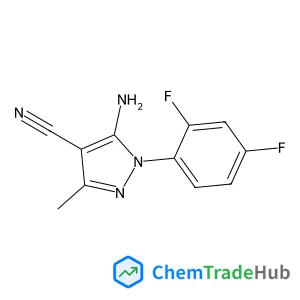
5-Amino-1-(2,4-difluorophenyl)-3-methyl-1H-pyrazole-4-carbonitrile
CAS Number:
1020057-92-4
Molecular Formula:
C11H8F2N4
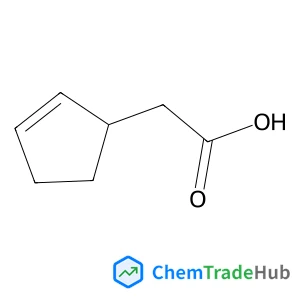
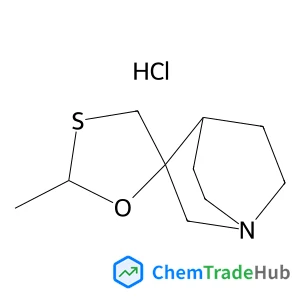
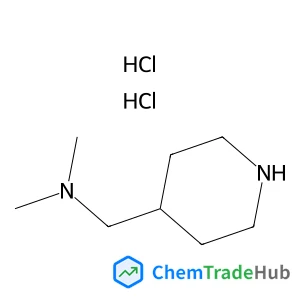
N,N-dimethyl(piperidin-4-yl)methanamine hydrochloride
CAS Number:
172281-72-0
Molecular Formula:
C8H20Cl2N2
Recommended Suppliers




Disclaimer
This page provides academic journal information for reference and research purposes only. We are not affiliated with any journal publishers and do not handle publication submissions. For publication-related inquiries, please contact the respective journal publishers directly.
If you notice any inaccuracies in the information displayed, please contact us at support@chemtradehub.com. We will promptly review and address your concerns.