












The anisotropy of the internal magnetic field on the central ion is capable of imposing great impact on the quantum tunneling of magnetization of Kramers single-ion magnets
Literature Information
Publication Date
2021-01-05
DOI
10.1039/D0CP05470D
Impact Factor
3.676
Authors
Bing Yin, Lan Luo
View Original
Abstract
In this work, a theoretical method, taking into account the anisotropy of the internal magnetic field (int), is proposed to predict the rate of quantum tunneling of magnetization (QTM), i.e., τQTM−1, for Kramers single-ion magnets (SIMs). Direct comparison to both experimental and previous theoretical results of three typical Kramers SIMs indicates the necessity of the inclusion of the anisotropy of int for accurate description of QTM. The predictions of the method here are consistent with the theory proposed by Prokof'ev and Stamp (PS). For Kramers SIMs of high magnetic axiality, the QTM rates, predicted by the method here, are almost linearly proportional to the results by the PS method. The dependence of τQTM−1 on various parameters is analyzed for model systems. The averaged magnitude of int (Bave) and principal g value of the axial direction (gZ) are the parameters on which τQTM−1 is linearly dependent. The ones on which τQTM−1 is quadratically dependent are gXY, i.e., the principal g value of the transversal direction, and xaniso characterizing the anisotropy of int. Compared to Bave and gZ, gXY and xaniso provide a higher order of dependence for QTM. Therefore regulation of the SMM property via introduction of desired values of gXY and xaniso ought to be a strategy more efficient than the one via Bave and gZ. Being different from the one via gXY, the strategy via xaniso to regulate the QTM has been rarely touched upon according to our best knowledge. However, this strategy could also lead to significant improvement since it is the same as gXY in the aspect of the dependence of τQTM−1.
Recommended Journals
Related Literature
Electromagnetic interference shielding in 1–18 GHz frequency and electrical property correlations in poly(vinylidene fluoride)–multi-walled carbon nanotube composites
G. Sudheer Kumar, D. Vishnupriya, Anupama Joshi, Suwarna Datar, T. Umasankar Patro
2015-07-07
Paper
DOI: 10.1039/C5CP02585K
Towards an accurate specific reaction parameter density functional for water dissociation on Ni(111): RPBE versus PW91
Bin Jiang, Hua Guo
2016-07-12
Paper
DOI: 10.1039/C6CP03707K
Molecular weight growth in Titan's atmosphere: branching pathways for the reaction of 1-propynyl radical (H3CCC˙) with small alkenes and alkynes
Benjamin B. Kirk, John D. Savee, Adam J. Trevitt, David L. Osborn, Kevin R. Wilson
2015-07-16
Paper
DOI: 10.1039/C5CP02589C
Enhanced energy transfer efficiency and stability of europium β-diketonate complex in ionic liquid-based lyotropic liquid crystals
Sijing Yi, Jiao Wang, Xiao Chen
2015-07-13
Paper
DOI: 10.1039/C5CP03659C
Graphene quantum dots to enhance the photocatalytic hydrogen evolution efficiency of anatase TiO2 with exposed {001} facet
Shan Yu, Yun-Qian Zhong, Bao-Quan Yu, Shi-Yi Cai, Li-Zhu Wu
2016-06-10
Paper
DOI: 10.1039/C6CP02561G
The Interplay of manganese and nitrate in hydroxyapatite nanoparticles as revealed by pulsed EPR and DFT
Marat Gafurov, Timur Biktagirov, Georgy Mamin, Elena Klimashina, Valery Putlayev, L. Kuznetsova, Sergei Orlinskii
2015-07-07
Paper
DOI: 10.1039/C5CP01986A
Sunlight as an energetic driver in the synthesis of molecules necessary for life
Rebecca J. Rapf, Veronica Vaida
2016-05-11
Perspective
DOI: 10.1039/C6CP00980H
Step dynamics and oxide formation during CO oxidation over a vicinal Pd surface
Mikhail Shipilin, Johan Gustafson, Chu Zhang, Lindsay Richard Merte, Edvin Lundgren
2016-01-20
Paper
DOI: 10.1039/C5CP07488F
Influence of PPH dendrimers' surface functions on the activation of human monocytes: a study of their interactions with pure lipid model systems
F. Ielasi, S. Fruchon, R. Poupot, M. Blanzat
2016-07-11
Paper
DOI: 10.1039/C6CP03536A
You might also like
Compound Q&A
What is 1-(2,4,6-Trifluorophenyl)ethanol (CAS: 1250113-83-7)?
1-(2,4,6-Trifluorophenyl)ethanol is an organic compound with the CAS number 1250...
1250113-83-71-(2,4,6-Trifluoroph...
Compound Q&A
Is 1-(2,4-Dimethoxybenzyl)-4-(hydroxymethyl)-2-pyrrolidinone (CAS: 919111-34-5) safe?
1-(2,4-Dimethoxybenzyl)-4-(hydroxymethyl)-2-pyrrolidinone (CAS: 919111-34-5) is ...
919111-34-51-(2,4-Dimethoxybenz...
Compound Q&A
What are the physical and chemical properties of (7S,15R)-6β,15-Diacetoxy-7α,20-epoxy-7-hydroxykaura-2,16-dien-1-one (CAS: 51419-51-3)?
(7S,15R)-6β,15-Diacetoxy-7α,20-epoxy-7-hydroxykaura-2,16-dien-1-one is a crystal...
51419-51-3(7S,15R)-6β,15-Diace...
Compound Q&A
What regulatory guidelines apply to rac-ethyl (1r,4r)-4-hydroxycyclohexane-1-carboxylate, trans (CAS: 3618-04-0)?
The compound rac-ethyl (1r,4r)-4-hydroxycyclohexane-1-carboxylate, trans (CAS: 3...
3618-04-0rac-ethyl (1r,4r)-4-...
Compound Q&A
What is the market or research trend for 2-(2,4-Difluorophenoxy)-3-nitropyridine (CAS: 175135-62-3)?
The market for 2-(2,4-Difluorophenoxy)-3-nitropyridine (CAS: 175135-62-3) is cur...
175135-62-32-(2,4-Difluoropheno...
Compound Q&A
What are the main uses of 6-Diazo-5-oxo-L-norleucine (CAS: 157-03-9)?
The main uses of 6-Diazo-5-oxo-L-norleucine (CAS: 157-03-9) include research in ...
157-03-96-Diazo-5-oxo-L-norl...
Compound Q&A
What precautions should be taken when handling 2-Aminoethyl-mono-amide-DOTA-tris(tBu ester) (CAS: 173308-19-5)?
When handling 2-Aminoethyl-mono-amide-DOTA-tris(tBu ester) (CAS: 173308-19-5), i...
173308-19-52-Aminoethyl-mono-am...
Compound Q&A
How is 5-Methylimidazo[1,2-a]pyridine-3-carbaldehyde (CAS: 178488-37-4) typically synthesized?
5-Methylimidazo[1,2-a]pyridine-3-carbaldehyde (CAS: 178488-37-4) can be synthesi...
178488-37-45-Methylimidazo[1,2-...
Compound Q&A
Are there alternatives to 2,4,6-Trihydroxyisophthalaldehyde (CAS: 4396-13-8) in synthesis?
There are alternative reagents that can be used in the synthesis of 2,4,6-Trihyd...
4396-13-82,4,6-Trihydroxyisop...
Compound Q&A
What is (2Z)-3-(5-Fluoro-1H-indol-3-yl)-2-sulfanylacrylic acid (CAS: 179461-52-0)?
(2Z)-3-(5-Fluoro-1H-indol-3-yl)-2-sulfanylacrylic acid is a chemical compound wi...
179461-52-0(2Z)-3-(5-Fluoro-1H-...
Source Journal
Physical Chemistry Chemical Physics

CiteScore:
5.5
Self-citation Rate:
10.3%
Articles per Year:
3036
Physical Chemistry Chemical Physics (PCCP) is an international journal co-owned by 19 physical chemistry and physics societies from around the world. This journal publishes original, cutting-edge research in physical chemistry, chemical physics and biophysical chemistry. To be suitable for publication in PCCP, articles must include significant innovation and/or insight into physical chemistry; this is the most important criterion that reviewers and Editors will judge against when evaluating submissions. The journal has a broad scope and welcomes contributions spanning experiment, theory, computation and data science. Topical coverage includes spectroscopy, dynamics, kinetics, statistical mechanics, thermodynamics, electrochemistry, catalysis, surface science, quantum mechanics, quantum computing and machine learning. Interdisciplinary research areas such as polymers and soft matter, materials, nanoscience, energy, surfaces/interfaces, and biophysical chemistry are welcomed if they demonstrate significant innovation and/or insight into physical chemistry. Joined experimental/theoretical studies are particularly appreciated when complementary and based on up-to-date approaches.
Recommended Compounds
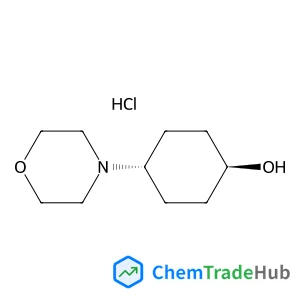
trans-4-(4-Morpholinyl)cyclohexanol hydrochloride (1:1)
CAS Number:
1588441-09-1
Molecular Formula:
C10H20ClNO2
![9H-Fluoren-9-ylmethyl [(2S)-1-hydroxy-3-(1H-indol-3-yl)-2-propanyl]carbamate structure](https://static.chemtradehub.com/structs/153/153815-60-2-a67d.webp "9H-Fluoren-9-ylmethyl [(2S)-1-hydroxy-3-(1H-indol-3-yl)-2-propanyl]carbamate structure")
9H-Fluoren-9-ylmethyl [(2S)-1-hydroxy-3-(1H-indol-3-yl)-2-propanyl]carbamate
CAS Number:
153815-60-2
Molecular Formula:
C26H24N2O3

Recommended Suppliers





Disclaimer
This page provides academic journal information for reference and research purposes only. We are not affiliated with any journal publishers and do not handle publication submissions. For publication-related inquiries, please contact the respective journal publishers directly.
If you notice any inaccuracies in the information displayed, please contact us at support@chemtradehub.com. We will promptly review and address your concerns.