












Perfluoro effect on the electronic excited states of para-benzoquinone revealed by experiment and theory
Literature Information
Publication Date
2021-01-13
DOI
10.1039/D0CP05626J
Impact Factor
3.676
Authors
J. Pereira-da-Silva, M. Mendes, F. Kossoski, A. I. Lozano, R. Rodrigues, N. C. Jones, S. V. Hoffmann, F. Ferreira da Silva
View Original
Abstract
We report a comprehensive study on the electronic excited states of tetrafluoro-1,4-benzoquinone, through high-resolution vacuum ultraviolet photoabsorption spectroscopy and time-dependent density functional theory calculations performed within the nuclear ensemble approach. Absolute cross section values were experimentally determined in the 3.8–10.8 eV energy range. The present experimental results represent the highest resolution data yet reported for this molecule and reveal previously unresolved spectral structures. The interpretation of the results was made in close comparison with the available data for para-benzoquinone [Jones et al., J. Chem. Phys., 2017, 146, 184303]. While the dominant absorption features for both molecules arise from analogous π* ← π transitions, some remarkable differences have been identified. The perfluoro effect manifests in different ways: shifts in band positions and cross sections, appearance of features associated with excitations to σCF* orbitals, and spectrum broadening by quenching of either vibrational or Rydberg progressions. The level of agreement between experiment and theory is very satisfactory, yet that required the inclusion of nuclear quantum effects in the calculations. We have also discussed the role of temperature on the absorption spectrum, as well as the involvement of core-excited resonances in promoting dissociative electron attachment reactions in the 3–5 eV range.
Related Literature
Yttrium metalloceneborane chemistry: isolation of 9-BBN substitution and coordination complexes in a single crystal, {(C5Me5)2Y[η3-C3H4(BC8H14)]} and {(C5Me5)2Y(μ-H)2BC8H14}
William J. Evans, Sara E. Lorenz, Joseph W. Ziller
2007-09-26
Communication
DOI: 10.1039/B709841C
Hexafluorotitanate salts containing organic cations: use as a reaction medium and precursor to the synthesis of titanium dioxide
David Gutiérrez-Tauste, Xavier Domènech, Concepción Domingo, José A. Ayllón
2007-10-10
Communication
DOI: 10.1039/B709578C
Synthesis and structure of the new complex hydride Li2BH4NH2
Philip A. Chater, William I. F. David, Paul A. Anderson
2007-10-23
Communication
DOI: 10.1039/B711111H
Immunoasssay based on the antibody-conjugated PAMAM-dendrimer–gold quantum dot complex
Robert C. Triulzi, Miodrag Micic, Silvia Giordani, Michael Serry, Wen-An Chiou, Roger M. Leblanc
2006-11-21
Communication
DOI: 10.1039/B611278A
The surprising and stereoselective formation of P2C10 cages by the reduction of Cp*PCl2
Oliver C. Presly, Michael Green, John C. Jeffery, Eva Leiner, Martin Murray, Christopher A. Russell, Manfred Scheer, Ulf Vogel
2006-09-18
Communication
DOI: 10.1039/B611484A
Trapping a pseudo-Hofmann rearrangement on a ruthenium cluster
Daniele Belletti, Pierre Braunstein, Abdelatif Messaoudi, Giovanni Predieri, Antonio Tiripicchio
2006-10-17
Communication
DOI: 10.1039/B611338A
Selective binding of cucurbit[7]uril and β-cyclodextrin with a redox-active molecular triad Ru(bpy)3–MV2+–naphthol
Dapeng Zou, Samir Andersson, Rong Zhang, Shiguo Sun, Björn Åkermark, Licheng Sun
2007-10-23
Communication
DOI: 10.1039/B712980G
Synthesis and characterization of a trigonal bipyramidal supramolecular cage based upon rhodium and platinum metal centers
Jered C. Garrison, Matthew J. Panzner, Paul D. Custer, D. Venkat Reddy, Peter L. Rinaldi, Claire A. Tessier, Wiley J. Youngs
2006-09-29
Communication
DOI: 10.1039/B608991G
A photochromic fluorescent switch in an organogel system with non-destructive readout ability
Shuzhang Xiao, Ying Zou, Mengxiao Yu, Tao Yi, Yifeng Zhou, Fuyou Li, Chunhui Huang
2007-08-31
Communication
DOI: 10.1039/B709409D
You might also like
Compound Q&A
How is Ethyl 4-chlorothieno[2,3-b]pyridine-5-carboxylate (CAS: 59713-58-5) typically synthesized?
Ethyl 4-chlorothieno[2,3-b]pyridine-5-carboxylate (CAS: 59713-58-5) can be synth...
59713-58-5Ethyl 4-chlorothieno...
Compound Q&A
What regulatory guidelines apply to 5-Methyl-1H-indole-3-carbaldehyde (CAS: 52562-50-2)?
5-Methyl-1H-indole-3-carbaldehyde (CAS: 52562-50-2) is subject to various regula...
52562-50-25-Methyl-1H-indole-3...
Compound Q&A
What are the physical and chemical properties of (1,3-Dimethyl-2,4-dioxo-1,2,3,4-tetrahydro-5-pyrimidinyl)boronic acid (CAS: 223418-73-3)?
(1,3-Dimethyl-2,4-dioxo-1,2,3,4-tetrahydro-5-pyrimidinyl)boronic acid is a white...
223418-73-3(1,3-Dimethyl-2,4-di...
Compound Q&A
How should waste containing Sulfocostunolide A (CAS: 1016983-51-9) be handled?
Waste containing Sulfocostunolide A (CAS: 1016983-51-9) should be handled with c...
1016983-51-9Sulfocostunolide A
Compound Q&A
What precautions should be taken when handling Murraxocin (CAS: 88478-44-8)?
When handling Murraxocin (CAS: 88478-44-8), ensure proper personal protective eq...
88478-44-8Murraxocin
Compound Q&A
What are the physical and chemical properties of Formvar (CAS: 63148-64-1)?
Formvar (CAS: 63148-64-1) is an alkyd resin characterized by a high molecular we...
63148-64-1Formvar(R)
Compound Q&A
Is (S)-4-benzyl-2-((benzyloxy)methyl)morpholine (CAS: 205242-66-6) safe?
(S)-4-benzyl-2-((benzyloxy)methyl)morpholine is generally safe when handled with...
205242-66-6(S)-4-benzyl-2-((ben...
Compound Q&A
What industries use Methyl 1-(5-bromo-2-pyrimidinyl)cyclopropanecarboxylate (CAS: 1447607-69-3)?
Methyl 1-(5-bromo-2-pyrimidinyl)cyclopropanecarboxylate (CAS: 1447607-69-3) is p...
1447607-69-3Methyl 1-(5-bromo-2-...
Compound Q&A
Is 2-Methyl-1-phenyl-1-propanamine hydrochloride (CAS: 24290-47-9) safe?
2-Methyl-1-phenyl-1-propanamine hydrochloride (CAS: 24290-47-9) is generally con...
24290-47-92-Methyl-1-phenyl-1-...
Compound Q&A
How is 3-(4-Bromophenyl)-2-methylpropanoic acid (CAS: 66735-01-1) typically synthesized?
3-(4-Bromophenyl)-2-methylpropanoic acid is synthesized through a multi-step pro...
66735-01-13-(4-Bromophenyl)-2-...
Source Journal
Physical Chemistry Chemical Physics

CiteScore:
5.5
Self-citation Rate:
10.3%
Articles per Year:
3036
Physical Chemistry Chemical Physics (PCCP) is an international journal co-owned by 19 physical chemistry and physics societies from around the world. This journal publishes original, cutting-edge research in physical chemistry, chemical physics and biophysical chemistry. To be suitable for publication in PCCP, articles must include significant innovation and/or insight into physical chemistry; this is the most important criterion that reviewers and Editors will judge against when evaluating submissions. The journal has a broad scope and welcomes contributions spanning experiment, theory, computation and data science. Topical coverage includes spectroscopy, dynamics, kinetics, statistical mechanics, thermodynamics, electrochemistry, catalysis, surface science, quantum mechanics, quantum computing and machine learning. Interdisciplinary research areas such as polymers and soft matter, materials, nanoscience, energy, surfaces/interfaces, and biophysical chemistry are welcomed if they demonstrate significant innovation and/or insight into physical chemistry. Joined experimental/theoretical studies are particularly appreciated when complementary and based on up-to-date approaches.
Recommended Compounds
![9H-Fluoren-9-ylmethyl [(2S)-1-hydroxy-3-(1H-indol-3-yl)-2-propanyl]carbamate structure](https://static.chemtradehub.com/structs/153/153815-60-2-a67d.webp "9H-Fluoren-9-ylmethyl [(2S)-1-hydroxy-3-(1H-indol-3-yl)-2-propanyl]carbamate structure")
9H-Fluoren-9-ylmethyl [(2S)-1-hydroxy-3-(1H-indol-3-yl)-2-propanyl]carbamate
CAS Number:
153815-60-2
Molecular Formula:
C26H24N2O3
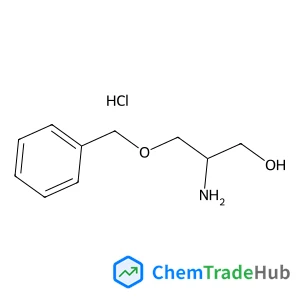
(R)-2-amino-3-(benzyloxy)propan-1-ol hydrochloride
CAS Number:
58577-95-0
Molecular Formula:
C10H16ClNO2
![4-{1-[4-(4,4,5,5-Tetramethyl-1,3,2-dioxaborolan-2-yl)phenyl]cyclopropyl}morpholine structure](https://static.chemtradehub.com/structs/120/1206594-08-2-7afb.webp "4-{1-[4-(4,4,5,5-Tetramethyl-1,3,2-dioxaborolan-2-yl)phenyl]cyclopropyl}morpholine structure")
4-{1-[4-(4,4,5,5-Tetramethyl-1,3,2-dioxaborolan-2-yl)phenyl]cyclopropyl}morpholine
CAS Number:
1206594-08-2
Molecular Formula:
C19H28BNO3
Recommended Suppliers






Disclaimer
This page provides academic journal information for reference and research purposes only. We are not affiliated with any journal publishers and do not handle publication submissions. For publication-related inquiries, please contact the respective journal publishers directly.
If you notice any inaccuracies in the information displayed, please contact us at support@chemtradehub.com. We will promptly review and address your concerns.