


Photodegradation of organic pollutants catalyzed by iron species under visible light irradiation
Literature Information
Publication Date
2010-11-17
DOI
10.1039/C0CP01203C
Impact Factor
3.676
Authors
Chunyan Sun, Chuncheng Chen, Wanhong Ma, Jincai Zhao
View Original
Abstract
The green oxidation technology is the most economically attractive and environmentally friendly oxidation technique in the treatment of organic pollutants. Photocatalytic degradation of organic pollutants by iron species is a desired green oxidation technique due to using hydrogen peroxide or ideally molecular oxygen as oxidant and water as solvent. However, the system has some disadvantages. The reaction has to be performed in acidic conditions in order to avoid Fe ion precipitation and iron sludge will be accumulated in the reaction. Moreover, the utilization of H2O2 means a high cost and risks in the storage and transportation and organic pollutants can not be completely mineralized. In this perspective, we report a systematic investigation of the improvement in the Fenton system for treatment of organic pollutants in water. Several strategies have been studied on the Fenton system for overcoming the above mentioned shortcomings and enhance the efficiency. For example, in order to extend the application of the Fenton system and perform it at neutral pH, iron complexes were used to replace the Fe2+/Fe3+. Moreover, iron complexes have a strong absorption in the visible region, which leads to decomposition of colorless organic pollutants under visible light irradiation. Iron complexes with special structures can activate molecular O2 instead of H2O2 under mild conditions and the supported iron species maintains a high catalytic activity after repeated use and can be reused simply by filtration. Finally, prospects for further work required to be performed for its practical application is discussed.
Recommended Journals

Journal of Peptide Science

Chemical Communications

Crystallography Reports

Russian Journal of Applied Chemistry

Saudi Pharmaceutical Journal

Russian Chemical Bulletin

Russian Journal of Bioorganic Chemistry

Russian Journal of General Chemistry

Drug Discovery Today

Current Opinion in Solid State & Materials Science
Related Literature
Topological semimetal state with triply degenerate nodal points in a stable Cu2Te structure
Yiming Mi
2021-01-05
Paper
DOI: 10.1039/D0CP05622G
Inverse halogen dependence in anion 13C NMR
Renan V. Viesser, Cláudio F. Tormena
2020-12-23
Paper
DOI: 10.1039/D0CP05891B
Anti-alignment driven dynamics in the excited states of molecules under strong fields
Ignacio R. Sola
2021-01-04
Paper
DOI: 10.1039/D0CP05692H
Gauging van der Waals interactions in aqueous solutions of 2D MOFs: when water likes organic linkers more than open-metal sites
Mohammad R. Momeni, Zeyu Zhang, David Dell'Angelo, Farnaz A. Shakib
2021-01-20
Paper
DOI: 10.1039/D0CP05923D
Effects of single and double active sites of Cu oxide clusters over the MFI zeolite for direct conversion of methane to methanol: DFT calculations
Watinee Nunthakitgoson, Anawat Thivasasith, Thana Maihom, Chularat Wattanakit
2021-01-05
Paper
DOI: 10.1039/D0CP05435F
Machine learning approaches to understand and predict rate constants for organic processes in mixtures containing ionic liquids
Tamar L. Greaves, Karin S. Schaffarczyk McHale, Raphael F. Burkart-Radke, Jason B. Harper, Tu C. Le
2021-01-14
Paper
DOI: 10.1039/D0CP04227G
Temperature and pressure-induced strains in anhydrous iron trifluoride polymorphs
M. Recio-Poo, A. Lobato, A. Otero-de-la-Roza, M. A. Salvadó, M. E. Arroyo-de Dompablo, J. M. Recio
2021-01-07
Paper
DOI: 10.1039/D0CP05888B
A non-perturbative pairwise-additive analysis of charge transfer contributions to intermolecular interaction energies
2020-12-16
Paper
DOI: 10.1039/D0CP05852A
You might also like
Compound Q&A
How is Ethyl 4-chlorothieno[2,3-b]pyridine-5-carboxylate (CAS: 59713-58-5) typically synthesized?
Ethyl 4-chlorothieno[2,3-b]pyridine-5-carboxylate (CAS: 59713-58-5) can be synth...
59713-58-5Ethyl 4-chlorothieno...
Compound Q&A
What regulatory guidelines apply to 5-Methyl-1H-indole-3-carbaldehyde (CAS: 52562-50-2)?
5-Methyl-1H-indole-3-carbaldehyde (CAS: 52562-50-2) is subject to various regula...
52562-50-25-Methyl-1H-indole-3...
Compound Q&A
What are the physical and chemical properties of (1,3-Dimethyl-2,4-dioxo-1,2,3,4-tetrahydro-5-pyrimidinyl)boronic acid (CAS: 223418-73-3)?
(1,3-Dimethyl-2,4-dioxo-1,2,3,4-tetrahydro-5-pyrimidinyl)boronic acid is a white...
223418-73-3(1,3-Dimethyl-2,4-di...
Compound Q&A
How should waste containing Sulfocostunolide A (CAS: 1016983-51-9) be handled?
Waste containing Sulfocostunolide A (CAS: 1016983-51-9) should be handled with c...
1016983-51-9Sulfocostunolide A
Compound Q&A
What precautions should be taken when handling Murraxocin (CAS: 88478-44-8)?
When handling Murraxocin (CAS: 88478-44-8), ensure proper personal protective eq...
88478-44-8Murraxocin
Compound Q&A
What are the physical and chemical properties of Formvar (CAS: 63148-64-1)?
Formvar (CAS: 63148-64-1) is an alkyd resin characterized by a high molecular we...
63148-64-1Formvar(R)
Compound Q&A
Is (S)-4-benzyl-2-((benzyloxy)methyl)morpholine (CAS: 205242-66-6) safe?
(S)-4-benzyl-2-((benzyloxy)methyl)morpholine is generally safe when handled with...
205242-66-6(S)-4-benzyl-2-((ben...
Compound Q&A
What industries use Methyl 1-(5-bromo-2-pyrimidinyl)cyclopropanecarboxylate (CAS: 1447607-69-3)?
Methyl 1-(5-bromo-2-pyrimidinyl)cyclopropanecarboxylate (CAS: 1447607-69-3) is p...
1447607-69-3Methyl 1-(5-bromo-2-...
Compound Q&A
Is 2-Methyl-1-phenyl-1-propanamine hydrochloride (CAS: 24290-47-9) safe?
2-Methyl-1-phenyl-1-propanamine hydrochloride (CAS: 24290-47-9) is generally con...
24290-47-92-Methyl-1-phenyl-1-...
Compound Q&A
How is 3-(4-Bromophenyl)-2-methylpropanoic acid (CAS: 66735-01-1) typically synthesized?
3-(4-Bromophenyl)-2-methylpropanoic acid is synthesized through a multi-step pro...
66735-01-13-(4-Bromophenyl)-2-...
Source Journal
Physical Chemistry Chemical Physics

CiteScore:
5.5
Self-citation Rate:
10.3%
Articles per Year:
3036
Physical Chemistry Chemical Physics (PCCP) is an international journal co-owned by 19 physical chemistry and physics societies from around the world. This journal publishes original, cutting-edge research in physical chemistry, chemical physics and biophysical chemistry. To be suitable for publication in PCCP, articles must include significant innovation and/or insight into physical chemistry; this is the most important criterion that reviewers and Editors will judge against when evaluating submissions. The journal has a broad scope and welcomes contributions spanning experiment, theory, computation and data science. Topical coverage includes spectroscopy, dynamics, kinetics, statistical mechanics, thermodynamics, electrochemistry, catalysis, surface science, quantum mechanics, quantum computing and machine learning. Interdisciplinary research areas such as polymers and soft matter, materials, nanoscience, energy, surfaces/interfaces, and biophysical chemistry are welcomed if they demonstrate significant innovation and/or insight into physical chemistry. Joined experimental/theoretical studies are particularly appreciated when complementary and based on up-to-date approaches.
Recommended Compounds
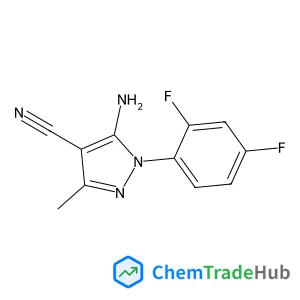
5-Amino-1-(2,4-difluorophenyl)-3-methyl-1H-pyrazole-4-carbonitrile
CAS Number:
1020057-92-4
Molecular Formula:
C11H8F2N4

Recommended Suppliers





Disclaimer
This page provides academic journal information for reference and research purposes only. We are not affiliated with any journal publishers and do not handle publication submissions. For publication-related inquiries, please contact the respective journal publishers directly.
If you notice any inaccuracies in the information displayed, please contact us at support@chemtradehub.com. We will promptly review and address your concerns.