













Temperature and pressure-induced strains in anhydrous iron trifluoride polymorphs
Literature Information
Publication Date
2021-01-07
DOI
10.1039/D0CP05888B
Impact Factor
3.676
Authors
M. Recio-Poo, A. Lobato, A. Otero-de-la-Roza, M. A. Salvadó, M. E. Arroyo-de Dompablo, J. M. Recio
View Original
Abstract
Various structural configurations of iron trifluoride appear at the nanoscale and macroscopic size, either in the amorphous or crystalline state. The specific atomic organization in these structures crucially alters the performance of FeF3 as an effective cathode in Li-ion batteries. Our detailed first-principles computational simulations examine the structural strains induced by temperature and stress on the four anhydrous polymorphs observed so far in FeF3 at ambient pressure. A wealth of data covering previous experimental results on their equilibrium structures and extending their characterization with new static and isothermal equations of state is provided. We inform on how porous apertures associated with the six-octahedra rings of the HTB and pyrochlore phases are modified under compressive and expansive strains. A quasi-auxetic behavior at low pressures for the ground state rhombohedral phase is detected, which is in concordance with its anomalous structural anisotropy. In contrast with the effect of temperature, this structure undergoes under negative pressure phase transitions to the other three polymorphs, indicating potential conditions where low-density FeF3 could show a better performance in technological applications.
Recommended Journals
Related Literature
Regioselectivity and enantioselectivity in nickel-catalysed reductive coupling reactions of alkynes
Ryan M. Moslin, Karen Miller-Moslin, Timothy F. Jamison
2007-07-03
Feature Article
DOI: 10.1039/B707737H
Synthesis and characterization of difluoromethylene-homo[60]fullerene, C60(CF2)
Anna S. Pimenova, Andrey A. Kozlov, Alexey A. Goryunkov, Vitaliy Yu. Markov, Pavel A. Khavrel, Stanislav M. Avdoshenko, Ilya N. Ioffe, Sergey I. Troyanov, Lev N. Sidorov
2006-12-18
Communication
DOI: 10.1039/B611623J
Efficient co-sensitization of nanocrystalline TiO2 films by organic sensitizers
Jun-Ho Yum, Song-Rim Jang, Pablo Walter, T. Geiger, F. Nüesch, Sanghoon Kim, Jaejung Ko, Michael Grätzel, Mohammad K. Nazeeruddin
2007-08-29
Communication
DOI: 10.1039/B710759E
A new functionalization strategy for pentacene
John E. Anthony, Johannes Gierschner, Chad A. Landis, Sean R. Parkin, Jes B. Sherman, Ronald C. Bakus II
2007-09-06
Communication
DOI: 10.1039/B711296C
A novel soft hydrothermal (SHY) route to crystalline PbS and CdS nanoparticles exhibiting diverse morphologies
Deborah Berhanu, Kuveshni Govender, David Smyth-Boyle, Martin Archbold, Douglas P. Halliday, Paul O'Brien
2006-10-25
Communication
DOI: 10.1039/B612934J
Fluorescent CXCR4 chemokine receptor antagonists: metal activated binding
Abid Khan, Jon D. Silversides, Leigh Madden, John Greenman, Stephen J. Archibald
2006-12-04
Communication
DOI: 10.1039/B614557D
The surprising and stereoselective formation of P2C10 cages by the reduction of Cp*PCl2
Oliver C. Presly, Michael Green, John C. Jeffery, Eva Leiner, Martin Murray, Christopher A. Russell, Manfred Scheer, Ulf Vogel
2006-09-18
Communication
DOI: 10.1039/B611484A
Room temperature synthesis of surface-functionalised boron nanoparticles
Alexandra L. Pickering, Christoph Mitterbauer, Nigel D. Browning, Susan M. Kauzlarich, Philip P. Power
2007-01-11
Communication
DOI: 10.1039/B614363F
Water soluble distyryl-boradiazaindacenes as efficient photosensitizers for photodynamic therapy
Serdar Atilgan, Zeynep Ekmekci, A. Lale Dogan, Dicle Guc, Engin U. Akkaya
2006-10-06
Communication
DOI: 10.1039/B612347C
You might also like
Compound Q&A
How is Ethyl 4-chlorothieno[2,3-b]pyridine-5-carboxylate (CAS: 59713-58-5) typically synthesized?
Ethyl 4-chlorothieno[2,3-b]pyridine-5-carboxylate (CAS: 59713-58-5) can be synth...
59713-58-5Ethyl 4-chlorothieno...
Compound Q&A
What regulatory guidelines apply to 5-Methyl-1H-indole-3-carbaldehyde (CAS: 52562-50-2)?
5-Methyl-1H-indole-3-carbaldehyde (CAS: 52562-50-2) is subject to various regula...
52562-50-25-Methyl-1H-indole-3...
Compound Q&A
What are the physical and chemical properties of (1,3-Dimethyl-2,4-dioxo-1,2,3,4-tetrahydro-5-pyrimidinyl)boronic acid (CAS: 223418-73-3)?
(1,3-Dimethyl-2,4-dioxo-1,2,3,4-tetrahydro-5-pyrimidinyl)boronic acid is a white...
223418-73-3(1,3-Dimethyl-2,4-di...
Compound Q&A
How should waste containing Sulfocostunolide A (CAS: 1016983-51-9) be handled?
Waste containing Sulfocostunolide A (CAS: 1016983-51-9) should be handled with c...
1016983-51-9Sulfocostunolide A
Compound Q&A
What precautions should be taken when handling Murraxocin (CAS: 88478-44-8)?
When handling Murraxocin (CAS: 88478-44-8), ensure proper personal protective eq...
88478-44-8Murraxocin
Compound Q&A
What are the physical and chemical properties of Formvar (CAS: 63148-64-1)?
Formvar (CAS: 63148-64-1) is an alkyd resin characterized by a high molecular we...
63148-64-1Formvar(R)
Compound Q&A
Is (S)-4-benzyl-2-((benzyloxy)methyl)morpholine (CAS: 205242-66-6) safe?
(S)-4-benzyl-2-((benzyloxy)methyl)morpholine is generally safe when handled with...
205242-66-6(S)-4-benzyl-2-((ben...
Compound Q&A
What industries use Methyl 1-(5-bromo-2-pyrimidinyl)cyclopropanecarboxylate (CAS: 1447607-69-3)?
Methyl 1-(5-bromo-2-pyrimidinyl)cyclopropanecarboxylate (CAS: 1447607-69-3) is p...
1447607-69-3Methyl 1-(5-bromo-2-...
Compound Q&A
Is 2-Methyl-1-phenyl-1-propanamine hydrochloride (CAS: 24290-47-9) safe?
2-Methyl-1-phenyl-1-propanamine hydrochloride (CAS: 24290-47-9) is generally con...
24290-47-92-Methyl-1-phenyl-1-...
Compound Q&A
How is 3-(4-Bromophenyl)-2-methylpropanoic acid (CAS: 66735-01-1) typically synthesized?
3-(4-Bromophenyl)-2-methylpropanoic acid is synthesized through a multi-step pro...
66735-01-13-(4-Bromophenyl)-2-...
Source Journal
Physical Chemistry Chemical Physics

CiteScore:
5.5
Self-citation Rate:
10.3%
Articles per Year:
3036
Physical Chemistry Chemical Physics (PCCP) is an international journal co-owned by 19 physical chemistry and physics societies from around the world. This journal publishes original, cutting-edge research in physical chemistry, chemical physics and biophysical chemistry. To be suitable for publication in PCCP, articles must include significant innovation and/or insight into physical chemistry; this is the most important criterion that reviewers and Editors will judge against when evaluating submissions. The journal has a broad scope and welcomes contributions spanning experiment, theory, computation and data science. Topical coverage includes spectroscopy, dynamics, kinetics, statistical mechanics, thermodynamics, electrochemistry, catalysis, surface science, quantum mechanics, quantum computing and machine learning. Interdisciplinary research areas such as polymers and soft matter, materials, nanoscience, energy, surfaces/interfaces, and biophysical chemistry are welcomed if they demonstrate significant innovation and/or insight into physical chemistry. Joined experimental/theoretical studies are particularly appreciated when complementary and based on up-to-date approaches.
Recommended Compounds

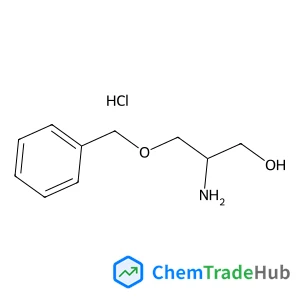
(R)-2-amino-3-(benzyloxy)propan-1-ol hydrochloride
CAS Number:
58577-95-0
Molecular Formula:
C10H16ClNO2
![Sodium 6-amino-3-[(E)-{4-[(E)-(4-aminophenyl)diazenyl]-2-methoxy-5-methylphenyl}diazenyl]-4-hydroxy-2-naphthalenesulfonate structure](https://static.chemtradehub.com/structs/294/2945-96-2-092f.webp "Sodium 6-amino-3-[(E)-{4-[(E)-(4-aminophenyl)diazenyl]-2-methoxy-5-methylphenyl}diazenyl]-4-hydroxy-2-naphthalenesulfonate structure")
Sodium 6-amino-3-[(E)-{4-[(E)-(4-aminophenyl)diazenyl]-2-methoxy-5-methylphenyl}diazenyl]-4-hydroxy-2-naphthalenesulfonate
CAS Number:
2945-96-2
Molecular Formula:
C24H21N6NaO5S
Recommended Suppliers




Disclaimer
This page provides academic journal information for reference and research purposes only. We are not affiliated with any journal publishers and do not handle publication submissions. For publication-related inquiries, please contact the respective journal publishers directly.
If you notice any inaccuracies in the information displayed, please contact us at support@chemtradehub.com. We will promptly review and address your concerns.