












A non-perturbative pairwise-additive analysis of charge transfer contributions to intermolecular interaction energies
Literature Information
Publication Date
2020-12-16
DOI
10.1039/D0CP05852A
Impact Factor
3.676
Authors
View Original
Abstract
Energy decomposition analysis (EDA) based on absolutely localized molecular orbitals (ALMOs) decomposes the interaction energy between molecules into physically interpretable components like geometry distortion, frozen interactions, polarization, and charge transfer (CT, also sometimes called charge delocalization) interactions. In this work, a numerically exact scheme to decompose the CT interaction energy into pairwise additive terms is introduced for the ALMO-EDA using density functional theory. Unlike perturbative pairwise charge-decomposition analysis, the new approach does not break down for strongly interacting systems, or show significant exchange–correlation functional dependence in the decomposed energy components. Both the energy lowering and the charge flow associated with CT can be decomposed. Complementary occupied–virtual orbital pairs (COVPs) that capture the dominant donor and acceptor CT orbitals are obtained for the new decomposition. It is applied to systems with different types of interactions including DNA base-pairs, borane-ammonia adducts, and transition metal hexacarbonyls. While consistent with most existing understanding of the nature of CT in these systems, the results also reveal some new insights into the origin of trends in donor–acceptor interactions.
Recommended Journals
Related Literature
Thermodynamic properties of neutral and charged oxygen vacancies in BaZrO3 based on first principles phonon calculations
Tor S. Bjørheim, Marco Arrigoni, Denis Gryaznov, Joachim Maier
2015-07-27
Paper
DOI: 10.1039/C5CP02529J
A multiscale mechanism of drug release from polymeric matrices: confirmation through a nonlinear theoretical model
E. S. Bacaita, M. Agop
2016-07-11
Paper
DOI: 10.1039/C6CP02259F
Formic acid oxidation on platinum: a simple mechanistic study
Kathleen A. Schwarz, Ravishankar Sundararaman, Thomas P. Moffat, Thomas C. Allison
2015-07-15
Paper
DOI: 10.1039/C5CP03045E
Determining adsorbate configuration on alumina surfaces with 13C nuclear magnetic resonance relaxation time analysis
P. A. Vecino, Z. Huang, J. Mitchell, J. McGregor, H. Daly, C. Hardacre, J. M. Thomson, L. F. Gladden
2015-07-21
Paper
DOI: 10.1039/C5CP02436F
A symbiotic view of the origin of life at hydrothermal impact crater-lakes
2016-04-13
Perspective
DOI: 10.1039/C6CP00550K
Interlayer coupling in two-dimensional titanium carbide MXenes
Chao Zhang, Jingyang Wang, Xiaohui Wang
2016-05-16
Communication
DOI: 10.1039/C6CP01699E
Molecular weight growth in Titan's atmosphere: branching pathways for the reaction of 1-propynyl radical (H3CCC˙) with small alkenes and alkynes
Benjamin B. Kirk, John D. Savee, Adam J. Trevitt, David L. Osborn, Kevin R. Wilson
2015-07-16
Paper
DOI: 10.1039/C5CP02589C
Effect of cobalt doping on the structural, magnetic and abnormal thermal expansion properties of NaZn13-type La(Fe1−xCox)11.4Al1.6 compounds
Rongjin Huang, Wei Wang, Zheshuai Lin, Jiangtao Li, Laifeng Li
2016-07-01
Communication
DOI: 10.1039/C6CP03221D
Is formamide a geochemically plausible prebiotic solvent?
Jeffrey L. Bada, John H. Chalmers
2016-05-24
Perspective
DOI: 10.1039/C6CP03290G
The non-dominance of counterions in charge-asymmetric electrolytes: non-monotonic precedence of electrostatic screening and local inversion of the electric field by multivalent coions
Guillermo Iván Guerrero-García, Enrique González-Tovar, Manuel Quesada-Pérez, Alberto Martín-Molina
2016-07-08
Paper
DOI: 10.1039/C6CP03483G
You might also like
Compound Q&A
What is 1-(2,4,6-Trifluorophenyl)ethanol (CAS: 1250113-83-7)?
1-(2,4,6-Trifluorophenyl)ethanol is an organic compound with the CAS number 1250...
1250113-83-71-(2,4,6-Trifluoroph...
Compound Q&A
Is 1-(2,4-Dimethoxybenzyl)-4-(hydroxymethyl)-2-pyrrolidinone (CAS: 919111-34-5) safe?
1-(2,4-Dimethoxybenzyl)-4-(hydroxymethyl)-2-pyrrolidinone (CAS: 919111-34-5) is ...
919111-34-51-(2,4-Dimethoxybenz...
Compound Q&A
What are the physical and chemical properties of (7S,15R)-6β,15-Diacetoxy-7α,20-epoxy-7-hydroxykaura-2,16-dien-1-one (CAS: 51419-51-3)?
(7S,15R)-6β,15-Diacetoxy-7α,20-epoxy-7-hydroxykaura-2,16-dien-1-one is a crystal...
51419-51-3(7S,15R)-6β,15-Diace...
Compound Q&A
What regulatory guidelines apply to rac-ethyl (1r,4r)-4-hydroxycyclohexane-1-carboxylate, trans (CAS: 3618-04-0)?
The compound rac-ethyl (1r,4r)-4-hydroxycyclohexane-1-carboxylate, trans (CAS: 3...
3618-04-0rac-ethyl (1r,4r)-4-...
Compound Q&A
What is the market or research trend for 2-(2,4-Difluorophenoxy)-3-nitropyridine (CAS: 175135-62-3)?
The market for 2-(2,4-Difluorophenoxy)-3-nitropyridine (CAS: 175135-62-3) is cur...
175135-62-32-(2,4-Difluoropheno...
Compound Q&A
What are the main uses of 6-Diazo-5-oxo-L-norleucine (CAS: 157-03-9)?
The main uses of 6-Diazo-5-oxo-L-norleucine (CAS: 157-03-9) include research in ...
157-03-96-Diazo-5-oxo-L-norl...
Compound Q&A
What precautions should be taken when handling 2-Aminoethyl-mono-amide-DOTA-tris(tBu ester) (CAS: 173308-19-5)?
When handling 2-Aminoethyl-mono-amide-DOTA-tris(tBu ester) (CAS: 173308-19-5), i...
173308-19-52-Aminoethyl-mono-am...
Compound Q&A
How is 5-Methylimidazo[1,2-a]pyridine-3-carbaldehyde (CAS: 178488-37-4) typically synthesized?
5-Methylimidazo[1,2-a]pyridine-3-carbaldehyde (CAS: 178488-37-4) can be synthesi...
178488-37-45-Methylimidazo[1,2-...
Compound Q&A
Are there alternatives to 2,4,6-Trihydroxyisophthalaldehyde (CAS: 4396-13-8) in synthesis?
There are alternative reagents that can be used in the synthesis of 2,4,6-Trihyd...
4396-13-82,4,6-Trihydroxyisop...
Compound Q&A
What is (2Z)-3-(5-Fluoro-1H-indol-3-yl)-2-sulfanylacrylic acid (CAS: 179461-52-0)?
(2Z)-3-(5-Fluoro-1H-indol-3-yl)-2-sulfanylacrylic acid is a chemical compound wi...
179461-52-0(2Z)-3-(5-Fluoro-1H-...
Source Journal
Physical Chemistry Chemical Physics

CiteScore:
5.5
Self-citation Rate:
10.3%
Articles per Year:
3036
Physical Chemistry Chemical Physics (PCCP) is an international journal co-owned by 19 physical chemistry and physics societies from around the world. This journal publishes original, cutting-edge research in physical chemistry, chemical physics and biophysical chemistry. To be suitable for publication in PCCP, articles must include significant innovation and/or insight into physical chemistry; this is the most important criterion that reviewers and Editors will judge against when evaluating submissions. The journal has a broad scope and welcomes contributions spanning experiment, theory, computation and data science. Topical coverage includes spectroscopy, dynamics, kinetics, statistical mechanics, thermodynamics, electrochemistry, catalysis, surface science, quantum mechanics, quantum computing and machine learning. Interdisciplinary research areas such as polymers and soft matter, materials, nanoscience, energy, surfaces/interfaces, and biophysical chemistry are welcomed if they demonstrate significant innovation and/or insight into physical chemistry. Joined experimental/theoretical studies are particularly appreciated when complementary and based on up-to-date approaches.
Recommended Compounds
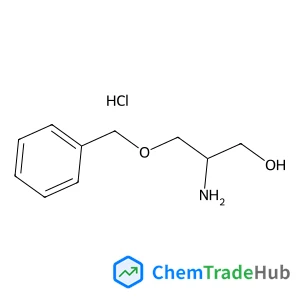
(R)-2-amino-3-(benzyloxy)propan-1-ol hydrochloride
CAS Number:
58577-95-0
Molecular Formula:
C10H16ClNO2
Recommended Suppliers





Disclaimer
This page provides academic journal information for reference and research purposes only. We are not affiliated with any journal publishers and do not handle publication submissions. For publication-related inquiries, please contact the respective journal publishers directly.
If you notice any inaccuracies in the information displayed, please contact us at support@chemtradehub.com. We will promptly review and address your concerns.