












![Imidazo[1,5-a]pyrazine structure](https://static.chemtradehub.com/structs/274/274-49-7-d749.webp "Imidazo[1,5-a]pyrazine structure")
Topological semimetal state with triply degenerate nodal points in a stable Cu2Te structure
Literature Information
Publication Date
2021-01-05
DOI
10.1039/D0CP05622G
Impact Factor
3.676
Authors
Yiming Mi
View Original
Abstract
Cu2Te is commonly used as the backside contact of CdTe-based solar cells. We predict a stable topological semimetal structure of Cu2Te(R3m) with triply degenerate nodal points near the Fermi energy. Triply degenerate nodal points are formed by the band crossing between two states with angular momentum j equal to 3/2 and 1/2 along the unique C3 axis. The anisotropic strain breaking C3 symmetry opens the energy gap, and transforms semimetal Cu2Te(R3m) into a topological insulator. It provides strong evidence for understanding the unconventional large linear magnetoresistance in Cu2−xTe. The band crossing of Cu2Te(R3m) strongly depends on the orbital on-site energy difference and the SOC strength. Crystal structures with the space group R3m (no. 160) are a good platform to obtain topological semimetals with triply degenerate nodal points. Compounds X2Y (X = Cu, Ag, Au, Y = O, S, Se, Te) except for Au2S and Cu2O are topological semimetals with triply degenerate nodal points around the Fermi energy.
Related Literature
Nano-patterning of solid substrates by adsorbed dendrimers
Ramon Pericet-Camara, Brian P. Cahill, Georg Papastavrou, Michal Borkovec
2006-10-25
Communication
DOI: 10.1039/B612249C
Room temperature synthesis of surface-functionalised boron nanoparticles
Alexandra L. Pickering, Christoph Mitterbauer, Nigel D. Browning, Susan M. Kauzlarich, Philip P. Power
2007-01-11
Communication
DOI: 10.1039/B614363F
Crystallization-driven constitutional changes of dynamic polymers in response to neat/solution conditions
Cheuk-Fai Chow, Jean-Marie Lehn
2007-10-04
Communication
DOI: 10.1039/B713413D
A novel soft hydrothermal (SHY) route to crystalline PbS and CdS nanoparticles exhibiting diverse morphologies
Deborah Berhanu, Kuveshni Govender, David Smyth-Boyle, Martin Archbold, Douglas P. Halliday, Paul O'Brien
2006-10-25
Communication
DOI: 10.1039/B612934J
Development of a pharmaceutical cocrystal of a monophosphate salt with phosphoric acid
Alex M. Chen, Martha E. Ellison, Andrey Peresypkin, Robert M. Wenslow, Narayan Variankaval, Cecile G. Savarin, Theresa K. Natishan, David J. Mathre, Peter G. Dormer, Danielle H. Euler, Richard G. Ball, Zhixiong Ye, Yaling Wang, Ivan Santos
2006-11-01
Communication
DOI: 10.1039/B612353H
Palladium-catalysed N-annulation routes to indoles: the synthesis of indoles with sterically demanding N-substituents, including demethylasterriquinone A1
Anthony J. Fletcher, Matthew N. Bax, Michael C. Willis
2007-09-03
Communication
DOI: 10.1039/B712227F
Novel one step hydrothermal synthesis of TiO2/WO3 nanocomposites with enhanced photocatalytic activity
Valeria Puddu, Robert Mokaya, Gianluca Li Puma
2007-09-07
Communication
DOI: 10.1039/B711559H
Controlling energy and charge transfer in linear chlorophyll dimers
Richard F. Kelley, Michael J. Tauber, Thea M. Wilson, Michael R. Wasielewski
2007-08-14
Communication
DOI: 10.1039/B708318A
Extensive spectral tuning of the proton transfer emission from 550 to 675 nm via a rational derivatization of 10-hydroxybenzo[h]quinoline
Kew-Yu Chen, Cheng-Chih Hsieh, Yi-Ming Cheng, Chin-Hung Lai, Pi-Tai Chou
2006-09-15
Communication
DOI: 10.1039/B610274C
Formation of cage-like hollow spherical silicavia a mesoporous structure by calcination of lysozyme–silica hybrid particles
Tatsuo Tsunoda, Akiko Kawai, Fujio Mizukami, Kengo Sakaguchi
2007-08-21
Communication
DOI: 10.1039/B709534A
You might also like
Compound Q&A
How is Ethyl 4-chlorothieno[2,3-b]pyridine-5-carboxylate (CAS: 59713-58-5) typically synthesized?
Ethyl 4-chlorothieno[2,3-b]pyridine-5-carboxylate (CAS: 59713-58-5) can be synth...
59713-58-5Ethyl 4-chlorothieno...
Compound Q&A
What regulatory guidelines apply to 5-Methyl-1H-indole-3-carbaldehyde (CAS: 52562-50-2)?
5-Methyl-1H-indole-3-carbaldehyde (CAS: 52562-50-2) is subject to various regula...
52562-50-25-Methyl-1H-indole-3...
Compound Q&A
What are the physical and chemical properties of (1,3-Dimethyl-2,4-dioxo-1,2,3,4-tetrahydro-5-pyrimidinyl)boronic acid (CAS: 223418-73-3)?
(1,3-Dimethyl-2,4-dioxo-1,2,3,4-tetrahydro-5-pyrimidinyl)boronic acid is a white...
223418-73-3(1,3-Dimethyl-2,4-di...
Compound Q&A
How should waste containing Sulfocostunolide A (CAS: 1016983-51-9) be handled?
Waste containing Sulfocostunolide A (CAS: 1016983-51-9) should be handled with c...
1016983-51-9Sulfocostunolide A
Compound Q&A
What precautions should be taken when handling Murraxocin (CAS: 88478-44-8)?
When handling Murraxocin (CAS: 88478-44-8), ensure proper personal protective eq...
88478-44-8Murraxocin
Compound Q&A
What are the physical and chemical properties of Formvar (CAS: 63148-64-1)?
Formvar (CAS: 63148-64-1) is an alkyd resin characterized by a high molecular we...
63148-64-1Formvar(R)
Compound Q&A
Is (S)-4-benzyl-2-((benzyloxy)methyl)morpholine (CAS: 205242-66-6) safe?
(S)-4-benzyl-2-((benzyloxy)methyl)morpholine is generally safe when handled with...
205242-66-6(S)-4-benzyl-2-((ben...
Compound Q&A
What industries use Methyl 1-(5-bromo-2-pyrimidinyl)cyclopropanecarboxylate (CAS: 1447607-69-3)?
Methyl 1-(5-bromo-2-pyrimidinyl)cyclopropanecarboxylate (CAS: 1447607-69-3) is p...
1447607-69-3Methyl 1-(5-bromo-2-...
Compound Q&A
Is 2-Methyl-1-phenyl-1-propanamine hydrochloride (CAS: 24290-47-9) safe?
2-Methyl-1-phenyl-1-propanamine hydrochloride (CAS: 24290-47-9) is generally con...
24290-47-92-Methyl-1-phenyl-1-...
Compound Q&A
How is 3-(4-Bromophenyl)-2-methylpropanoic acid (CAS: 66735-01-1) typically synthesized?
3-(4-Bromophenyl)-2-methylpropanoic acid is synthesized through a multi-step pro...
66735-01-13-(4-Bromophenyl)-2-...
Source Journal
Physical Chemistry Chemical Physics

CiteScore:
5.5
Self-citation Rate:
10.3%
Articles per Year:
3036
Physical Chemistry Chemical Physics (PCCP) is an international journal co-owned by 19 physical chemistry and physics societies from around the world. This journal publishes original, cutting-edge research in physical chemistry, chemical physics and biophysical chemistry. To be suitable for publication in PCCP, articles must include significant innovation and/or insight into physical chemistry; this is the most important criterion that reviewers and Editors will judge against when evaluating submissions. The journal has a broad scope and welcomes contributions spanning experiment, theory, computation and data science. Topical coverage includes spectroscopy, dynamics, kinetics, statistical mechanics, thermodynamics, electrochemistry, catalysis, surface science, quantum mechanics, quantum computing and machine learning. Interdisciplinary research areas such as polymers and soft matter, materials, nanoscience, energy, surfaces/interfaces, and biophysical chemistry are welcomed if they demonstrate significant innovation and/or insight into physical chemistry. Joined experimental/theoretical studies are particularly appreciated when complementary and based on up-to-date approaches.
Recommended Compounds
![2-Methyl-2-propanyl 1,6-diazaspiro[3.4]octane-6-carboxylate structure](https://static.chemtradehub.com/structs/115/1158749-79-1-81ee.webp "2-Methyl-2-propanyl 1,6-diazaspiro[3.4]octane-6-carboxylate structure")
2-Methyl-2-propanyl 1,6-diazaspiro[3.4]octane-6-carboxylate
CAS Number:
1158749-79-1
Molecular Formula:
C11H20N2O2
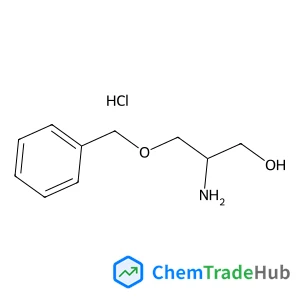
(R)-2-amino-3-(benzyloxy)propan-1-ol hydrochloride
CAS Number:
58577-95-0
Molecular Formula:
C10H16ClNO2
Recommended Suppliers






Disclaimer
This page provides academic journal information for reference and research purposes only. We are not affiliated with any journal publishers and do not handle publication submissions. For publication-related inquiries, please contact the respective journal publishers directly.
If you notice any inaccuracies in the information displayed, please contact us at support@chemtradehub.com. We will promptly review and address your concerns.