












Inverse halogen dependence in anion 13C NMR
Literature Information
Publication Date
2020-12-23
DOI
10.1039/D0CP05891B
Impact Factor
3.676
Authors
Renan V. Viesser, Cláudio F. Tormena
View Original
Abstract
Halogens cause pronounced and systematic effects on the 13C NMR chemical shift (δ13C) of an adjacent carbon nucleus, usually leading to a decrease in the values across the halogen series. Although this normal halogen dependence (NHD) is known in organic and inorganic compounds containing the carbon atom in its neutral and cationic forms, information about carbanions is scarce. To understand how δ13C changes in molecules with different charges, the shielding mechanisms of CHX3, CX3+, and CX3− (X = Cl, Br, or I) systems are investigated via density functional theory calculations and further analyzed by decomposition into contributions of natural localized molecular orbitals. An inverse halogen dependence (IHD) is determined for the anion series as a result of the negative spin–orbit contribution instead of scalar paramagnetic effects. The presence of a carbon nonbonding orbital in anions allows magnetic couplings that generate a deshielding effect on the nucleus and contradicts the classical association between δ13C and atomic charge.
Related Literature
Behaviour of NBD-head group labelled phosphatidylethanolamines in POPC bilayers: a molecular dynamics study
2015-05-22
Paper
DOI: 10.1039/C5CP01596K
The unique Raman fingerprint of boron nitride substitution patterns in graphene
Marco Lorenz, Daniele Pullini, Mauro Sgroi
2016-07-04
Communication
DOI: 10.1039/C6CP02101H
Ultra-fast single-file transport of a simple liquid beyond the collective behavior zone
Jiaye Su, Keda Yang, Decai Huang
2016-01-22
Communication
DOI: 10.1039/C5CP07253K
Stability and geometry of silica nano-ribbons (SNRs): a first-principles study
A. van Blaaderen, M. A. van Huis
2016-07-14
Paper
DOI: 10.1039/C6CP03913H
Coupling effect between the structure and surface characteristics of electrospun carbon nanofibres on the electrochemical activity towards the VO2+/VO2+ redox couple
Guanjie Wei, Zhenguo Gao, Zengfu Wei, Xinzhuang Fan, Jianguo Liu, Chuanwei Yan
2015-07-07
Paper
DOI: 10.1039/C5CP02952J
The cis-isomer performs better than the trans-isomer in porphyrin-sensitized solar cells: interfacial electron transport and charge recombination investigations
Liyang Luo, Ram B. Ambre, Sandeep B. Mane, Eric Wei-Guang Diau, Chen-Hsiung Hung
2015-06-30
Paper
DOI: 10.1039/C5CP02367J
Cysteine containing dipeptides show a metal specificity that matches the composition of seawater
Luca Belmonte, Daniele Rossetto, Michele Forlin, Simone Scintilla, Claudia Bonfio, Sheref S. Mansy
2016-05-10
Communication
DOI: 10.1039/C6CP00608F
Thermodynamic properties of neutral and charged oxygen vacancies in BaZrO3 based on first principles phonon calculations
Tor S. Bjørheim, Marco Arrigoni, Denis Gryaznov, Joachim Maier
2015-07-27
Paper
DOI: 10.1039/C5CP02529J
Is formamide a geochemically plausible prebiotic solvent?
Jeffrey L. Bada, John H. Chalmers
2016-05-24
Perspective
DOI: 10.1039/C6CP03290G
Solvent effects on static polarizability, static first hyperpolarizability and one- and two-photon absorption properties of functionalized triply twisted Möbius annulenes: a DFT study
Md Mehboob Alam, Varun Kundi, Pompozhi Protasis Thankachan
2016-07-05
Paper
DOI: 10.1039/C6CP02732F
You might also like
Compound Q&A
What is 1-(2,4,6-Trifluorophenyl)ethanol (CAS: 1250113-83-7)?
1-(2,4,6-Trifluorophenyl)ethanol is an organic compound with the CAS number 1250...
1250113-83-71-(2,4,6-Trifluoroph...
Compound Q&A
Is 1-(2,4-Dimethoxybenzyl)-4-(hydroxymethyl)-2-pyrrolidinone (CAS: 919111-34-5) safe?
1-(2,4-Dimethoxybenzyl)-4-(hydroxymethyl)-2-pyrrolidinone (CAS: 919111-34-5) is ...
919111-34-51-(2,4-Dimethoxybenz...
Compound Q&A
What are the physical and chemical properties of (7S,15R)-6β,15-Diacetoxy-7α,20-epoxy-7-hydroxykaura-2,16-dien-1-one (CAS: 51419-51-3)?
(7S,15R)-6β,15-Diacetoxy-7α,20-epoxy-7-hydroxykaura-2,16-dien-1-one is a crystal...
51419-51-3(7S,15R)-6β,15-Diace...
Compound Q&A
What regulatory guidelines apply to rac-ethyl (1r,4r)-4-hydroxycyclohexane-1-carboxylate, trans (CAS: 3618-04-0)?
The compound rac-ethyl (1r,4r)-4-hydroxycyclohexane-1-carboxylate, trans (CAS: 3...
3618-04-0rac-ethyl (1r,4r)-4-...
Compound Q&A
What is the market or research trend for 2-(2,4-Difluorophenoxy)-3-nitropyridine (CAS: 175135-62-3)?
The market for 2-(2,4-Difluorophenoxy)-3-nitropyridine (CAS: 175135-62-3) is cur...
175135-62-32-(2,4-Difluoropheno...
Compound Q&A
What are the main uses of 6-Diazo-5-oxo-L-norleucine (CAS: 157-03-9)?
The main uses of 6-Diazo-5-oxo-L-norleucine (CAS: 157-03-9) include research in ...
157-03-96-Diazo-5-oxo-L-norl...
Compound Q&A
What precautions should be taken when handling 2-Aminoethyl-mono-amide-DOTA-tris(tBu ester) (CAS: 173308-19-5)?
When handling 2-Aminoethyl-mono-amide-DOTA-tris(tBu ester) (CAS: 173308-19-5), i...
173308-19-52-Aminoethyl-mono-am...
Compound Q&A
How is 5-Methylimidazo[1,2-a]pyridine-3-carbaldehyde (CAS: 178488-37-4) typically synthesized?
5-Methylimidazo[1,2-a]pyridine-3-carbaldehyde (CAS: 178488-37-4) can be synthesi...
178488-37-45-Methylimidazo[1,2-...
Compound Q&A
Are there alternatives to 2,4,6-Trihydroxyisophthalaldehyde (CAS: 4396-13-8) in synthesis?
There are alternative reagents that can be used in the synthesis of 2,4,6-Trihyd...
4396-13-82,4,6-Trihydroxyisop...
Compound Q&A
What is (2Z)-3-(5-Fluoro-1H-indol-3-yl)-2-sulfanylacrylic acid (CAS: 179461-52-0)?
(2Z)-3-(5-Fluoro-1H-indol-3-yl)-2-sulfanylacrylic acid is a chemical compound wi...
179461-52-0(2Z)-3-(5-Fluoro-1H-...
Source Journal
Physical Chemistry Chemical Physics

CiteScore:
5.5
Self-citation Rate:
10.3%
Articles per Year:
3036
Physical Chemistry Chemical Physics (PCCP) is an international journal co-owned by 19 physical chemistry and physics societies from around the world. This journal publishes original, cutting-edge research in physical chemistry, chemical physics and biophysical chemistry. To be suitable for publication in PCCP, articles must include significant innovation and/or insight into physical chemistry; this is the most important criterion that reviewers and Editors will judge against when evaluating submissions. The journal has a broad scope and welcomes contributions spanning experiment, theory, computation and data science. Topical coverage includes spectroscopy, dynamics, kinetics, statistical mechanics, thermodynamics, electrochemistry, catalysis, surface science, quantum mechanics, quantum computing and machine learning. Interdisciplinary research areas such as polymers and soft matter, materials, nanoscience, energy, surfaces/interfaces, and biophysical chemistry are welcomed if they demonstrate significant innovation and/or insight into physical chemistry. Joined experimental/theoretical studies are particularly appreciated when complementary and based on up-to-date approaches.
Recommended Compounds
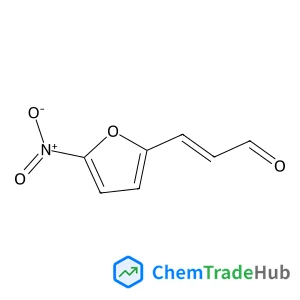

5-Amino-1-(2,4-difluorophenyl)-3-methyl-1H-pyrazole-4-carbonitrile
CAS Number:
1020057-92-4
Molecular Formula:
C11H8F2N4
Recommended Suppliers





Disclaimer
This page provides academic journal information for reference and research purposes only. We are not affiliated with any journal publishers and do not handle publication submissions. For publication-related inquiries, please contact the respective journal publishers directly.
If you notice any inaccuracies in the information displayed, please contact us at support@chemtradehub.com. We will promptly review and address your concerns.