












Composite hydrogels with temperature sensitive heterogeneities: influence of gel matrix on the volume phase transition of embedded poly-(N-isopropylacrylamide) microgels
Literature Information
Publication Date
2010-09-30
DOI
10.1039/C0CP01135E
Impact Factor
3.676
Authors
Judith Meid, Tatjana Friedrich, Bernd Tieke, Peter Lindner, Walter Richtering
View Original
Abstract
The thermo-responsive behaviour of poly-(N-isopropylacrylamide) (PNiPAM) microgels embedded in covalently cross-linked non-temperature-sensitive polyacrylamide (PAam) hydrogel matrixes with different compositions was investigated by using small angle neutron scattering (SANS). The composition of the composite hydrogel was varied by (a) increasing the cross-linker and acrylamide concentration leading to strong hydrogel matrixes and (b) by increasing the microgel concentration to obtain composite gels with an internal structure. Additionally we synthesized composite hydrogels by using γ-irradiation as initiation for the polymerisation. This leads to the formation of chemical bonds between the PNiPAM microgels and the surrounding polyacrylamide matrix. Thus it is possible to synthesize hydrogels without an additional cross-linker, as well as pure particle networks. Some samples were prepared at two different temperatures, below and above the volume phase transition temperature of PNiPAM, resulting in highly swollen or totally collapsed microgels during the incorporation step. The volume phase transition of microgels is not influenced by a hydrogel matrix with high acrylamide concentration independent of the preparation temperature. However, an increased cross-linker concentration leads to a corset like constraint on microgel swelling. Microgels, which are embedded in the collapsed state (at 50 °C), are not able to swell upon cooling, whereas microgels embedded in the swollen state can collapse upon heating. For samples with an increased microgel concentration, the close microgel packing was disturbed by the formation of the polyacrylamide matrix. The hydrogel matrix squeezes the microgels together and leads to partial aggregation. The experiments demonstrate how composite hydrogels with stimuli-sensitive heterogeneities can be prepared such that the full responsiveness of the embedded microgels is retained while the macroscopic dimensions of the gel are not affected by the volume phase transition of the microgels.
Related Literature
Direct electron irradiation of DNA in a fully aqueous environment. Damage determination in combination with Monte Carlo simulations
Maria-Astrid Schröter, Harald Seitz, Hans-Jörg Kunte, Tihomir Solomun
2016-12-14
Paper
DOI: 10.1039/C6CP07707B
ψ-Phosphorene: a new allotrope of phosphorene
Haidi Wang, Zhao Liu
2016-12-19
Paper
DOI: 10.1039/C6CP07944J
Hot electron-driven photocatalytic water splitting
Bingya Hou, Lang Shen, Haotian Shi, Rehan Kapadia
2017-01-05
Paper
DOI: 10.1039/C6CP07542H
A structure–property interplay between the width and height of cages and the static third order nonlinear optical responses for fullerenes: applying gamma density analysis
Li Wang, Jin-Ting Ye, He Chen, Zhen-Zhen Chen
2016-12-08
Paper
DOI: 10.1039/C6CP06651H
Raman optical activity of tetra-alanine in the poly(l-proline) II type peptide conformation
Masakazu Furuta, Tomotsumi Fujisawa, Hiroyasu Urago, Takahiro Eguchi, Takahito Shingae, Satoshi Takahashi, Ewan W. Blanch, Masashi Unno
2016-12-16
Paper
DOI: 10.1039/C6CP07828A
Luminophores of tunable colors from ternary Ag–In–S and quaternary Ag–In–Zn–S nanocrystals covering the visible to near-infrared spectral range
Grzegorz Gabka, Piotr Bujak, Kamil Kotwica, Andrzej Ostrowski, Wojciech Lisowski, Janusz W. Sobczak, Adam Pron
2016-12-02
Paper
DOI: 10.1039/C6CP07008F
In situ X-ray absorption near edge structure studies and charge transfer kinetics of Na6[V10O28] electrodes
Chun-Jern Pan, Ali Haider, Rami Al-Oweini, Ming-Hsien Lin, Ulrich Kortz
2017-01-16
Paper
DOI: 10.1039/C6CP05768C
Computational study of the interplay between intermolecular interactions and CO2 orientations in type I hydrates
M. Pérez-Rodríguez, A. Vidal-Vidal, J. M. Míguez, F. J. Blas, J.-P. Torré, M. M. Piñeiro
2016-12-12
Paper
DOI: 10.1039/C6CP07097C
You might also like
Compound Q&A
Is 2-(2-chloroacetamido)-3-phenylpropanoic acid (CAS: 7765-11-9) safe?
2-(2-Chloroacetamido)-3-phenylpropanoic acid (CAS: 7765-11-9) is generally consi...
7765-11-92-(2-chloroacetamido...
Compound Q&A
Is 2-(Benzyloxy)-5-bromobenzoic acid (CAS: 62176-31-2) safe?
2-(Benzyloxy)-5-bromobenzoic acid can be handled safely if appropriate precautio...
62176-31-22-(Benzyloxy)-5-brom...
Compound Q&A
What is (4-Methyl-1,2,5-oxadiazol-3-yl)methanamine hydrochloride (CAS: 1159825-48-5)?
(4-Methyl-1,2,5-oxadiazol-3-yl)methanamine hydrochloride is a chemical compound ...
1159825-48-5(4-Methyl-1,2,5-oxad...
Compound Q&A
What is 2-(5-Hexylthiophen-2-yl)-4,4,5,5-tetramethyl-1,3,2-dioxaborolane (CAS: 917985-54-7)?
2-(5-Hexylthiophen-2-yl)-4,4,5,5-tetramethyl-1,3,2-dioxaborolane (CAS: 917985-54...
917985-54-72-(5-Hexylthiophen-2...
Compound Q&A
Are there alternatives to 4-(8-Methyl-9H-1,3-dioxolo[4,5-h][2,3]benzodiazepin-5-yl)benzenamine (CAS: 102771-26-6) in synthesis?
While 4-(8-Methyl-9H-1,3-dioxolo[4,5-h][2,3]benzodiazepin-5-yl)benzenamine (CAS:...
102771-26-64-(8-Methyl-9H-1,3-d...
Compound Q&A
What is the market or research trend for tert-butyl 3-hydroxy-4,5,7,8-tetrahydro-2H-pyrazolo[3,4-d]azepine-6-carboxylate (CAS: 851376-80-2)?
The market for tert-butyl 3-hydroxy-4,5,7,8-tetrahydro-2H-pyrazolo[3,4-d]azepine...
851376-80-2tert-butyl 3-hydroxy...
Compound Q&A
How should waste containing 3,5-Diamino-1H-pyrazole-4-carbonitrile (CAS: 6844-58-2) be handled?
Waste containing 3,5-Diamino-1H-pyrazole-4-carbonitrile (CAS: 6844-58-2) should ...
6844-58-23,5-Diamino-1H-pyraz...
Compound Q&A
How is (6-Fluoro-3-pyridinyl)boronic acid (CAS: 351019-18-6) typically synthesized?
(6-Fluoro-3-pyridinyl)boronic acid can be synthesized through the reaction of 6-...
351019-18-6(6-Fluoro-3-pyridiny...
Compound Q&A
What industries use Dibenzyl carbonimidoylbiscarbamate (CAS: 10065-79-9)?
Dibenzyl carbonimidoylbiscarbamate (CAS: 10065-79-9) finds applications in vario...
10065-79-9Dibenzyl carbonimido...
Compound Q&A
What is the market or research trend for (beta,beta,2,3,4,5,6-~2~H_7_)Phenylalanine (CAS: 74228-83-4)?
The market for (beta,beta,2,3,4,5,6-~2~H_7_)Phenylalanine (CAS: 74228-83-4) is g...
74228-83-4(beta,beta,2,3,4,5,6...
Source Journal
Physical Chemistry Chemical Physics

CiteScore:
5.5
Self-citation Rate:
10.3%
Articles per Year:
3036
Physical Chemistry Chemical Physics (PCCP) is an international journal co-owned by 19 physical chemistry and physics societies from around the world. This journal publishes original, cutting-edge research in physical chemistry, chemical physics and biophysical chemistry. To be suitable for publication in PCCP, articles must include significant innovation and/or insight into physical chemistry; this is the most important criterion that reviewers and Editors will judge against when evaluating submissions. The journal has a broad scope and welcomes contributions spanning experiment, theory, computation and data science. Topical coverage includes spectroscopy, dynamics, kinetics, statistical mechanics, thermodynamics, electrochemistry, catalysis, surface science, quantum mechanics, quantum computing and machine learning. Interdisciplinary research areas such as polymers and soft matter, materials, nanoscience, energy, surfaces/interfaces, and biophysical chemistry are welcomed if they demonstrate significant innovation and/or insight into physical chemistry. Joined experimental/theoretical studies are particularly appreciated when complementary and based on up-to-date approaches.
Recommended Compounds
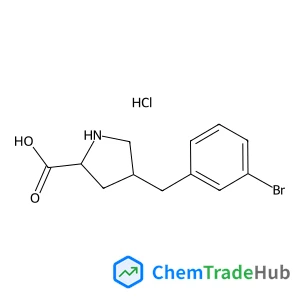
(2S,4R)-4-(3-Bromobenzyl)pyrrolidine-2-carboxylic acid hydrochloride
CAS Number:
1049734-10-2
Molecular Formula:
C12H15BrClNO2
![Heptadecanoic Acid 3-[2-[4-(6-Fluoro-1,2-benzisoxazol-3-yl)-1-piperidinyl]ethyl]-6,7,8,9-tetrahydro-2-methyl-4-oxo-4H-pyrido[1,2-a]pyrimidin-9-yl Ester structure](https://static.chemtradehub.com/structs/140/1404053-62-8-9da4.webp "Heptadecanoic Acid 3-[2-[4-(6-Fluoro-1,2-benzisoxazol-3-yl)-1-piperidinyl]ethyl]-6,7,8,9-tetrahydro-2-methyl-4-oxo-4H-pyrido[1,2-a]pyrimidin-9-yl Ester structure")
Heptadecanoic Acid 3-[2-[4-(6-Fluoro-1,2-benzisoxazol-3-yl)-1-piperidinyl]ethyl]-6,7,8,9-tetrahydro-2-methyl-4-oxo-4H-pyrido[1,2-a]pyrimidin-9-yl Ester
CAS Number:
1404053-62-8
Molecular Formula:
C40H59FN4O4
![2-[(E)-(2-Methoxyphenyl)diazenyl]-3-oxo-N-(2-oxo-2,3-dihydro-1H-benzimidazol-5-yl)butanamide structure](https://static.chemtradehub.com/structs/821/82199-12-0-f1d0.webp "2-[(E)-(2-Methoxyphenyl)diazenyl]-3-oxo-N-(2-oxo-2,3-dihydro-1H-benzimidazol-5-yl)butanamide structure")
2-[(E)-(2-Methoxyphenyl)diazenyl]-3-oxo-N-(2-oxo-2,3-dihydro-1H-benzimidazol-5-yl)butanamide
CAS Number:
82199-12-0
Molecular Formula:
C18H17N5O4
Recommended Suppliers






Disclaimer
This page provides academic journal information for reference and research purposes only. We are not affiliated with any journal publishers and do not handle publication submissions. For publication-related inquiries, please contact the respective journal publishers directly.
If you notice any inaccuracies in the information displayed, please contact us at support@chemtradehub.com. We will promptly review and address your concerns.