












Primary photodynamics of a biomimetic model of photoactive yellow protein (PYP)
Literature Information
Publication Date
2010-09-21
DOI
10.1039/C0CP00618A
Impact Factor
3.676
Authors
Pascale Changenet-Barret, Christina Loukou, Christian Ley, Fabien Lacombat, Pascal Plaza, Jean-Maurice Mallet, Monique M. Martin
View Original
Abstract
The present work aims at characterizing the photophysical behavior of a first biomimetic cyclodextrin model (CD-PYP1) of the photoactive site of photoactive yellow protein (PYP). The hydrophobic cyclodextrin cavity in which the chromophore self-includes, mimics its local environment within the protein. The photoinduced behavior of deprotonated CD-PYP1 (dp-CD-PYP1) has been probed by femtosecond transient-absorption spectroscopy and compared to those of the free deprotonated chromophore (pCT−) and of wild-type PYP. The excited-state deactivation of dp-CD-PYP1 is found to be non-exponential, with slower time components and higher quantum yield of fluorescence than pCT−. Like in PYP, the non-exponential decay is attributed to ground-state structural heterogeneities of the self-inclusion complexes. A long-lived photoproduct is observed in the transient spectra of dp-CD-PYP1 and identified as the cis isomer. The isomerization quantum yield of dp-CD-PYP1 is estimated to be about 4%, in contrast with the free chromophore in solution which does not photoisomerize at all. This demonstrates the active role of the cyclodextrin environment to promote the photoisomerization of the chromophore, as is thought to be the case for wild-type PYP. The effects of chromophore inclusion in the cyclodextrin on the photoinduced processes are rationalized within the framework of recent theoretical calculations involving two competitive deactivation channels: (i) trans to cis isomerization and (ii) rotation of the phenolate group, leading to trans ground-state recovery. Inclusion is proposed to favor isomerization by hindering the rotation of the phenolate group. Optimizing the structure of this first model in order to better reproduce the primary photoresponse of PYP thus appears very promising.
Related Literature
Unravelling the fundamentals of thermal and chemical expansion of BaCeO3 from first principles phonon calculations
Andreas Løken, Reidar Haugsrud, Tor S. Bjørheim
2016-10-19
Paper
DOI: 10.1039/C6CP05710A
Design, synthesis and DSSC performance of o-fluorine substituted phenylene spacer sensitizers: effect of TiO2 thickness variation
Telugu Bhim Raju, Jayraj V. Vaghasiya, Mohammad Adil Afroz, Saurabh S. Soni
2016-09-16
Paper
DOI: 10.1039/C6CP05641E
Should “anion–π interactions” be called “anion–σ interactions”? A revision of the origin of some hole-bonds and their nomenclature
2016-10-12
Communication
DOI: 10.1039/C6CP06416G
Accidental degeneracy in the spiropyran radical cation: charge transfer between two orthogonal rings inducing ultra-efficient reactivity
Luuk Kortekaas, Jorn D. Steen, Benjamin Lasorne, Wesley R. Browne
2016-10-27
Paper
DOI: 10.1039/C6CP06907J
Dynamic viscosity mapping of the oxidation of squalene aerosol particles
Athanasios Athanasiadis, Clare Fitzgerald, Nicholas M. Davidson, Chiara Giorio, Stanley W. Botchway, Andrew D. Ward, Markus Kalberer, Francis D. Pope, Marina K. Kuimova
2016-10-12
Paper
DOI: 10.1039/C6CP05674A
High-efficiency p–n junction oxide photoelectrodes for photoelectrochemical water splitting
Lu Yan
2016-10-19
Paper
DOI: 10.1039/C6CP06536H
Amyloid beta peptides inside a reconstituted cell-like liposomal system: aggregation, FRET, fluorescence oscillations and solvation dynamics
Somen Nandi, Rajdeep Chowdhury, Abhijit Saha, Kankan Bhattacharyya
2016-10-13
Paper
DOI: 10.1039/C6CP06143E
Catalytic aspects of metallophthalocyanines adsorbed on gold-electrode. Theoretical exploration of the binding nature role
Paulina Sierra-Rosales, Alvaro Muñoz-Castro, José Heráclito Zagal, Fernando Mendizábal
2016-10-04
Paper
DOI: 10.1039/C6CP06156G
Theoretical characterization of the conformational features of unnatural oligonucleotides containing a six nucleotide genetic alphabet
Wenjuan Wang, Xiehuang Sheng, Shaolong Zhang, Fang Huang, Chuanzhi Sun, Jianbiao Liu, Dezhan Chen
2016-09-20
Paper
DOI: 10.1039/C6CP05594J
Elucidation of the local dynamics of domain-III of human serum albumin over the ps–μs time regime using a new fluorescent label
Bhaswati Sengupta, Arusha Acharyya, Pratik Sen
2016-09-26
Paper
DOI: 10.1039/C6CP05743H
You might also like
Compound Q&A
How is Ethyl 4-chlorothieno[2,3-b]pyridine-5-carboxylate (CAS: 59713-58-5) typically synthesized?
Ethyl 4-chlorothieno[2,3-b]pyridine-5-carboxylate (CAS: 59713-58-5) can be synth...
59713-58-5Ethyl 4-chlorothieno...
Compound Q&A
What regulatory guidelines apply to 5-Methyl-1H-indole-3-carbaldehyde (CAS: 52562-50-2)?
5-Methyl-1H-indole-3-carbaldehyde (CAS: 52562-50-2) is subject to various regula...
52562-50-25-Methyl-1H-indole-3...
Compound Q&A
What are the physical and chemical properties of (1,3-Dimethyl-2,4-dioxo-1,2,3,4-tetrahydro-5-pyrimidinyl)boronic acid (CAS: 223418-73-3)?
(1,3-Dimethyl-2,4-dioxo-1,2,3,4-tetrahydro-5-pyrimidinyl)boronic acid is a white...
223418-73-3(1,3-Dimethyl-2,4-di...
Compound Q&A
How should waste containing Sulfocostunolide A (CAS: 1016983-51-9) be handled?
Waste containing Sulfocostunolide A (CAS: 1016983-51-9) should be handled with c...
1016983-51-9Sulfocostunolide A
Compound Q&A
What precautions should be taken when handling Murraxocin (CAS: 88478-44-8)?
When handling Murraxocin (CAS: 88478-44-8), ensure proper personal protective eq...
88478-44-8Murraxocin
Compound Q&A
What are the physical and chemical properties of Formvar (CAS: 63148-64-1)?
Formvar (CAS: 63148-64-1) is an alkyd resin characterized by a high molecular we...
63148-64-1Formvar(R)
Compound Q&A
Is (S)-4-benzyl-2-((benzyloxy)methyl)morpholine (CAS: 205242-66-6) safe?
(S)-4-benzyl-2-((benzyloxy)methyl)morpholine is generally safe when handled with...
205242-66-6(S)-4-benzyl-2-((ben...
Compound Q&A
What industries use Methyl 1-(5-bromo-2-pyrimidinyl)cyclopropanecarboxylate (CAS: 1447607-69-3)?
Methyl 1-(5-bromo-2-pyrimidinyl)cyclopropanecarboxylate (CAS: 1447607-69-3) is p...
1447607-69-3Methyl 1-(5-bromo-2-...
Compound Q&A
Is 2-Methyl-1-phenyl-1-propanamine hydrochloride (CAS: 24290-47-9) safe?
2-Methyl-1-phenyl-1-propanamine hydrochloride (CAS: 24290-47-9) is generally con...
24290-47-92-Methyl-1-phenyl-1-...
Compound Q&A
How is 3-(4-Bromophenyl)-2-methylpropanoic acid (CAS: 66735-01-1) typically synthesized?
3-(4-Bromophenyl)-2-methylpropanoic acid is synthesized through a multi-step pro...
66735-01-13-(4-Bromophenyl)-2-...
Source Journal
Physical Chemistry Chemical Physics

CiteScore:
5.5
Self-citation Rate:
10.3%
Articles per Year:
3036
Physical Chemistry Chemical Physics (PCCP) is an international journal co-owned by 19 physical chemistry and physics societies from around the world. This journal publishes original, cutting-edge research in physical chemistry, chemical physics and biophysical chemistry. To be suitable for publication in PCCP, articles must include significant innovation and/or insight into physical chemistry; this is the most important criterion that reviewers and Editors will judge against when evaluating submissions. The journal has a broad scope and welcomes contributions spanning experiment, theory, computation and data science. Topical coverage includes spectroscopy, dynamics, kinetics, statistical mechanics, thermodynamics, electrochemistry, catalysis, surface science, quantum mechanics, quantum computing and machine learning. Interdisciplinary research areas such as polymers and soft matter, materials, nanoscience, energy, surfaces/interfaces, and biophysical chemistry are welcomed if they demonstrate significant innovation and/or insight into physical chemistry. Joined experimental/theoretical studies are particularly appreciated when complementary and based on up-to-date approaches.
Recommended Compounds
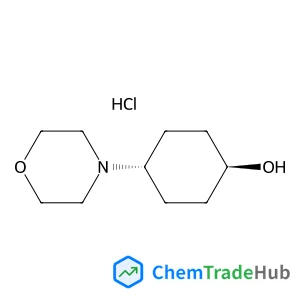
trans-4-(4-Morpholinyl)cyclohexanol hydrochloride (1:1)
CAS Number:
1588441-09-1
Molecular Formula:
C10H20ClNO2
![4-[(1-Methyl-1H-pyrrol-2-yl)methylene]-1,3(2H,4H)-isoquinolinedione structure](https://static.chemtradehub.com/structs/110/1104546-89-5-a600.webp "4-[(1-Methyl-1H-pyrrol-2-yl)methylene]-1,3(2H,4H)-isoquinolinedione structure")
4-[(1-Methyl-1H-pyrrol-2-yl)methylene]-1,3(2H,4H)-isoquinolinedione
CAS Number:
1104546-89-5
Molecular Formula:
C15H12N2O2
![2-(Methylsulfonyl)-2,4,5,6-tetrahydropyrrolo[3,4-c]pyrazole structure](https://static.chemtradehub.com/structs/122/1226781-80-1-09d5.webp "2-(Methylsulfonyl)-2,4,5,6-tetrahydropyrrolo[3,4-c]pyrazole structure")
2-(Methylsulfonyl)-2,4,5,6-tetrahydropyrrolo[3,4-c]pyrazole
CAS Number:
1226781-80-1
Molecular Formula:
C6H9N3O2S
Recommended Suppliers





Disclaimer
This page provides academic journal information for reference and research purposes only. We are not affiliated with any journal publishers and do not handle publication submissions. For publication-related inquiries, please contact the respective journal publishers directly.
If you notice any inaccuracies in the information displayed, please contact us at support@chemtradehub.com. We will promptly review and address your concerns.