












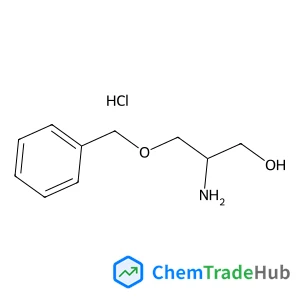
(R)-2-amino-3-(benzyloxy)propan-1-ol hydrochloride
CAS Number:
58577-95-0
Molecular Formula:
C10H16ClNO2
Lu Yan
Development of all oxide p–n junctions makes a significant advancement in photoelectrode catalysis functional materials. In this article, we report the preparation of TiO2 nanorod (NR)/Cu2O photoanodes via a simple hydrothermal method followed by an electrochemical deposition process. This facile synthesis route can simultaneously achieve uniform TiO2 NR/Cu2O composite nanostructures and obtain varied amounts of Cu2O by controlling the deposition time. The photocurrent density of TiO2 NR/Cu2O heterojunction photoanodes enhanced the photocatalytic activity with a photocurrent density of 5.25 mA cm−2 at 1.23 V versus RHE compared to pristine TiO2 NR photoanodes under the same conditions. It is demonstrated that the presence of Cu2O has played an important role in expanding the spectral response region and reducing the photogenerated charge recombination rate. More importantly, the results provide new insights into the performance of all oxide p–n junctions as photoanodes for PEC water splitting.
Barbora Prudilová, Eva Otyepková, Jindřich Fanfrlík, Drahomír Hnyk, Josef Holub, Martin Petr, Jan Filip, Klára Čépe, Petr Lazar, Michal Otyepka
DOI: 10.1039/C9CP00771G
Leonardo Belpassi, Luiz F. Roncaratti, Stefano Falcinelli, David Cappelletti, Fernando Pirani
DOI: 10.1039/C9CP00300B
Li Shao, Xiangyang Duan, Yan Li, Qingxin Yuan, Bo Gao, Honggang Ye, Pei Ding
DOI: 10.1039/C9CP00468H
Ik Jang Ko, Hyuna Lee, Jin Hwan Park, Gyeong Woo Kim, Raju Lampande, Ramchandra Pode, Jang Hyuk Kwon
DOI: 10.1039/C9CP00965E
Shuang Gao, Daniel A. Obenchain, Juncheng Lei, Gang Feng, Sven Herbers, Qian Gou, Jens-Uwe Grabow
DOI: 10.1039/C9CP00055K
Xi Cao, Rochan Sinha, Shuxia Tao
DOI: 10.1039/C8CP07684G
Monika Benkovičová, Ana Hološ, Peter Nádaždy, Yuriy Halahovets, Mário Kotlár, Jozef Kollár, Matej Jergel, Jaroslav Mosnáček, Ján Ivančo
DOI: 10.1039/C9CP02064K
Iuliana Mihalache, Eugeniu Vasile, Cristina Pachiu, Sandra A. V. Eremia, Antonio Radoi, Mihaela Kusko
DOI: 10.1039/C9CP00751B
Tilo Seydel, Robert M. Edkins, Katharina Edkins
DOI: 10.1039/C9CP01982K
Juan Carlos del Valle, Javier Catalán
DOI: 10.1039/C9CP00739C
Ethyl 4-chlorothieno[2,3-b]pyridine-5-carboxylate (CAS: 59713-58-5) can be synth...
5-Methyl-1H-indole-3-carbaldehyde (CAS: 52562-50-2) is subject to various regula...
(1,3-Dimethyl-2,4-dioxo-1,2,3,4-tetrahydro-5-pyrimidinyl)boronic acid is a white...
Waste containing Sulfocostunolide A (CAS: 1016983-51-9) should be handled with c...
When handling Murraxocin (CAS: 88478-44-8), ensure proper personal protective eq...
Formvar (CAS: 63148-64-1) is an alkyd resin characterized by a high molecular we...
(S)-4-benzyl-2-((benzyloxy)methyl)morpholine is generally safe when handled with...
Methyl 1-(5-bromo-2-pyrimidinyl)cyclopropanecarboxylate (CAS: 1447607-69-3) is p...
2-Methyl-1-phenyl-1-propanamine hydrochloride (CAS: 24290-47-9) is generally con...
3-(4-Bromophenyl)-2-methylpropanoic acid is synthesized through a multi-step pro...

Physical Chemistry Chemical Physics (PCCP) is an international journal co-owned by 19 physical chemistry and physics societies from around the world. This journal publishes original, cutting-edge research in physical chemistry, chemical physics and biophysical chemistry. To be suitable for publication in PCCP, articles must include significant innovation and/or insight into physical chemistry; this is the most important criterion that reviewers and Editors will judge against when evaluating submissions. The journal has a broad scope and welcomes contributions spanning experiment, theory, computation and data science. Topical coverage includes spectroscopy, dynamics, kinetics, statistical mechanics, thermodynamics, electrochemistry, catalysis, surface science, quantum mechanics, quantum computing and machine learning. Interdisciplinary research areas such as polymers and soft matter, materials, nanoscience, energy, surfaces/interfaces, and biophysical chemistry are welcomed if they demonstrate significant innovation and/or insight into physical chemistry. Joined experimental/theoretical studies are particularly appreciated when complementary and based on up-to-date approaches.
![9,9'-Spirobi[fluoren]-2-amine structure](https://static.chemtradehub.com/structs/118/118951-68-1-0d14.webp "9,9'-Spirobi[fluoren]-2-amine structure")
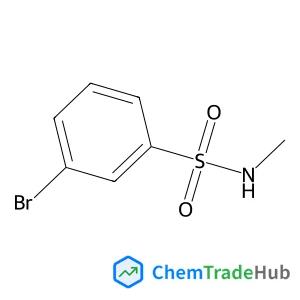
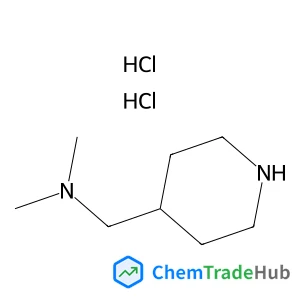
![4-{1-[4-(4,4,5,5-Tetramethyl-1,3,2-dioxaborolan-2-yl)phenyl]cyclopropyl}morpholine structure](https://static.chemtradehub.com/structs/120/1206594-08-2-7afb.webp "4-{1-[4-(4,4,5,5-Tetramethyl-1,3,2-dioxaborolan-2-yl)phenyl]cyclopropyl}morpholine structure")




