












Accidental degeneracy in the spiropyran radical cation: charge transfer between two orthogonal rings inducing ultra-efficient reactivity
Literature Information
Publication Date
2016-10-27
DOI
10.1039/C6CP06907J
Impact Factor
3.676
Authors
Luuk Kortekaas, Jorn D. Steen, Benjamin Lasorne, Wesley R. Browne
View Original
Abstract
Photochromism of the spiropyran radical cation to the corresponding merocyanine form is investigated by a combination of electrochemical oxidation, UV/vis absorption spectroscopy, spectroelectrochemistry and first-principles calculations (TD-DFT, CAS-SCF and CAS-PT2). First, we demonstrate that the ring-opening of mono-spiropyrans occurs upon one-electron oxidation and that it can be driven photochemically as well as thermally, with trapping of the merocyanine by protonation. Second, in order to explain this experimentally observed spectroelectrochemical behaviour we suggest a theoretical mechanism based on the reactivity of the two lowest electronic excited-states, which promotes effective electron transfer from the indoline (nitrogen-ring) to the pyran (oxygen-ring) moieties (and vice versa) through a conical intersection seam of degeneracy. Characterisation of the minimum energy conical intersection on this crossing revealed that it presents a rare diabatic trapping topology. The excited state molecule cannot escape from crossing the intersection seam due to the presence of only one degeneracy-lifting coordinate that efficiently channels into the formation of the merocyanine photoproduct, so giving rise to a “kitchen sink” funnel-like effect. Therefore, assuming rapid relaxation after vertical excitation to a higher electronic state, photoconversion cannot be avoided in the D1 electronic state, which rationalises the remarkably efficient visible light driven excited-state reactivity observed experimentally.
Related Literature
Development of a potential energy surface for the O3–Ar system: rovibrational states of the complex
Sangeeta Sur, Ernesto Quintas-Sánchez, Steve A. Ndengué, Richard Dawes
2019-03-12
Paper
DOI: 10.1039/C9CP01044K
Structural analysis of helicene molecules adsorbed on symmetric surfaces
Emilian Tuca, Irina Paci
2019-03-27
Paper
DOI: 10.1039/C9CP00284G
Spin trapping and flipping in FeCO through relativistic electron dynamics
Inga S. Ulusoy, Angela K. Wilson
2018-12-19
Paper
DOI: 10.1039/C8CP06583G
Size-controllable and uniform gold bumpy nanocubes for single-particle-level surface-enhanced Raman scattering sensitivity
Hyejin Chang, Yoon Young Lee, Hye Eun Lee, Hyo-Yong Ahn, Eunbyeol Ko, Ki Tae Nam
2019-03-15
Paper
DOI: 10.1039/C9CP00138G
Mechanisms of fluorescence quenching in prototypical aggregation-induced emission systems: excited state dynamics with TD-DFTB
Thierry Tran, Antonio Prlj, Kun-Han Lin, Daniel Hollas, Clémence Corminboeuf
2019-03-06
Paper
DOI: 10.1039/C9CP00691E
tert-Butyl peroxy radical: ground and first excited state energetics and fundamental frequencies
Peter R. Franke, Gary E. Douberly
2019-04-23
Paper
DOI: 10.1039/C9CP01476D
The importance of charge redistribution during electrochemical reactions: a density functional theory study of silver orthophosphate (Ag3PO4)
Xi Cao, Rochan Sinha, Shuxia Tao
2019-04-17
Paper
DOI: 10.1039/C8CP07684G
Dynamic exciton localisation in a pyrene–BODIPY–pyrene dye conjugate
Nina Auerhammer, Alexander Schulz, Alexander Schmiedel, Marco Holzapfel, Joscha Hoche, Roland Mitric, Christoph Lambert
2019-03-22
Paper
DOI: 10.1039/C9CP00908F
Calculation of apparent pKa values of saturated fatty acids with different lengths in DOPC phospholipid bilayers
Sanja Škulj, Mario Vazdar
2019-04-25
Paper
DOI: 10.1039/C9CP01204D
Mechanical properties of molybdenum diselenide revealed by molecular dynamics simulation and support vector machine
Xinyu Wang, Yang Hong, Man Wang, Gongming Xin, Yanan Yue, Jingchao Zhang
2019-02-11
Paper
DOI: 10.1039/C8CP07881E
You might also like
Compound Q&A
How is Ethyl 4-chlorothieno[2,3-b]pyridine-5-carboxylate (CAS: 59713-58-5) typically synthesized?
Ethyl 4-chlorothieno[2,3-b]pyridine-5-carboxylate (CAS: 59713-58-5) can be synth...
59713-58-5Ethyl 4-chlorothieno...
Compound Q&A
What regulatory guidelines apply to 5-Methyl-1H-indole-3-carbaldehyde (CAS: 52562-50-2)?
5-Methyl-1H-indole-3-carbaldehyde (CAS: 52562-50-2) is subject to various regula...
52562-50-25-Methyl-1H-indole-3...
Compound Q&A
What are the physical and chemical properties of (1,3-Dimethyl-2,4-dioxo-1,2,3,4-tetrahydro-5-pyrimidinyl)boronic acid (CAS: 223418-73-3)?
(1,3-Dimethyl-2,4-dioxo-1,2,3,4-tetrahydro-5-pyrimidinyl)boronic acid is a white...
223418-73-3(1,3-Dimethyl-2,4-di...
Compound Q&A
How should waste containing Sulfocostunolide A (CAS: 1016983-51-9) be handled?
Waste containing Sulfocostunolide A (CAS: 1016983-51-9) should be handled with c...
1016983-51-9Sulfocostunolide A
Compound Q&A
What precautions should be taken when handling Murraxocin (CAS: 88478-44-8)?
When handling Murraxocin (CAS: 88478-44-8), ensure proper personal protective eq...
88478-44-8Murraxocin
Compound Q&A
What are the physical and chemical properties of Formvar (CAS: 63148-64-1)?
Formvar (CAS: 63148-64-1) is an alkyd resin characterized by a high molecular we...
63148-64-1Formvar(R)
Compound Q&A
Is (S)-4-benzyl-2-((benzyloxy)methyl)morpholine (CAS: 205242-66-6) safe?
(S)-4-benzyl-2-((benzyloxy)methyl)morpholine is generally safe when handled with...
205242-66-6(S)-4-benzyl-2-((ben...
Compound Q&A
What industries use Methyl 1-(5-bromo-2-pyrimidinyl)cyclopropanecarboxylate (CAS: 1447607-69-3)?
Methyl 1-(5-bromo-2-pyrimidinyl)cyclopropanecarboxylate (CAS: 1447607-69-3) is p...
1447607-69-3Methyl 1-(5-bromo-2-...
Compound Q&A
Is 2-Methyl-1-phenyl-1-propanamine hydrochloride (CAS: 24290-47-9) safe?
2-Methyl-1-phenyl-1-propanamine hydrochloride (CAS: 24290-47-9) is generally con...
24290-47-92-Methyl-1-phenyl-1-...
Compound Q&A
How is 3-(4-Bromophenyl)-2-methylpropanoic acid (CAS: 66735-01-1) typically synthesized?
3-(4-Bromophenyl)-2-methylpropanoic acid is synthesized through a multi-step pro...
66735-01-13-(4-Bromophenyl)-2-...
Source Journal
Physical Chemistry Chemical Physics

CiteScore:
5.5
Self-citation Rate:
10.3%
Articles per Year:
3036
Physical Chemistry Chemical Physics (PCCP) is an international journal co-owned by 19 physical chemistry and physics societies from around the world. This journal publishes original, cutting-edge research in physical chemistry, chemical physics and biophysical chemistry. To be suitable for publication in PCCP, articles must include significant innovation and/or insight into physical chemistry; this is the most important criterion that reviewers and Editors will judge against when evaluating submissions. The journal has a broad scope and welcomes contributions spanning experiment, theory, computation and data science. Topical coverage includes spectroscopy, dynamics, kinetics, statistical mechanics, thermodynamics, electrochemistry, catalysis, surface science, quantum mechanics, quantum computing and machine learning. Interdisciplinary research areas such as polymers and soft matter, materials, nanoscience, energy, surfaces/interfaces, and biophysical chemistry are welcomed if they demonstrate significant innovation and/or insight into physical chemistry. Joined experimental/theoretical studies are particularly appreciated when complementary and based on up-to-date approaches.
Recommended Compounds
![4-{1-[4-(4,4,5,5-Tetramethyl-1,3,2-dioxaborolan-2-yl)phenyl]cyclopropyl}morpholine structure](https://static.chemtradehub.com/structs/120/1206594-08-2-7afb.webp "4-{1-[4-(4,4,5,5-Tetramethyl-1,3,2-dioxaborolan-2-yl)phenyl]cyclopropyl}morpholine structure")
4-{1-[4-(4,4,5,5-Tetramethyl-1,3,2-dioxaborolan-2-yl)phenyl]cyclopropyl}morpholine
CAS Number:
1206594-08-2
Molecular Formula:
C19H28BNO3
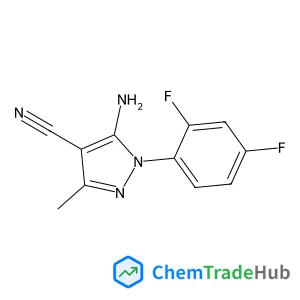
5-Amino-1-(2,4-difluorophenyl)-3-methyl-1H-pyrazole-4-carbonitrile
CAS Number:
1020057-92-4
Molecular Formula:
C11H8F2N4
Recommended Suppliers







Disclaimer
This page provides academic journal information for reference and research purposes only. We are not affiliated with any journal publishers and do not handle publication submissions. For publication-related inquiries, please contact the respective journal publishers directly.
If you notice any inaccuracies in the information displayed, please contact us at support@chemtradehub.com. We will promptly review and address your concerns.