


Symmetry forbidden vibronic spectra and internal conversion in benzene
Literature Information
Publication Date
2010-10-14
DOI
10.1039/C0CP00120A
Impact Factor
3.676
Authors
Jun Li, Xiang Yuan Li, Chao Yuan Zhu
View Original
Abstract
The spectra of symmetry-forbidden transitions and internal conversion were investigated in the present work. Temperature dependence was taken into account for the spectra simulation. The vibronic coupling, essential in the two processes, was calculated based on the Herzberg–Teller theory within the Born–Oppenheimer approximation. The approach was employed for the symmetry-forbidden absorption/fluorescence, and internal conversion between 11A1g and 11B2u states in benzene. Vibrational frequencies, normal coordinates, electronic transition dipole moments, and non-adiabatic coupling matrix elements were obtained by ab initio quantum chemical methods. The main peaks, along with the weak peaks, were in good agreement with the observed ones. The rate constant of the 11A1g ← 11B2u internal conversion was estimated within the order of 103 s−1. This could be regarded as the lower limit (about 4.8 × 10³ s−1) of the internal conversion. It is stressed that the distortion effect was taken into account both in the symmetry-forbidden absorption/fluorescence, and the rate constants of internal conversion in the present work. The distortion effects complicate the spectra and increase the rate constants of internal conversion.
Recommended Journals

Heterocyclic Communications

Construction and Building Materials

Main Group Metal Chemistry

Cement and Concrete Composites

Advanced Materials

Composite Interfaces

Bio-Medical Materials and Engineering

Journal of Computer-Aided Molecular Design

Advanced Composite Materials

Journal of Physical Organic Chemistry
Related Literature
Short-range ion dynamics in methylammonium lead iodide by multinuclear solid state NMR and 127I NQR
Alessandro Senocrate, Igor Moudrakovski, Joachim Maier
2018-07-11
Paper
DOI: 10.1039/C8CP01535J
Full-dimensional analytical potential energy surface describing the gas-phase Cl + C2H6 reaction and kinetics study of rate constants and kinetic isotope effects
Cipriano Rangel, Joaquin Espinosa-Garcia
2018-01-03
Paper
DOI: 10.1039/C7CP07592H
Polydopamine and eumelanin models in various oxidation states
Chun-Teh Chen, Markus J. Buehler
2018-10-09
Paper
DOI: 10.1039/C8CP05037F
Guanidinium/ammonium competition and proton transfer in the interaction of the amino acid arginine with the tetracarboxylic 18-crown-6 ionophore
Juan Ramón Avilés-Moreno, Giel Berden, Jos Oomens, Bruno Martínez-Haya
2018-01-05
Paper
DOI: 10.1039/C7CP07975C
Identification and composition of conformational isomers and their cations in crotonaldehyde by VUV-MATI spectroscopy
Sung Man Park, Hong Lae Kim, Chan Ho Kwon
2018-10-10
Paper
DOI: 10.1039/C8CP05577G
The ortho-benzyne cation is not planar
D. Kaiser, E. Reusch, P. Hemberger, A. Bodi, E. Welz, B. Engels, I. Fischer
2018-01-09
Paper
DOI: 10.1039/C7CP08055G
Probing the interaction between solid benzene and water using vacuum ultraviolet and infrared spectroscopy
Anita Dawes, Natalia Pascual, Nigel J. Mason, Sabrina Gärtner, Søren V. Hoffmann, Nykola C. Jones
2018-05-11
Paper
DOI: 10.1039/C8CP01228H
Ab initio calculations of heavy-actinide hexahalide compounds: do these heavy actinides behave like their isoelectronic lanthanide analogues?
Cristian Celis-Barros, María J. Beltrán-Leiva
2017-12-22
Paper
DOI: 10.1039/C7CP06585J
Remarkable hydrogen storage properties of MgH2 doped with VNbO5
Antonio Valentoni, Gabriele Mulas, Stefano Enzo
2018-01-05
Paper
DOI: 10.1039/C7CP07157D
Linear humidity response of carbon dot-modified molybdenum disulfide
Guili He, Da Huang, Zhi Yang, Yutong Han, Jun Hu, Nantao Hu, Yanjie Su, Zhihua Zhou, Yafei Zhang, Yan Zhang
2018-01-04
Paper
DOI: 10.1039/C7CP07125F
You might also like
Compound Q&A
Is 6-(3-Fluorophenyl)picolinic acid (CAS: 887982-40-3) safe?
6-(3-Fluorophenyl)picolinic acid is generally considered safe for laboratory use...
887982-40-36-(3-Fluorophenyl)pi...
Compound Q&A
What industries use (3R)-3-Pyrrolidinol (CAS: 2799-21-5)?
(3R)-3-Pyrrolidinol is used in the pharmaceutical industry as a precursor for dr...
2799-21-5(3R)-3-Pyrrolidinol
Compound Q&A
What precautions should be taken when handling (4R,5R)-4,5-Diethoxycarbonyl-2,2-dimethyldioxolane (CAS: 59779-75-8)?
When handling (4R,5R)-4,5-Diethoxycarbonyl-2,2-dimethyldioxolane (CAS: 59779-75-...
59779-75-8(4R,5R)-4,5-Diethoxy...
Compound Q&A
How is 1-(6-Chloroimidazo[1,2-b]pyridazin-3-yl)ethanone (CAS: 90734-71-7) typically synthesized?
1-(6-Chloroimidazo[1,2-b]pyridazin-3-yl)ethanone is often synthesized via a mult...
90734-71-71-(6-Chloroimidazo[1...
Compound Q&A
What is the market or research trend for N-Ethyl-3,4-dimethylbenzylamine (CAS: 39180-83-1)?
The market for N-Ethyl-3,4-dimethylbenzylamine (CAS: 39180-83-1) remains steady,...
39180-83-1N-Ethyl-3,4-dimethyl...
Compound Q&A
What is Tert-butyl 3-(pyrrolidin-1-yl)azetidine-1-carboxylate (CAS: 1019008-21-9)?
Tert-butyl 3-(pyrrolidin-1-yl)azetidine-1-carboxylate is a chemical compound wit...
1019008-21-9Tert-butyl 3-(pyrrol...
Compound Q&A
What regulatory guidelines apply to 1-Bromo-3-chloro-2,4-dimethoxybenzene (CAS: 1228956-93-1)?
1-Bromo-3-chloro-2,4-dimethoxybenzene (CAS: 1228956-93-1) falls under the classi...
1228956-93-11-Bromo-3-chloro-2,4...
Compound Q&A
Is 8-Bromo-2-methyl-3,4-dihydroisoquinolin-1(2H)-one (CAS: 1368622-07-4) safe?
The safety of 8-Bromo-2-methyl-3,4-dihydroisoquinolin-1(2H)-one (CAS: 1368622-07...
1368622-07-48-Bromo-2-methyl-3,4...
Compound Q&A
Is Benzyl [(3S)-2,6-dioxo-3-piperidinyl]carbamate (CAS: 22785-43-9) safe?
Benzyl [(3S)-2,6-dioxo-3-piperidinyl]carbamate is generally safe when handled wi...
22785-43-9Benzyl [(3S)-2,6-dio...
Compound Q&A
How should 1-{[4-(4,4,5,5-Tetramethyl-1,3,2-dioxaborolan-2-yl)phenyl]sulfonyl}pyrrolidine (CAS: 928657-21-0) be stored?
1-{[4-(4,4,5,5-Tetramethyl-1,3,2-dioxaborolan-2-yl)phenyl]sulfonyl}pyrrolidine s...
928657-21-01-{[4-(4,4,5,5-Tetra...
Source Journal
Physical Chemistry Chemical Physics

CiteScore:
5.5
Self-citation Rate:
10.3%
Articles per Year:
3036
Physical Chemistry Chemical Physics (PCCP) is an international journal co-owned by 19 physical chemistry and physics societies from around the world. This journal publishes original, cutting-edge research in physical chemistry, chemical physics and biophysical chemistry. To be suitable for publication in PCCP, articles must include significant innovation and/or insight into physical chemistry; this is the most important criterion that reviewers and Editors will judge against when evaluating submissions. The journal has a broad scope and welcomes contributions spanning experiment, theory, computation and data science. Topical coverage includes spectroscopy, dynamics, kinetics, statistical mechanics, thermodynamics, electrochemistry, catalysis, surface science, quantum mechanics, quantum computing and machine learning. Interdisciplinary research areas such as polymers and soft matter, materials, nanoscience, energy, surfaces/interfaces, and biophysical chemistry are welcomed if they demonstrate significant innovation and/or insight into physical chemistry. Joined experimental/theoretical studies are particularly appreciated when complementary and based on up-to-date approaches.
Recommended Compounds
![2-[({[(2-Methyl-2-propanyl)oxy]carbonyl}amino)methyl]isonicotinic acid structure](https://static.chemtradehub.com/structs/473/473924-63-9-973b.webp "2-[({[(2-Methyl-2-propanyl)oxy]carbonyl}amino)methyl]isonicotinic acid structure")
2-[({[(2-Methyl-2-propanyl)oxy]carbonyl}amino)methyl]isonicotinic acid
CAS Number:
473924-63-9
Molecular Formula:
C12H16N2O4
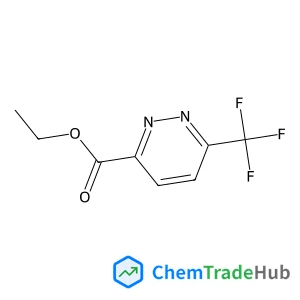
Ethyl 6-(trifluoromethyl)pyridazine-3-carboxylate
CAS Number:
1192155-06-8
Molecular Formula:
C8H7F3N2O2
Recommended Suppliers





Disclaimer
This page provides academic journal information for reference and research purposes only. We are not affiliated with any journal publishers and do not handle publication submissions. For publication-related inquiries, please contact the respective journal publishers directly.
If you notice any inaccuracies in the information displayed, please contact us at support@chemtradehub.com. We will promptly review and address your concerns.