


Push–pull electron effects of the complexant in a Li atom doped molecule with electride character: a new strategy to enhance the first hyperpolarizability
Literature Information
Publication Date
2010-07-07
DOI
10.1039/C004262E
Impact Factor
3.676
Authors
Zhong-Jun Zhou, Ying Li, Zhi-Ru Li, Rong Wang, Qing-Zhong Li, Yang Li, Feng-Yan Jia, Yin-Feng Wang, Zong-Jun Li, Jian-Bo Cheng, Chia-Chung Sun
View Original
Abstract
Differing from the reported strategy of push or pull electron effects of the complexant, a new strategy of the combination effects of both push and pull electrons of the complexant to enhance the first hyperpolarizability is performed with two Li atom doped complexants with a pair of difluorophenyl subunit rings. Large variance of the static first hyperpolarizabilities (β0) are exhibited at the MP2/6-311++G(d,p) level. The order of the β0 values is 2.9 ×10² (complexant UD) ≪ 5.9 × 10³ (LL) < 1.9 × 10⁴ (H-L) < 2.3 × 10⁴ (HF-L) < 3.2 × 10⁴ (L-L) < 7.8 × 10⁵ a.u. (HF-LF). It is found that HF-LF with the edge-type push–pull electronic effect of the complexant has the largest β0. The edge-type push–pull electronic effect brings a 2700 times increase in the β0 from the UD to HF-LF structure. It shows that the push–pull electronic effect is a highly effective strategy to enhance the β0 value. The β0 (7.8 × 10⁵ a.u.) of the HF-LF is considerable, due to the small ΔE and the very large Δμ (18.085 a.u.), which comes from the corresponding long-range charge transfer transition. It is interesting that a pair of subunit rings of the complexant may have different electronic effects. In H-L and HF-LF, the left ring with a longer distance between Li and the subunit ring exhibits a push electronic effect, while the right ring with the shorter distance exhibits a pull electronic effect. This work may contribute to the development of potential high-performance nonlinear optical materials.
Recommended Journals

Molecular Pharmacology

Journal of Physics and Chemistry of Solids

Journal of Medicinal Chemistry

Israel Journal of Chemistry

Helvetica Chimica Acta

Pure and Applied Chemistry

Science Progress

Journal of Heterocyclic Chemistry

Planta Medica

Proceedings of the National Academy of Sciences of the United States of America
Related Literature
Very general formation of tetrahydropterincation radicals during reaction of iron porphyrins with tetrahydropterins: model for the corresponding NO-synthase reaction
Delphine Mathieu, Yves-Michel Frapart, Jean François Bartoli, Jean-Luc Boucher, Pierrette Battioni, Daniel Mansuy
2003-12-02
Communication
DOI: 10.1039/B312441J
NMR and computational studies of the chemical reduction of [2.2]paracyclophane: formation of dianionic p-xylenyl oligomers
Ilya D. Gridnev, Fabio Pichierri
2003-11-26
Communication
DOI: 10.1039/B311885A
Electrospray mass spectrometry of undiluted ionic liquids
Glen P. Jackson, Douglas C. Duckworth
2004-01-27
Communication
DOI: 10.1039/B314754A
Synthesis and structural characterization of an azatitanacyclobutene: the key intermediate in the catalytic anti-Markovnikov addition of primary amines to α-alkynes
Benjamin D. Ward, Aline Maisse-François, Philip Mountford
2004-02-13
Communication
DOI: 10.1039/B316383K
Selective 1,3-complexation of p-tBu-calix[4]arene by [TiCp2Me2]
Colin L. Raston
2003-11-25
Communication
DOI: 10.1039/B309455C
The kinetics of propene and hexenepolymerisation with [(SBI)ZrR]+X−: evidence for monomer-dependent early or late transition states
Fuquan Song, Roderick D. Cannon, Manfred Bochmann
2004-02-05
Communication
DOI: 10.1039/B314845A
Noncontact two-color luminescence thermometry based on intramolecular luminophore cyclization within an ionic liquid
Gary A. Baker, Sheila N. Baker, T. Mark McCleskey
2003-10-30
Communication
DOI: 10.1039/B310459C
Alkoxyphenyl-substituted polyfluorene: a stable blue-light-emitting polymer with good solution processability
Ji-Hoon Lee, Do-Hoon Hwang
2003-10-11
Communication
DOI: 10.1039/B309006J
Alteration of room temperature phosphorescence lifetimes of quinine and quinidine by chiral additives
Yanli Wei, Wing-Hong Chan, Albert W. M. Lee, Carmen W. Huie
2003-12-18
Communication
DOI: 10.1039/B311667K
First total synthesis of murisolin
Naoyoshi Maezaki, Hiroaki Tominaga, Naoto Kojima, Minori Yanai, Daisuke Urabe, Tetsuaki Tanaka
2004-01-19
Communication
DOI: 10.1039/B312362F
You might also like
Compound Q&A
How should waste containing 2-Ethyl-4-Methyl-1H-Imidazole-5-Carbaldehyde (CAS: 88634-80-4) be handled?
Waste containing 2-Ethyl-4-Methyl-1H-Imidazole-5-Carbaldehyde (CAS: 88634-80-4) ...
88634-80-42-Ethyl-4-Methyl-1H-...
Compound Q&A
What industries use Triethoxy(octyl)silane (CAS: 1385031-14-0)?
Triethoxy(octyl)silane (CAS: 1385031-14-0) is widely used in the pharmaceuticals...
1385031-14-0Triethoxy(octyl)sila...
Compound Q&A
Are there alternatives to 3-iodo-7-nitro-1H-indazole (CAS: 864724-64-1) in synthesis?
Several alternatives to 3-iodo-7-nitro-1H-indazole (CAS: 864724-64-1) exist in t...
864724-64-13-iodo-7-nitro-1H-in...
Compound Q&A
Are there alternatives to Benzene, bis[(trimethoxysilyl)ethyl] (CAS: 266317-71-9) in synthesis?
Yes, there are alternatives to Benzene, bis[(trimethoxysilyl)ethyl] (CAS: 266317...
266317-71-9Benzene, bis[(trimet...
Compound Q&A
Is Isothiazole-3-carbonitrile (CAS: 1452-17-1) safe?
Isothiazole-3-carbonitrile (CAS: 1452-17-1) is generally considered safe when us...
1452-17-1Isothiazole-3-carbon...
Compound Q&A
Is (3-Chlorophenyl)methanol (CAS: 873-63-2) safe?
(3-Chlorophenyl)methanol (CAS: 873-63-2) is considered low to moderately toxic. ...
873-63-2(3-Chlorophenyl)meth...
Compound Q&A
How is (2S,3S)-2-Hydroxy-3-({[(2-methyl-2-propanyl)oxy]carbonyl}amino)-3-(2-naphthyl)propanoic acid (CAS: 959583-98-3) typically synthesized?
(2S,3S)-2-Hydroxy-3-({[(2-methyl-2-propanyl)oxy]carbonyl}amino)-3-(2-naphthyl)pr...
959583-98-3(2S,3S)-2-Hydroxy-3-...
Compound Q&A
What precautions should be taken when handling Methyl 2-(bromomethyl)-5-methoxybenzoate (CAS: 788081-99-2)?
Proper handling of methyl 2-(bromomethyl)-5-methoxybenzoate requires the use of ...
788081-99-2Methyl 2-(bromomethy...
Compound Q&A
What is 6,8-Dibromoimidazo[1,2-a]pyridine-2-carboxylic acid (CAS: 904805-36-3)?
6,8-Dibromoimidazo[1,2-a]pyridine-2-carboxylic acid (CAS: 904805-36-3) is an aro...
904805-36-36,8-Dibromoimidazo[1...
Compound Q&A
Is 3-Amino-5-bromo-2-pyridinecarbonitrile (CAS: 573675-27-1) safe?
3-Amino-5-bromo-2-pyridinecarbonitrile is considered safe when handled under pro...
573675-27-13-Amino-5-bromo-2-py...
Source Journal
Physical Chemistry Chemical Physics

CiteScore:
5.5
Self-citation Rate:
10.3%
Articles per Year:
3036
Physical Chemistry Chemical Physics (PCCP) is an international journal co-owned by 19 physical chemistry and physics societies from around the world. This journal publishes original, cutting-edge research in physical chemistry, chemical physics and biophysical chemistry. To be suitable for publication in PCCP, articles must include significant innovation and/or insight into physical chemistry; this is the most important criterion that reviewers and Editors will judge against when evaluating submissions. The journal has a broad scope and welcomes contributions spanning experiment, theory, computation and data science. Topical coverage includes spectroscopy, dynamics, kinetics, statistical mechanics, thermodynamics, electrochemistry, catalysis, surface science, quantum mechanics, quantum computing and machine learning. Interdisciplinary research areas such as polymers and soft matter, materials, nanoscience, energy, surfaces/interfaces, and biophysical chemistry are welcomed if they demonstrate significant innovation and/or insight into physical chemistry. Joined experimental/theoretical studies are particularly appreciated when complementary and based on up-to-date approaches.
Recommended Compounds


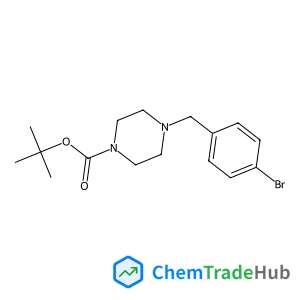
2-Methyl-2-propanyl 4-(4-bromobenzyl)-1-piperazinecarboxylate
CAS Number:
844891-10-7
Molecular Formula:
C16H23BrN2O2
![4-(4-{4-[4-Fluoro-3-(trifluoromethyl)phenyl]-1-methyl-1H-imidazol-2-yl}-1-piperidinyl)-1H-pyrazolo[3,4-d]pyrimidine 4-methylbenzenesulfonate (1:1) structure](https://static.chemtradehub.com/structs/108/1082949-68-5-00b6.webp "4-(4-{4-[4-Fluoro-3-(trifluoromethyl)phenyl]-1-methyl-1H-imidazol-2-yl}-1-piperidinyl)-1H-pyrazolo[3,4-d]pyrimidine 4-methylbenzenesulfonate (1:1) structure")
4-(4-{4-[4-Fluoro-3-(trifluoromethyl)phenyl]-1-methyl-1H-imidazol-2-yl}-1-piperidinyl)-1H-pyrazolo[3,4-d]pyrimidine 4-methylbenzenesulfonate (1:1)
CAS Number:
1082949-68-5
Molecular Formula:
C28H27F4N7O3S
Recommended Suppliers



Disclaimer
This page provides academic journal information for reference and research purposes only. We are not affiliated with any journal publishers and do not handle publication submissions. For publication-related inquiries, please contact the respective journal publishers directly.
If you notice any inaccuracies in the information displayed, please contact us at support@chemtradehub.com. We will promptly review and address your concerns.