


Detailed investigation of the propagation rate of urethane acrylates
Literature Information
Publication Date
2010-01-19
DOI
10.1039/B9PY00352E
Impact Factor
5.582
Authors
Christopher Barner-Kowollik, Francesca Bennet, Maria Schneider-Baumann, Dominik Voll, Thomas Rölle, Thomas Fäcke, Marc-Stephan Weiser, Friedrich-Karl Bruder, Tanja Junkers
View Original
Abstract
Temperature dependent propagation rate coefficients, kp, are determined for four acrylate monomers containing a carbamate moiety via the pulsed laser polymerization-size exclusion chromatography (PLP-SEC) technique. Therefore, the Mark–Houwink–Kuhn–Sakurada coefficients K and a of the respective polymers were additionally determined via triple-detection SEC. The monomers under investigation were synthesized from hydroxyethyl acrylate, hydroxyl(iso)propyl acrylate as well as phenyl isocyanate and hexyl isocyanate, respectively, in all four possible combinations. For 2-(phenylcarbamoyloxy)ethyl acrylate (PhCEA) an activation energy of 14.3 kJ mol−1 and a frequency factor of A = 1.2 × 10⁷ L·mol−1 s−1 are obtained for kp. The MHKS parameters for poly(PhCEA) are K = 8.3 × 10⁻⁵ dL g−1 and a = 0.677. For 2-(phenylcarbamoyloxy)isopropyl acrylate (PhCPA) an activation energy of 14.2 kJ mol−1 and a frequency factor of A = 4.9 × 10⁶ L mol−1 s−1 are found for kp and the MHKS parameters for poly(PhCPA) read K = 10.3 × 10⁻⁵ dL g−1 and a = 0.657. The activation parameters of kp of 2-(hexylcarbamoyloxy)ethyl acrylate (HCEA) are EA = 13.3 kJ mol−1 and A = 6.6 × 10⁶ L mol−1 s−1 with K = 36.0 × 10⁻⁵ dL g−1 and a = 0.552 for poly(HCEA). For 2-(hexylcarbamoyloxy)isopropyl acrylate (HCPA) EA is 14.1 kJ mol−1 and A = 6.6 × 10⁶ L mol−1 s−1 with K = 26.0 × 10⁻⁵ dL g−1 and a = 0.587 for poly(HCPA). All rate measurements were performed in 1 M solutions in butyl acetate. The fast propagating nature and reduced activation energy of the monomers may be understood on the basis of the increased nucleophilicity that is induced by the carbamate functionality present in all monomers. Rate-increasing effects from solvent polarity and/or from H-bonding can, however, not be excluded and might also contribute to the observed high propagation rates.
Recommended Journals

Planta Medica

Organic Preparations and Procedures International

Pharmacological Reviews

Journal of Medicinal Chemistry

Journal of Heterocyclic Chemistry

Pure and Applied Chemistry

Science

Russian Chemical Reviews

Proceedings of the National Academy of Sciences of the United States of America

Journal of Physics and Chemistry of Solids
Related Literature
UV light-driven asymmetric vinylogous aldol reaction of isatins with 2-alkylbenzophenones and enantioselective synthesis of 3-hydroxyoxindoles
Shixuan Cao, Jiatian Li, Taishan Yan, Jie Han
2021-12-07
Research Article
DOI: 10.1039/D1QO01555A
Synthesis and evaluation of N,S-compounds as chiral ligands for transfer hydrogenation of acetophenone
Jenny K. Ekegren, Peter Roth, Klas Källström, Tibor Tarnai, Pher G. Andersson
2002-12-09
Paper
DOI: 10.1039/B208907F
Synthesis of difluoromethylated enynes by the reaction of α-(trifluoromethyl)styrenes with terminal alkynes
Mingsheng Wu, Xianghu Zhao, Yisen Liu, Song Cao
2018-09-11
Paper
DOI: 10.1039/C8OB02117A
Synthesis of novel chiral phosphinocyrhetrenyloxazoline ligands and their application in asymmetric catalysis
Carsten Bolm, Li Xiao, Martin Kesselgruber
2002-11-26
Paper
DOI: 10.1039/B208345K
Copper-catalyzed oxidative multicomponent reaction: synthesis of imidazo fused heterocycles with molecular oxygen
Xianwei Li, Tianzhang Wang, Yu-Jing Lu, Shaomin Ji, Yanping Huo, Bifu Liu
2018-08-02
Paper
DOI: 10.1039/C8OB01532E
Synthesis of functionalized 3,2′-pyrrolidinyl spirooxindoles via domino 1,6-addition/annulation reactions of para-quinone methides and 3-chlorooxindoles
Xiaochen Tian, Yongxing Zhang
2021-12-20
Research Article
DOI: 10.1039/D1QO01605A
Radical addition to oximeethers for asymmetric synthesis of β-amino acid derivatives
Hideto Miyabe, Kayoko Fujii, Takeaki Naito
2002-12-16
Paper
DOI: 10.1039/B208823A
Correction: Synthesis of highly substituted 2-spiropiperidines
Samuel D. Griggs, Nathan Thompson, Daniel T. Tape, Marie Fabre, Paul A. Clarke
2018-08-10
Correction
DOI: 10.1039/C8OB90117A
Eugenunilones A–H: rearranged sesquiterpenoids from Eugenia uniflora
Mu Chen, Jia-Qing Cao, Song Ang, Ting-Ni Zeng, Ni-Ping Li, Tang-Jia Yang, Jun-Shan Liu, Yan Wu, Wen-Cai Ye, Lei Wang
2021-12-03
Research Article
DOI: 10.1039/D1QO01629F
Androsterone-based gels enable diastereospecific reductions and diastereoselective epoxidations of gelators
Tao Li, Yu Chen, Chunbao Li
2018-09-04
Paper
DOI: 10.1039/C8OB01505H
You might also like
Compound Q&A
What is the market or research trend for N-(4-Methoxybenzyl)-2-pyridinamine (CAS: 52818-63-0)?
N-(4-Methoxybenzyl)-2-pyridinamine (CAS: 52818-63-0) is increasingly being used ...
52818-63-0N-(4-Methoxybenzyl)-...
Compound Q&A
What precautions should be taken when handling Ethyl 4-(2-chlorophenyl)-1,3-thiazole-2-carboxylate (CAS: 1050507-06-6)?
When handling Ethyl 4-(2-chlorophenyl)-1,3-thiazole-2-carboxylate, appropriate p...
1050507-06-6Ethyl 4-(2-chlorophe...
Compound Q&A
What regulatory guidelines apply to diethyldiselane (CAS: 628-39-7)?
Diethyldiselane (CAS: 628-39-7) is classified under the Globally Harmonized Syst...
628-39-7Diethyldiselane
Compound Q&A
What is the market or research trend for oxocopper (CAS: 12053-18-8)?
The market for oxocopper (CAS: 12053-18-8) is primarily driven by its use in cat...
12053-18-8oxocopper; oxo-(oxoc...
Compound Q&A
What is the market or research trend for 5-{[(2-Methyl-2-propanyl)oxy]carbonyl}-5-azaspiro[2.4]heptane-7-carboxylic acid?
The market for 5-{[(2-Methyl-2-propanyl)oxy]carbonyl}-5-azaspiro[2.4]heptane-7-c...
1268519-54-55-{[(2-Methyl-2-prop...
Compound Q&A
What is 2-(1-Pyrrolidinyl)-4-pyridinamine (CAS: 35981-63-6)?
2-(1-Pyrrolidinyl)-4-pyridinamine is a chemical compound with the CAS number 359...
35981-63-62-(1-Pyrrolidinyl)-4...
Compound Q&A
What are the physical and chemical properties of 2-(3-Pyridinyl)-1-azabicyclo[2.2.2]octane (CAS: 91556-75-1)?
2-(3-Pyridinyl)-1-azabicyclo[2.2.2]octane (CAS: 91556-75-1) is a crystalline sol...
91556-75-12-(3-Pyridinyl)-1-az...
Compound Q&A
How is (S)-Alpha-allyl-proline hydrochloride (CAS: 129704-91-2) typically synthesized?
(S)-Alpha-allyl-proline hydrochloride is usually synthesized via a Wittig reacti...
129704-91-2(S)-Alpha-allyl-prol...
Compound Q&A
What is 3-Methyl-1,2-oxazole-5-carboxylic acid (CAS: 4857-42-5)?
3-Methyl-1,2-oxazole-5-carboxylic acid (CAS: 4857-42-5) is an organic compound w...
4857-42-53-Methyl-1,2-oxazole...
Compound Q&A
How is Lys-SMCC-DM1 (CAS: 1281816-04-3) typically synthesized?
Lys-SMCC-DM1 is synthesized via a multi-step process involving the coupling of S...
1281816-04-3Lys-SMCC-DM1
Source Journal
Polymer Chemistry

CiteScore:
8.6
Self-citation Rate:
7.3%
Articles per Year:
457
Polymer Chemistry welcomes submissions in all areas of polymer science that have a strong focus on macromolecular chemistry. Manuscripts may cover a broad range of fields, yet no direct application focus is required.
Recommended Compounds
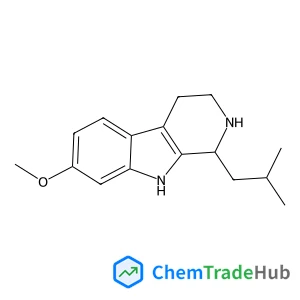
1-Isobutyl-7-methoxy-2,3,4,9-tetrahydro-1H-beta-carboline
CAS Number:
175975-76-5
Molecular Formula:
C16H22N2O
![1-(1-Benzyl-1,2,3,6-tetrahydropyridin-4-yl)-1H-benzo[d]imidazol-2(3H)-one structure](https://static.chemtradehub.com/structs/603/60373-71-9-7dfb.webp "1-(1-Benzyl-1,2,3,6-tetrahydropyridin-4-yl)-1H-benzo[d]imidazol-2(3H)-one structure")
1-(1-Benzyl-1,2,3,6-tetrahydropyridin-4-yl)-1H-benzo[d]imidazol-2(3H)-one
CAS Number:
60373-71-9
Molecular Formula:
C19H19N3O
![1-{3-[4-Amino-3-(4-phenoxyphenyl)-1H-pyrazolo[3,4-d]pyrimidin-1-yl]-1-piperidinyl}-2,3-dihydroxy-1-propanone structure](https://static.chemtradehub.com/structs/122/1226872-27-0-e037.webp "1-{3-[4-Amino-3-(4-phenoxyphenyl)-1H-pyrazolo[3,4-d]pyrimidin-1-yl]-1-piperidinyl}-2,3-dihydroxy-1-propanone structure")
1-{3-[4-Amino-3-(4-phenoxyphenyl)-1H-pyrazolo[3,4-d]pyrimidin-1-yl]-1-piperidinyl}-2,3-dihydroxy-1-propanone
CAS Number:
1226872-27-0
Molecular Formula:
C25H26N6O4
Recommended Suppliers







Disclaimer
This page provides academic journal information for reference and research purposes only. We are not affiliated with any journal publishers and do not handle publication submissions. For publication-related inquiries, please contact the respective journal publishers directly.
If you notice any inaccuracies in the information displayed, please contact us at support@chemtradehub.com. We will promptly review and address your concerns.