













Tailoring the synthesis of supported Pdcatalysts towards desired structure and size of metal particles
Literature Information
Publication Date
2010-03-23
DOI
10.1039/B920464D
Impact Factor
3.676
Authors
Gatla Suresh, Jörg Radnik, Venkata Narayana Kalevaru, Marga-Martina Pohl, Matthias Schneider, Bernhard Lücke, Andreas Martin, Neetika Madaan, Angelika Brückner
View Original
Abstract
In a systematic study, the influence of different preparation parameters on phase composition and size of metal crystallites and particles in Pd–Cu/TiO2 and Pd–Sb/TiO2 catalyst materials has been explored. Temperature and atmosphere of thermal pretreatment (pure He or 10% H2/He), nature of metal precursors (chlorides, nitrates or acetates) as well as of ammonium additives (ammonium sulfate, nitrate, carbonate) and urea were varied with the aim of tailoring the synthesis procedure for the preferential formation of metal particles with similar size and structure as observed recently in active catalysts after long-term equilibration under catalytic reaction conditions in acetoxylation of toluene to benzylacetate. Among the metal precursors and additives, the chloride metal precursors and (NH4)2SO4 were most suitable. Upon thermal pretreatment of Pd–Sb or Pd–Cu precursors, chloroamine complexes of Pd and Cu are formed, which decompose above 220 °C to metallic phases independent of the atmosphere. In He, metallic Pd particles were formed with both the co-components. In H2/He flow, Pd–Cu precursors were converted to core–shell particles with a Cu shell and a Pd core, while Sb1Pd1 and Sb7Pd20 alloy phases were formed in the presence of Sb. Metal crystallites of about 40 nm agglomerate to particles of up to 150 nm in He and to even larger size in H2/He.
Recommended Journals
Related Literature
Adsorption of linear aliphatic α,ω-dithiols on plasmonic metal nanoparticles: a structural study based on surface-enhanced Raman spectra
I. Izquierdo-Lorenzo, S. Sanchez-Cortes
2014-04-15
Paper
DOI: 10.1039/C4CP00424H
Selective oxidation of alcohols in aqueous suspensions of rhodium ion-modified TiO2 photocatalysts under irradiation of visible light
Sho Kitano, Atsuhiro Tanaka, Keiji Hashimoto, Hiroshi Kominami
2014-05-08
Paper
DOI: 10.1039/C4CP00863D
What makes zeolitic imidazolate frameworks hydrophobic or hydrophilic? The impact of geometry and functionalization on water adsorption
Aurélie U. Ortiz, Alexy P. Freitas, Anne Boutin, Alain H. Fuchs, François-Xavier Coudert
2013-12-20
Paper
DOI: 10.1039/C3CP54292K
Structural relaxation of vapor-deposited molecular glasses and supercooled liquids
Kikujiro Ishii, Hideyuki Nakayama
2014-04-24
Perspective
DOI: 10.1039/C4CP00458B
Introducing manganese complexes as redox mediators for dye-sensitized solar cells
Ishanie Rangeeka Perera, Wanchun Xiang, Torben Daeneke, Richard A. Evans, C. André Ohlin, Leone Spiccia
2013-12-06
Paper
DOI: 10.1039/C3CP54894E
Selective adsorption of bismuth telluride nanoplatelets through electrostatic attraction
2014-04-23
Paper
DOI: 10.1039/C4CP00690A
Optical response of quantum-sized Ag and Au clusters – cage vs. compact structures and the remarkable insensitivity to compression
Robert L. Whetten, Xóchitl López-Lozano
2014-05-07
Paper
DOI: 10.1039/C4CP01277A
Self-healing mechanism of metallopolymers investigated by QM/MM simulations and Raman spectroscopy
Julien Guthmuller
2014-05-15
Paper
DOI: 10.1039/C4CP00562G
Kink energy and kink dipole moments on vicinal Au(001) in halide electrolytes
M. Al-Shakran, G. Beltramo, M. Giesen
2014-03-17
Paper
DOI: 10.1039/C4CP00448E
Non-innocent side-chains with dipole moments in organic solar cells improve charge separation
Hilde D. de Gier, Ria Broer
2014-05-06
Paper
DOI: 10.1039/C4CP01070A
You might also like
Compound Q&A
What precautions should be taken when handling 2-Chloro-1,2-bis(4-methylphenyl)ethanone (CAS: 71193-32-3)?
When handling 2-Chloro-1,2-bis(4-methylphenyl)ethanone (CAS: 71193-32-3), it is ...
71193-32-32-Chloro-1,2-bis(4-m...
Compound Q&A
What industries use 4-Ethoxy-3-(5-methyl-4-oxo-7-propyl-1,4-dihydroimidazo[5,1-f][1,2,4]triazin-2-yl)benzenesulfonyl chloride (CAS: 224789-26-8)?
4-Ethoxy-3-(5-methyl-4-oxo-7-propyl-1,4-dihydroimidazo[5,1-f][1,2,4]triazin-2-yl...
224789-26-84-Ethoxy-3-(5-methyl...
Compound Q&A
How should Methyl 3-Oxo-4-Androsten-17-Carboxylate (CAS: 2681-55-2) be stored?
Methyl 3-Oxo-4-Androsten-17-Carboxylate (CAS: 2681-55-2) should be stored in a c...
2681-55-2Methyl 3-Oxo-4-Andro...
Compound Q&A
What are the main uses of (R)-3-Amino-4-(3-hexylphenylamino)-4-oxobutylphosphonic acid (CAS: 909725-61-7)?
(R)-3-Amino-4-(3-hexylphenylamino)-4-oxobutylphosphonic acid is primarily used i...
909725-61-7(R)-3-Amino-4-(3-hex...
Compound Q&A
What regulatory guidelines apply to 2-Methyl-2-propanyl 3-amino-3-carbamoyl-1-azetidinecarboxylate (CAS: 1254120-14-3)?
2-Methyl-2-propanyl 3-amino-3-carbamoyl-1-azetidinecarboxylate (CAS: 1254120-14-...
1254120-14-32-Methyl-2-propanyl ...
Compound Q&A
Are there alternatives to (E)-4-(tert-Butoxy)-4-oxobut-2-enoic acid (CAS: 135355-96-3) in synthesis?
There are alternative reagents that can be used in synthesis instead of (E)-4-(t...
135355-96-3(E)-4-(tert-Butoxy)-...
Compound Q&A
What are the physical and chemical properties of [2-(3-Chlorophenyl)-1,3-thiazol-4-yl]methanol (CAS: 121202-20-8)?
[2-(3-Chlorophenyl)-1,3-thiazol-4-yl]methanol (CAS: 121202-20-8) is a crystallin...
121202-20-8[2-(3-Chlorophenyl)-...
Compound Q&A
What is the market or research trend for Methyl (2S)-[(4S)-2,2-dimethyl-1,3-dioxolan-4-yl]{[(4-methylphenyl)sulfonyl]oxy}acetate (CAS: 166249-17-8)?
The market and research trends for Methyl (2S)-[(4S)-2,2-dimethyl-1,3-dioxolan-4...
166249-17-8Methyl (2S)-[(4S)-2,...
Compound Q&A
What is the market or research trend for 1-Bromo-2-isocyanatoethane (CAS: 42865-19-0)?
The market for 1-Bromo-2-isocyanatoethane (CAS: 42865-19-0) is driven by its use...
42865-19-01-Bromo-2-isocyanato...
Compound Q&A
What are the main uses of 4-Nitro-D-phenylalanine hydrochloride (CAS: 147065-06-3)?
4-Nitro-D-phenylalanine hydrochloride (CAS: 147065-06-3) is primarily used in re...
147065-06-34-Nitro-D-phenylalan...
Source Journal
Physical Chemistry Chemical Physics

CiteScore:
5.5
Self-citation Rate:
10.3%
Articles per Year:
3036
Physical Chemistry Chemical Physics (PCCP) is an international journal co-owned by 19 physical chemistry and physics societies from around the world. This journal publishes original, cutting-edge research in physical chemistry, chemical physics and biophysical chemistry. To be suitable for publication in PCCP, articles must include significant innovation and/or insight into physical chemistry; this is the most important criterion that reviewers and Editors will judge against when evaluating submissions. The journal has a broad scope and welcomes contributions spanning experiment, theory, computation and data science. Topical coverage includes spectroscopy, dynamics, kinetics, statistical mechanics, thermodynamics, electrochemistry, catalysis, surface science, quantum mechanics, quantum computing and machine learning. Interdisciplinary research areas such as polymers and soft matter, materials, nanoscience, energy, surfaces/interfaces, and biophysical chemistry are welcomed if they demonstrate significant innovation and/or insight into physical chemistry. Joined experimental/theoretical studies are particularly appreciated when complementary and based on up-to-date approaches.
Recommended Compounds
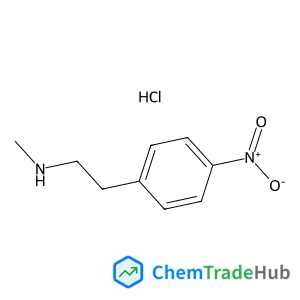
N-Methyl-2-(4-nitrophenyl)ethanamine hydrochloride (1:1)
CAS Number:
166943-39-1
Molecular Formula:
C9H13ClN2O2

Recommended Suppliers




Disclaimer
This page provides academic journal information for reference and research purposes only. We are not affiliated with any journal publishers and do not handle publication submissions. For publication-related inquiries, please contact the respective journal publishers directly.
If you notice any inaccuracies in the information displayed, please contact us at support@chemtradehub.com. We will promptly review and address your concerns.