












Selective oxidation of alcohols in aqueous suspensions of rhodium ion-modified TiO2 photocatalysts under irradiation of visible light
Literature Information
Publication Date
2014-05-08
DOI
10.1039/C4CP00863D
Impact Factor
3.676
Authors
Sho Kitano, Atsuhiro Tanaka, Keiji Hashimoto, Hiroshi Kominami
View Original
Abstract
Photocatalytic oxidation of benzyl alcohols in aqueous suspensions of rhodium ion-modified titanium(IV) oxide (Rh3+/TiO2) in the presence of O2 under irradiation of visible light was examined. In the photocatalytic oxidation of benzyl alcohol, benzaldehyde was obtained in a high yield (97%) with >99% conversion of benzyl alcohol. Rh3+/TiO2 photocatalysts having various physical properties were prepared using commercially available TiO2 powders as supporting materials for Rh3+ to investigate the effect(s) of physical properties of TiO2 on photocatalytic activities of Rh3+/TiO2 for selective oxidation. Adsorption properties of benzyl alcohol, benzaldehyde and benzoic acid on TiO2 were also investigated to understand the high benzaldehyde selectivity over the Rh3+/TiO2 photocatalyst. The reaction mechanism was discussed on the basis of the results of photocatalytic oxidation of various p-substituted benzyl alcohol derivatives.
Related Literature
Computational investigation of structural and electronic properties of aqueous interfaces of GaN, ZnO, and a GaN/ZnO alloy
Neerav Kharche, Mark S. Hybertsen, James T. Muckerman
2014-03-24
Paper
DOI: 10.1039/C4CP00486H
Spiropyran as a reusable chemosensor for selective colorimetric detection of aromatic thiols
Yasuhiro Shiraishi, Kohei Yamamoto, Shigehiro Sumiya, Takayuki Hirai
2014-02-19
Paper
DOI: 10.1039/C3CP55478C
Understanding the chemical dynamics of the reactions of dicarbon with 1-butyne, 2-butyne, and 1,2-butadiene – toward the formation of resonantly stabilized free radicals
Dorian S. N. Parker, Surajit Maity, Beni B. Dangi, Ralf I. Kaiser, Alexander Landera, Alexander M. Mebel
2014-05-02
Paper
DOI: 10.1039/C4CP00639A
Electron transport in MoWSeS monolayers in the presence of an external electric field
Nourdine Zibouche, Pier Philipsen, Thomas Heine, Agnieszka Kuc
2014-04-11
Paper
DOI: 10.1039/C4CP00966E
13C NMR relaxation and reorientation dynamics in imidazolium-based ionic liquids: revising interpretation
Petri Ingman, Erkki Lähderanta
2014-04-09
Paper
DOI: 10.1039/C4CP00637B
Silicon based tandem cells: novel photocathodes for hydrogen production
W. Calvet, E. Murugasen, J. Klett, B. Kaiser, W. Jaegermann, F. Finger, S. Hoch, M. Blug, J. Busse
2014-03-12
Paper
DOI: 10.1039/C3CP55198A
Excitonic energy transfer in polymer wrapped carbon nanotubes in gradually grown nanoassemblies
Victor A. Karachevtsev, Alexander M. Plokhotnichenko, Victor S. Leontiev
2014-04-14
Paper
DOI: 10.1039/C4CP00776J
Perfect spin filtering and large spin thermoelectric effects in organic transition-metal molecular junctions
X. F. Yang, Y. S. Liu, X. Zhang, L. P. Zhou, X. F. Wang, F. Chi, J. F. Feng
2014-04-15
Paper
DOI: 10.1039/C4CP00390J
Selective oxidation of alcohols in aqueous suspensions of rhodium ion-modified TiO2 photocatalysts under irradiation of visible light
Sho Kitano, Atsuhiro Tanaka, Keiji Hashimoto, Hiroshi Kominami
2014-05-08
Paper
DOI: 10.1039/C4CP00863D
The effect of atomic ions on model σ-hole bonded complexes of AH3Y (A = C, Si, Ge; Y = F, Cl, Br)
Sean A. C. McDowell, Jerelle A. Joseph
2014-04-07
Paper
DOI: 10.1039/C4CP01074D
You might also like
Compound Q&A
What precautions should be taken when handling 4-Methyl-6-(trifluoromethyl)quinoline (CAS: 40716-16-3)?
When handling 4-Methyl-6-(trifluoromethyl)quinoline (CAS: 40716-16-3), safety go...
40716-16-34-Methyl-6-(trifluor...
Compound Q&A
What is 4-(3,5-Difluorophenyl)aniline (CAS: 405058-00-6)?
4-(3,5-Difluorophenyl)aniline is an aromatic organic compound with the CAS numbe...
405058-00-64-(3,5-Difluoropheny...
Compound Q&A
How is 5-{[4-(Trifluoromethyl)phenyl]sulfanyl}-1,2,3-thiadiazole-4-carboxylic acid (CAS: 338982-07-3) typically synthesized?
5-{[4-(Trifluoromethyl)phenyl]sulfanyl}-1,2,3-thiadiazole-4-carboxylic acid can ...
338982-07-35-{[4-(Trifluorometh...
Compound Q&A
What is the market or research trend for 4-Benzylaniline hydrochloride (CAS: 6317-57-3)?
The market for 4-Benzylaniline hydrochloride (CAS: 6317-57-3) is steadily growin...
6317-57-34-Benzylaniline hydr...
Compound Q&A
Is [3-(Diethylsulfamoyl)phenyl]boronic acid (CAS: 871329-58-7) safe?
[3-(Diethylsulfamoyl)phenyl]boronic acid is generally considered safe when handl...
871329-58-7[3-(Diethylsulfamoyl...
Compound Q&A
What are the main uses of 3-Bromo-2,5-dimethoxyaniline (CAS: 115929-62-9)?
3-Bromo-2,5-dimethoxyaniline is mainly used in the pharmaceutical and chemical i...
115929-62-93-Bromo-2,5-dimethox...
Compound Q&A
What regulatory guidelines apply to N-Methyl-1-(5-methyl-1H-indol-3-yl)methanamine (CAS: 915922-67-7)?
N-Methyl-1-(5-methyl-1H-indol-3-yl)methanamine (CAS: 915922-67-7) is subject to ...
915922-67-7N-Methyl-1-(5-methyl...
Compound Q&A
What industries use Carbamic acid, N-[(5S)-5,6-diamino-6-oxohexyl]-, 1,1-dimethylethyl ester (CAS: 24828-96-4)?
This compound is primarily used in the pharmaceutical industry for the synthesis...
24828-96-4Carbamic acid, N-[(5...
Compound Q&A
How should 2-Methyl-2-propanyl [(1S,3R)-3-aminocyclohexyl]carbamate (CAS: 1298101-47-9) be stored?
2-Methyl-2-propanyl [(1S,3R)-3-aminocyclohexyl]carbamate (CAS: 1298101-47-9) sho...
1298101-47-92-Methyl-2-propanyl ...
Compound Q&A
What industries use Ethyl 2-bromo-4,4,4-trifluorobutanoate (CAS: 367-33-9)?
Ethyl 2-bromo-4,4,4-trifluorobutanoate (CAS: 367-33-9) is utilized in the pharma...
367-33-9Ethyl 2-bromo-4,4,4-...
Source Journal
Physical Chemistry Chemical Physics

CiteScore:
5.5
Self-citation Rate:
10.3%
Articles per Year:
3036
Physical Chemistry Chemical Physics (PCCP) is an international journal co-owned by 19 physical chemistry and physics societies from around the world. This journal publishes original, cutting-edge research in physical chemistry, chemical physics and biophysical chemistry. To be suitable for publication in PCCP, articles must include significant innovation and/or insight into physical chemistry; this is the most important criterion that reviewers and Editors will judge against when evaluating submissions. The journal has a broad scope and welcomes contributions spanning experiment, theory, computation and data science. Topical coverage includes spectroscopy, dynamics, kinetics, statistical mechanics, thermodynamics, electrochemistry, catalysis, surface science, quantum mechanics, quantum computing and machine learning. Interdisciplinary research areas such as polymers and soft matter, materials, nanoscience, energy, surfaces/interfaces, and biophysical chemistry are welcomed if they demonstrate significant innovation and/or insight into physical chemistry. Joined experimental/theoretical studies are particularly appreciated when complementary and based on up-to-date approaches.
Recommended Compounds
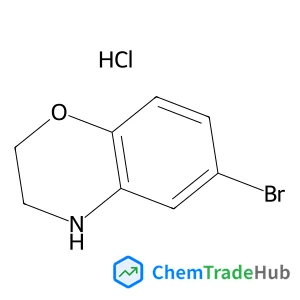
6-Bromo-3,4-dihydro-2H-1,4-benzoxazine hydrochloride (1:1)
CAS Number:
1260803-10-8
Molecular Formula:
C8H9BrClNO

![1-[(4-Methylphenyl)sulfonyl]-3-(4,4,5,5-tetramethyl-1,3,2-dioxaborolan-2-yl)-1H-pyrrolo[2,3-b]pyridine-5-carbonitrile structure](https://static.chemtradehub.com/structs/143/1434747-57-5-fc0d.webp "1-[(4-Methylphenyl)sulfonyl]-3-(4,4,5,5-tetramethyl-1,3,2-dioxaborolan-2-yl)-1H-pyrrolo[2,3-b]pyridine-5-carbonitrile structure")
1-[(4-Methylphenyl)sulfonyl]-3-(4,4,5,5-tetramethyl-1,3,2-dioxaborolan-2-yl)-1H-pyrrolo[2,3-b]pyridine-5-carbonitrile
CAS Number:
1434747-57-5
Molecular Formula:
C21H22BN3O4S
Recommended Suppliers




Disclaimer
This page provides academic journal information for reference and research purposes only. We are not affiliated with any journal publishers and do not handle publication submissions. For publication-related inquiries, please contact the respective journal publishers directly.
If you notice any inaccuracies in the information displayed, please contact us at support@chemtradehub.com. We will promptly review and address your concerns.