












Self-healing mechanism of metallopolymers investigated by QM/MM simulations and Raman spectroscopy
Literature Information
Publication Date
2014-05-15
DOI
10.1039/C4CP00562G
Impact Factor
3.676
Authors
Julien Guthmuller
View Original
Abstract
The thermally induced self-healing mechanisms in metallopolymers based on bisterpyridine complexes of iron(II) sulfate and cadmium(II) bromide, respectively, were studied by means of combined quantum mechanical/molecular mechanical (QM/MM) simulations and Raman spectroscopy. Two possible healing schemes, one based on a decomplexation of the cross-linking complexes and a second one relying on the dissociation of ionic clusters, have been addressed. Temperature-dependent Raman spectroscopy displayed bathochromic shifts of the Raman intensity pattern upon heating. QM/MM simulations on the polymer models assign these alterations to a partial decomplexation of the metal terpyridine complexes, i.e. signals originating from free terpyridine ligands increase upon heating. Thus, a healing mechanisms based on partial decomplexation of the cross-linking complexes is suggested. The possibility that the dissociation of ionic clusters, which are assumed to be present in this class of self-healing polymers, is also responsible for the self-healing process was investigated as well. However, such calculations on model clusters revealed relatively strong binding of the clusters, which renders reversible cluster breaking and reformation upon temperature cycling in the range up to 100 째C unlikely.
Related Literature
Synthesis and fluorescence properties of novel squarylium–boron complexes
Yasuhiro Kubota, Masahiro Tsukamoto, Katsuhiro Ohnishi, Jiye Jin, Kazumasa Funabiki, Masaki Matsui
2017-04-28
Research Article
DOI: 10.1039/C7QO00225D
Synthetic strategies towards mycolactone A/B, an exotoxin secreted by Mycobacterium ulcerans
Sarah Saint-Auret, Hajer Abdelkafi, Didier Le Nouen, Philippe Bisseret, Nicolas Blanchard
2017-08-28
Research Article
DOI: 10.1039/C7QO00608J
Efficient trifluoromethylation via the cyclopropanation of allenes and subsequent C–C bond cleavage
Yang Tang, Qiong Yu
2017-06-23
Research Article
DOI: 10.1039/C7QO00419B
Photoredox catalytic intramolecular imine C–H bond functionalization using ligand free Cu(ii) salts
Xuhong Ren, Qiyang Wang, Wenjia Yu, Xiaoyu Zhan, Yishan Yao, Bingjie Qin, Mingxin Dong, Xinhua He
2017-07-06
Research Article
DOI: 10.1039/C7QO00348J
Photoredox 1,2-dicarbofunctionalization of unactivated alkenes via tandem radical difluoroalkylation and alkynyl migration
Jing Liu, Weipeng Li, Jin Xie
2017-11-06
Research Article
DOI: 10.1039/C7QO00808B
Silver-mediated fluorination of alkyl iodides with TMSCF3 as the fluorinating agent
Liyan Wang, Xiaohuan Jiang, Pingping Tang
2017-06-27
Research Article
DOI: 10.1039/C7QO00450H
Copper(ii) catalyzed domino synthesis of quinoline derivatives from arylamines and alkynes
Huimin Dai, Chun-Xiao Li, Chao Yu, Zihao Wang, Hong Yan, Changsheng Lu
2017-07-04
Research Article
DOI: 10.1039/C7QO00333A
Correction: Total synthesis of natural products via iridium catalysis
Changchun Yuan, Bo Liu
2018-01-31
Correction
DOI: 10.1039/C8QO90004C
You might also like
Compound Q&A
What precautions should be taken when handling 4-Methyl-6-(trifluoromethyl)quinoline (CAS: 40716-16-3)?
When handling 4-Methyl-6-(trifluoromethyl)quinoline (CAS: 40716-16-3), safety go...
40716-16-34-Methyl-6-(trifluor...
Compound Q&A
What is 4-(3,5-Difluorophenyl)aniline (CAS: 405058-00-6)?
4-(3,5-Difluorophenyl)aniline is an aromatic organic compound with the CAS numbe...
405058-00-64-(3,5-Difluoropheny...
Compound Q&A
How is 5-{[4-(Trifluoromethyl)phenyl]sulfanyl}-1,2,3-thiadiazole-4-carboxylic acid (CAS: 338982-07-3) typically synthesized?
5-{[4-(Trifluoromethyl)phenyl]sulfanyl}-1,2,3-thiadiazole-4-carboxylic acid can ...
338982-07-35-{[4-(Trifluorometh...
Compound Q&A
What is the market or research trend for 4-Benzylaniline hydrochloride (CAS: 6317-57-3)?
The market for 4-Benzylaniline hydrochloride (CAS: 6317-57-3) is steadily growin...
6317-57-34-Benzylaniline hydr...
Compound Q&A
Is [3-(Diethylsulfamoyl)phenyl]boronic acid (CAS: 871329-58-7) safe?
[3-(Diethylsulfamoyl)phenyl]boronic acid is generally considered safe when handl...
871329-58-7[3-(Diethylsulfamoyl...
Compound Q&A
What are the main uses of 3-Bromo-2,5-dimethoxyaniline (CAS: 115929-62-9)?
3-Bromo-2,5-dimethoxyaniline is mainly used in the pharmaceutical and chemical i...
115929-62-93-Bromo-2,5-dimethox...
Compound Q&A
What regulatory guidelines apply to N-Methyl-1-(5-methyl-1H-indol-3-yl)methanamine (CAS: 915922-67-7)?
N-Methyl-1-(5-methyl-1H-indol-3-yl)methanamine (CAS: 915922-67-7) is subject to ...
915922-67-7N-Methyl-1-(5-methyl...
Compound Q&A
What industries use Carbamic acid, N-[(5S)-5,6-diamino-6-oxohexyl]-, 1,1-dimethylethyl ester (CAS: 24828-96-4)?
This compound is primarily used in the pharmaceutical industry for the synthesis...
24828-96-4Carbamic acid, N-[(5...
Compound Q&A
How should 2-Methyl-2-propanyl [(1S,3R)-3-aminocyclohexyl]carbamate (CAS: 1298101-47-9) be stored?
2-Methyl-2-propanyl [(1S,3R)-3-aminocyclohexyl]carbamate (CAS: 1298101-47-9) sho...
1298101-47-92-Methyl-2-propanyl ...
Compound Q&A
What industries use Ethyl 2-bromo-4,4,4-trifluorobutanoate (CAS: 367-33-9)?
Ethyl 2-bromo-4,4,4-trifluorobutanoate (CAS: 367-33-9) is utilized in the pharma...
367-33-9Ethyl 2-bromo-4,4,4-...
Source Journal
Physical Chemistry Chemical Physics

CiteScore:
5.5
Self-citation Rate:
10.3%
Articles per Year:
3036
Physical Chemistry Chemical Physics (PCCP) is an international journal co-owned by 19 physical chemistry and physics societies from around the world. This journal publishes original, cutting-edge research in physical chemistry, chemical physics and biophysical chemistry. To be suitable for publication in PCCP, articles must include significant innovation and/or insight into physical chemistry; this is the most important criterion that reviewers and Editors will judge against when evaluating submissions. The journal has a broad scope and welcomes contributions spanning experiment, theory, computation and data science. Topical coverage includes spectroscopy, dynamics, kinetics, statistical mechanics, thermodynamics, electrochemistry, catalysis, surface science, quantum mechanics, quantum computing and machine learning. Interdisciplinary research areas such as polymers and soft matter, materials, nanoscience, energy, surfaces/interfaces, and biophysical chemistry are welcomed if they demonstrate significant innovation and/or insight into physical chemistry. Joined experimental/theoretical studies are particularly appreciated when complementary and based on up-to-date approaches.
Recommended Compounds
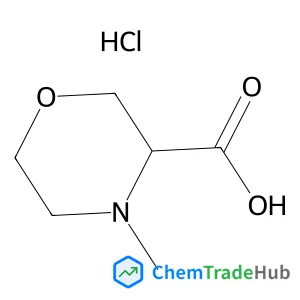
4-Methyl-3-morpholinecarboxylic acid hydrochloride (1:1)
CAS Number:
1240518-90-4
Molecular Formula:
C6H12ClNO3
![(2E)-3-(3-Chlorophenyl)-N-{2-[4-(methylsulfonyl)-1-piperazinyl]-2-oxoethyl}acrylamide structure](https://static.chemtradehub.com/structs/250/2505001-54-5-c1e9.webp "(2E)-3-(3-Chlorophenyl)-N-{2-[4-(methylsulfonyl)-1-piperazinyl]-2-oxoethyl}acrylamide structure")
(2E)-3-(3-Chlorophenyl)-N-{2-[4-(methylsulfonyl)-1-piperazinyl]-2-oxoethyl}acrylamide
CAS Number:
2505001-54-5
Molecular Formula:
C16H20ClN3O4S
Recommended Suppliers






Disclaimer
This page provides academic journal information for reference and research purposes only. We are not affiliated with any journal publishers and do not handle publication submissions. For publication-related inquiries, please contact the respective journal publishers directly.
If you notice any inaccuracies in the information displayed, please contact us at support@chemtradehub.com. We will promptly review and address your concerns.