












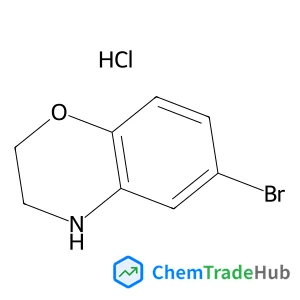
6-Bromo-3,4-dihydro-2H-1,4-benzoxazine hydrochloride (1:1)
CAS Number:
1260803-10-8
Molecular Formula:
C8H9BrClNO
Kikujiro Ishii, Hideyuki Nakayama
Molecular glasses prepared by vapor deposition have been revealed in recent years to have properties which the glasses prepared by ordinary liquid-quenching methods do not have. Thus the vapor-deposition method of material preparation has attracted increasing attention in the context of its possible application in manufacturing functional organic devices. The remarkable nature of vapor-deposited molecular glasses is that their properties depend very much on the deposition temperature and deposition rate. This suggests that the microscopic structure formed at the sample surface in the vapor deposition plays an important role in determining the sample properties. However, little of the structure of vapor-deposited molecular glasses has been clarified yet. In this article, we summarize first the research history of vapor-deposited molecular glasses, the concepts of amorphous solid and glass, and the methods for studying molecular glasses. We then summarize the research results reported to date for molecular glasses and related supercooled liquids. We also include in this article our recent research results in this field, and mention our present view on vapor-deposited molecular glasses.
Ramana V. Daggupati, Chandrasekharam Malapaka
DOI: 10.1039/C7QO00851A
E. de Julián, E. Menéndez-Pedregal, M. Claros, M. Vaquero, J. Díez, E. Lastra, P. Gamasa, A. Pizzano
DOI: 10.1039/C7QO00908A
Xiaonan Shi, Yan He, Xinying Zhang, Xuesen Fan
DOI: 10.1039/C7QO00366H
DOI: 10.1039/C7QO00446J
Xiaozhong Cheng, Tao Zhu, Haofei Hong, Zhifang Zhou, Zhimeng Wu
DOI: 10.1039/C7QO00481H
Qi Yang, Liang Liu, Yue Chi, Wei Hao, Wen-Xiong Zhang
DOI: 10.1039/C7QO00927E
Jun Luo, Wan-Sha Huang, Sheng-Mou Hu, Pan-Pan Zhang, Xu-Wei Zhou, Xiao-Bing Wang, Ming-Hua Yang, Jian-Guang Luo, Chen Wang, Chang Liu, He-Quan Yao, Can Zhang, Hong-Bin Sun, Yi-Jun Chen, Ling-Yi Kong
DOI: 10.1039/C7QO00678K
N. Zink-Lorre, E. Font-Sanchis, Á. Sastre-Santos, F. Fernández-Lázaro
DOI: 10.1039/C7QO00337D
When handling 4-Methyl-6-(trifluoromethyl)quinoline (CAS: 40716-16-3), safety go...
4-(3,5-Difluorophenyl)aniline is an aromatic organic compound with the CAS numbe...
5-{[4-(Trifluoromethyl)phenyl]sulfanyl}-1,2,3-thiadiazole-4-carboxylic acid can ...
The market for 4-Benzylaniline hydrochloride (CAS: 6317-57-3) is steadily growin...
[3-(Diethylsulfamoyl)phenyl]boronic acid is generally considered safe when handl...
3-Bromo-2,5-dimethoxyaniline is mainly used in the pharmaceutical and chemical i...
N-Methyl-1-(5-methyl-1H-indol-3-yl)methanamine (CAS: 915922-67-7) is subject to ...
This compound is primarily used in the pharmaceutical industry for the synthesis...
2-Methyl-2-propanyl [(1S,3R)-3-aminocyclohexyl]carbamate (CAS: 1298101-47-9) sho...
Ethyl 2-bromo-4,4,4-trifluorobutanoate (CAS: 367-33-9) is utilized in the pharma...

Physical Chemistry Chemical Physics (PCCP) is an international journal co-owned by 19 physical chemistry and physics societies from around the world. This journal publishes original, cutting-edge research in physical chemistry, chemical physics and biophysical chemistry. To be suitable for publication in PCCP, articles must include significant innovation and/or insight into physical chemistry; this is the most important criterion that reviewers and Editors will judge against when evaluating submissions. The journal has a broad scope and welcomes contributions spanning experiment, theory, computation and data science. Topical coverage includes spectroscopy, dynamics, kinetics, statistical mechanics, thermodynamics, electrochemistry, catalysis, surface science, quantum mechanics, quantum computing and machine learning. Interdisciplinary research areas such as polymers and soft matter, materials, nanoscience, energy, surfaces/interfaces, and biophysical chemistry are welcomed if they demonstrate significant innovation and/or insight into physical chemistry. Joined experimental/theoretical studies are particularly appreciated when complementary and based on up-to-date approaches.
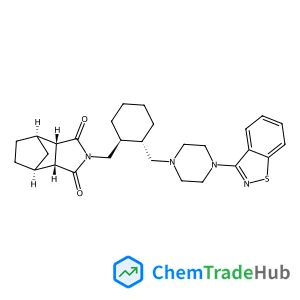
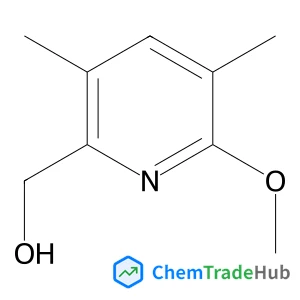
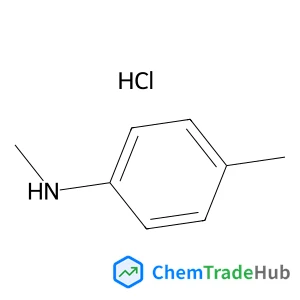
![1-[(4-Methylphenyl)sulfonyl]-3-(4,4,5,5-tetramethyl-1,3,2-dioxaborolan-2-yl)-1H-pyrrolo[2,3-b]pyridine-5-carbonitrile structure](https://static.chemtradehub.com/structs/143/1434747-57-5-fc0d.webp "1-[(4-Methylphenyl)sulfonyl]-3-(4,4,5,5-tetramethyl-1,3,2-dioxaborolan-2-yl)-1H-pyrrolo[2,3-b]pyridine-5-carbonitrile structure")





