












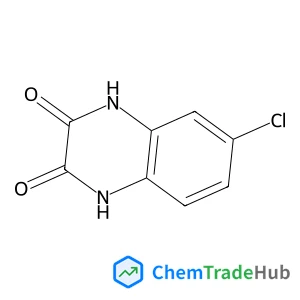
6-CHLORO-2,3-DIOXO-1,2,3,4-TETRAHYDROQUINOXALINE, 97
CAS Number:
169-14-2
Molecular Formula:
C8H5ClN2O2
I. Izquierdo-Lorenzo, S. Sanchez-Cortes
The adsorption mechanism of linear aliphatic α,ω-dithiols with chain lengths of 6, 8 and 10 carbon atoms on silver and gold nanoparticles has been studied by surface-enhanced Raman scattering (SERS) spectroscopy. SERS spectra provided the structural marker bands of these compounds and they were employed to obtain information about the adsorption and coordination mechanism, the orientation, conformational order, and packing of the aliphatic chains of dithiols on the metal nanoparticle surface. The effect of the type of metal (silver or gold) and the extent of surface coverage on all the above mentioned properties is discussed. It was found that the adsorption of dithiols on Au nanoparticles leads to a more disordered structure of the aliphatic chains of dithiols in comparison with the adsorption on Ag nanoparticles. The interaction through both thiol groups makes the adsorption of dithiols on metal surfaces substantially different from that of monothiols; in particular, the orientation of dithiols is perpendicular, while monothiols adopt a tilted orientation. Dithiols may act as linkers between metal nanoparticles and induce the formation of nanogaps with a controllable interparticle distance. The nanogaps thus formed are able to produce hot spots exhibiting a large intensification of electromagnetic field in these points which has been proved by the observation of intense SERS spectra of dithiols until a concentration of 10−8 M, corresponding to a large Raman enhancement factor of 5 × 10⁶.
Zhe Huang, Ming Zhan, Shaoguang Zhang, Qian Luo, Wen-Xiong Zhang
DOI: 10.1039/C7QO00287D
Ze-lin Li, Li-kun Jin, Chun Cai
DOI: 10.1039/C7QO00396J
Jiawei Zhu, Song Sun, Minfang Xia, Ning Gu, Jiang Cheng
DOI: 10.1039/C7QO00478H
Jing Liu, Weipeng Li, Jin Xie
DOI: 10.1039/C7QO00808B
T. Sony, S. Prabhakar, L. Raju Chowhan
DOI: 10.1039/C7QO00109F
Igor B. Krylov, Stanislav A. Paveliev, Boris N. Shelimov, Boris V. Lokshin, Irina A. Garbuzova, Viktor A. Tafeenko, Gennady I. Nikishin, Alexander O. Terent'ev
DOI: 10.1039/C7QO00447H
Abbasriyaludeen Abdul Raheem, Santhosh Kamaraj, Veeman Sannasi, Chandrasekar Praveen
DOI: 10.1039/C7QO00920H
Kang Chen, Ding Wang, Zhao-Wei Li, Zheng Liu, Fei Pan, Yun-Fei Zhang
DOI: 10.1039/C7QO00432J
Ibrahim Ata, Sadok Ben Dkhil, Martin Pfannmöller, Sara Bals, David Duché, Jean-Jacques Simon, Tomoyuki Koganezawa, Noriyuki Yoshimoto, Christine Videlot-Ackermann, Olivier Margeat, Jörg Ackermann, Peter Bäuerle
DOI: 10.1039/C7QO00222J
When handling 4-Methyl-6-(trifluoromethyl)quinoline (CAS: 40716-16-3), safety go...
4-(3,5-Difluorophenyl)aniline is an aromatic organic compound with the CAS numbe...
5-{[4-(Trifluoromethyl)phenyl]sulfanyl}-1,2,3-thiadiazole-4-carboxylic acid can ...
The market for 4-Benzylaniline hydrochloride (CAS: 6317-57-3) is steadily growin...
[3-(Diethylsulfamoyl)phenyl]boronic acid is generally considered safe when handl...
3-Bromo-2,5-dimethoxyaniline is mainly used in the pharmaceutical and chemical i...
N-Methyl-1-(5-methyl-1H-indol-3-yl)methanamine (CAS: 915922-67-7) is subject to ...
This compound is primarily used in the pharmaceutical industry for the synthesis...
2-Methyl-2-propanyl [(1S,3R)-3-aminocyclohexyl]carbamate (CAS: 1298101-47-9) sho...
Ethyl 2-bromo-4,4,4-trifluorobutanoate (CAS: 367-33-9) is utilized in the pharma...

Physical Chemistry Chemical Physics (PCCP) is an international journal co-owned by 19 physical chemistry and physics societies from around the world. This journal publishes original, cutting-edge research in physical chemistry, chemical physics and biophysical chemistry. To be suitable for publication in PCCP, articles must include significant innovation and/or insight into physical chemistry; this is the most important criterion that reviewers and Editors will judge against when evaluating submissions. The journal has a broad scope and welcomes contributions spanning experiment, theory, computation and data science. Topical coverage includes spectroscopy, dynamics, kinetics, statistical mechanics, thermodynamics, electrochemistry, catalysis, surface science, quantum mechanics, quantum computing and machine learning. Interdisciplinary research areas such as polymers and soft matter, materials, nanoscience, energy, surfaces/interfaces, and biophysical chemistry are welcomed if they demonstrate significant innovation and/or insight into physical chemistry. Joined experimental/theoretical studies are particularly appreciated when complementary and based on up-to-date approaches.
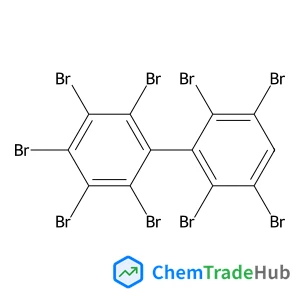
![(3R,5R)-1-[(Benzyloxy)carbonyl]-5-methyl-3-piperidinecarboxylic acid structure](https://static.chemtradehub.com/structs/126/1269757-29-0-c552.webp "(3R,5R)-1-[(Benzyloxy)carbonyl]-5-methyl-3-piperidinecarboxylic acid structure")
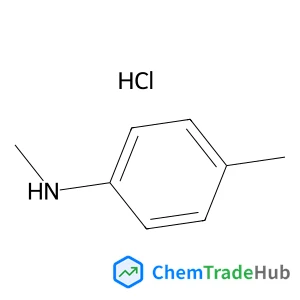
![(2E)-3-(3-Chlorophenyl)-N-{2-[4-(methylsulfonyl)-1-piperazinyl]-2-oxoethyl}acrylamide structure](https://static.chemtradehub.com/structs/250/2505001-54-5-c1e9.webp "(2E)-3-(3-Chlorophenyl)-N-{2-[4-(methylsulfonyl)-1-piperazinyl]-2-oxoethyl}acrylamide structure")




