












Inside front cover
Literature Information
Publication Date
DOI
10.1039/B918024A
Impact Factor
6.222
Authors
View Original
Abstract
The first page of this article is displayed as the abstract.
Related Literature
Organocatalytic kinetic resolution via intramolecular aldol reactions: Enantioselective synthesis of both enantiomers of chiral cyclohexenones
Liujuan Chen, Sanzhong Luo, Jiuyuan Li, Xin Li, Jin-Pei Cheng
2010-04-01
Paper
DOI: 10.1039/B927343C
Redox rich dicobalt macrocycles as templates for multi-electron transformations
Nathaniel K. Szymczak, Louise A. Berben, Jonas C. Peters
2009-10-06
Communication
DOI: 10.1039/B913946J
Lamellar transition-metal molybdate–CTA mesostructured composites (metal = Ni, Co): one-pot synthesis and application in treatment of acid fuchsine
Hong-Bin Yao, Xiao-Bo Li, Shu-Juan Liu, Shu-Hong Yu
2009-10-06
Communication
DOI: 10.1039/B914329G
Syntheses of ylidenbutenolide-modified derivatives of peridinin and their stereochemical and spectral characteristics
Takayuki Kajikawa, Kazuyoshi Aoki, Takashi Iwashita, Dariusz M. Niedzwiedzki, Harry A. Frank, Shigeo Katsumura
2010-04-23
Communication
DOI: 10.1039/C002006K
Stereoselective synthesis of enynones via base-catalyzed isomerization of 1,5-disubstituted-2,4-pentadiynyl silyl ethers or their alcohol derivatives
Jingjin Chen, Guoqin Fan, Yuanhong Liu
2010-09-16
Communication
DOI: 10.1039/C0OB00344A
Long wavelength red fluorescent dyes from 3,5-diiodo-BODIPYs
Lijuan Jiao, Changjiang Yu, Timsy Uppal, Mingming Liu, Yan Li, Yunyou Zhou, Erhong Hao, Xiaoke Hu, M. Graça H. Vicente
2010-04-14
Communication
DOI: 10.1039/C001068E
[Pb9CdCdPb9]6−: A Zintl cluster anion with an unsupported cadmium–cadmium bond
Binbin Zhou, Mark S. Denning, Thomas A. D. Chapman, John E. McGrady, Jose M. Goicoechea
2009-10-22
Communication
DOI: 10.1039/B917185A
Development of 2,6-carboxy-substituted boron dipyrromethene (BODIPY) as a novel scaffold of ratiometric fluorescent probes for live cell imaging
Yasuteru Urano, Hirotatsu Kojima, Takuya Terai, Kenjiro Hanaoka
2009-10-08
Communication
DOI: 10.1039/B917209B
Syntheses, structural characterization and CO releasing properties of boranocarbonate [H3BCO2H]− derivatives
Tamil Selvi Pitchumony, Bernhard Spingler, Roberto Motterlini, Roger Alberto
2010-08-24
Paper
DOI: 10.1039/C0OB00099J
First time-resolved EPR observation of Nafion photochemistry
Fosca Conti, Enrico Negro, Vito Di Noto
2009-10-13
Communication
DOI: 10.1039/B913870F
You might also like
Compound Q&A
What industries use (1R,3S)-1,3-Cyclopentanediol (CAS: 16326-97-9)?
(1R,3S)-1,3-Cyclopentanediol finds applications in various industries. In the ph...
16326-97-9(1R,3S)-1,3-Cyclopen...
Compound Q&A
What precautions should be taken when handling N'-[4-(Dimethylamino)phenyl]-N,N-dimethyl-1,4-benzenediamine (CAS: 637-31-0)?
When handling N'-[4-(Dimethylamino)phenyl]-N,N-dimethyl-1,4-benzenediamine, it i...
637-31-0N'-[4-(Dimethylamino...
Compound Q&A
Are there alternatives to 5-(2,4-Difluorophenyl)-2-methoxypyrimidine (CAS: 1352318-16-1) in synthesis?
There are several alternatives to 5-(2,4-Difluorophenyl)-2-methoxypyrimidine in ...
1352318-16-15-(2,4-Difluoropheny...
Compound Q&A
What regulatory guidelines apply to 1-(3-Methoxyphenoxy)propan-2-ol (CAS: 382141-68-6)?
1-(3-Methoxyphenoxy)propan-2-ol (CAS: 382141-68-6) must comply with the Globally...
382141-68-61-(3-Methoxyphenoxy)...
Compound Q&A
Is Tetrodotoxin Citrate (CAS: 18660-81-6) safe?
Tetrodotoxin Citrate is extremely dangerous and should be handled with extreme c...
18660-81-6Tetrodotoxin Citrate
Compound Q&A
What are the main uses of 2-Methyl-2-propanyl [(1R,3S)-3-hydroxycyclopentyl]carbamate (CAS: 225641-84-9)?
2-Methyl-2-propanyl [(1R,3S)-3-hydroxycyclopentyl]carbamate (CAS: 225641-84-9) i...
225641-84-92-Methyl-2-propanyl ...
Compound Q&A
How should waste containing 4-(2-Hydroxyhexafluoroisopropyl)Benzoic Acid (CAS: 16261-80-6) be handled?
Waste containing 4-(2-Hydroxyhexafluoroisopropyl)Benzoic Acid (CAS: 16261-80-6) ...
16261-80-64-(2-Hydroxyhexafluo...
Compound Q&A
How is 2-Methyl-2-proanyl {(2S)-1-[(benzyloxy)amino]-3-hydroxy-3-methyl-1-oxo-2-butanyl}carbamate (CAS: 102507-19-7) typically synthesized?
2-Methyl-2-proanyl {(2S)-1-[(benzyloxy)amino]-3-hydroxy-3-methyl-1-oxo-2-butanyl...
102507-19-72-Methyl-2-propanyl ...
Compound Q&A
What is Benzeneethanamine, α-ethyl-, hydrochloride (1:1) (CAS: 20735-15-3)?
Benzeneethanamine, α-ethyl-, hydrochloride (1:1) is an organic compound with the...
20735-15-3Benzeneethanamine, α...
Compound Q&A
Are there alternatives to 3-{(E)-[4-(Dimethylamino)phenyl]diazenyl}benzoic acid (CAS: 20691-84-3) in synthesis?
In the synthesis of compounds similar to 3-{(E)-[4-(Dimethylamino)phenyl]diazeny...
20691-84-33-{(E)-[4-(Dimethyla...
Source Journal
Chemical Communications

CiteScore:
8.6
Self-citation Rate:
4.7%
Articles per Year:
2458
ChemComm publishes urgent research which is of outstanding significance and interest to experts in the field, while also appealing to the journal’s broad chemistry readership. Our communication format is ideally suited to short, urgent studies that are of such importance that they require accelerated publication. Our scope covers all topics in chemistry, and research at the interface of chemistry and other disciplines (such as materials science, nanoscience, physics, engineering and biology) where there is a significant novelty in the chemistry aspects. Major topic areas covered include: Analytical Chemistry Catalysis Chemical Biology and medicinal chemistry Computational Chemistry and Machine Learning Energy and sustainable chemistry Environmental Chemistry Green Chemistry Inorganic Chemistry Materials Chemistry Nanoscience Organic Chemistry Physical Chemistry Polymer Chemistry Supramolecular Chemistry
Recommended Compounds
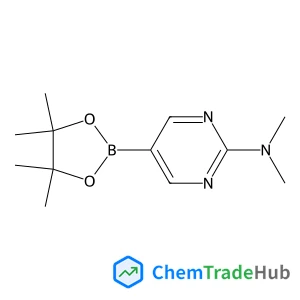
N,N-Dimethyl-5-(4,4,5,5-tetramethyl-1,3,2-dioxaborolan-2-yl)-2-pyrimidinamine
CAS Number:
1032759-30-0
Molecular Formula:
C12H20BN3O2
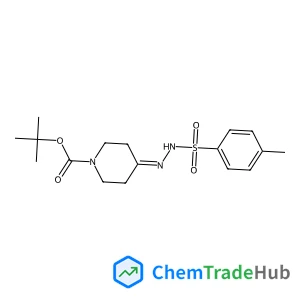
tert-Butyl 4-(2-(p-Tolylsulfonyl)hydrazono)piperidine-1-carboxylate
CAS Number:
1046478-89-0
Molecular Formula:
C17H25N3O4S
Recommended Suppliers






Disclaimer
This page provides academic journal information for reference and research purposes only. We are not affiliated with any journal publishers and do not handle publication submissions. For publication-related inquiries, please contact the respective journal publishers directly.
If you notice any inaccuracies in the information displayed, please contact us at support@chemtradehub.com. We will promptly review and address your concerns.