












Stereoselective synthesis of enynones via base-catalyzed isomerization of 1,5-disubstituted-2,4-pentadiynyl silyl ethers or their alcohol derivatives
Literature Information
Publication Date
2010-09-16
DOI
10.1039/C0OB00344A
Impact Factor
3.876
Authors
Jingjin Chen, Guoqin Fan, Yuanhong Liu
View Original
Abstract
1,5-Disubstituted-2,4-pentadiynyl silyl ethers undergo smooth desilylative isomerization to afford cis-enynones as major products with moderate stereoselectivities in the presence of a catalytic amount of KOtBu or DBU. While the isomerization reactions of their alcohol derivatives catalyzed by KOH, KOtBu or NaH take place efficiently to produce trans-enynones with high stereoselectivities. These reactions provide convenient and practical routes for the synthesis of enynones with a wide range of substitution groups.
Related Literature
EndoV/DNA ligase mutation scanning assay using microchip capillary electrophoresis and dual-color laser-induced fluorescence detection
Małgorzata A. Witek, John K. Osiri, Hong Wang, Rondedrick Sinville, Hanna Pincas, Francis Barany
2011-10-07
Paper
DOI: 10.1039/C1AY05366C
Near-infrared-driven water splitting for hydrogen evolution using a Cu2ZnSnS4-based photocathode by the application of upconversion nanoparticles
Kuang Feng, Zhiwang Cai, Dingwang Huang, Lintao Li, Kang Wang, Yan Li, Chenyang Wang, Jie Song, Wei Wei, Feng Jiang
2020-03-30
Communication
DOI: 10.1039/D0SE00152J
Measuring estriol and estrone simultaneously in liquid cosmetic samples using second-order calibration coupled with excitation–emission matrix fluorescence based on region selection
De-Zhu Tu, Hai-Long Wu, Yuan-Na Li, Juan Zhang, Yong Li, Chong-Chong Nie, Xiao-Hua Zhang, Ru-Qin Yu
2011-11-23
Paper
DOI: 10.1039/C1AY05388D
Plasma-reduced Co(OH)2 with activated hydrogen evolution and overall water splitting performance
Junxiang Jiang, Yuanhao Tang, Lin Dong, Wenhao Zhang, Haobin Wu
2020-03-30
Communication
DOI: 10.1039/D0SE00381F
Nano-assembly of ursolic acid with platinum prodrug overcomes multiple deactivation pathways in platinum-resistant ovarian cancer
Yupeng Wang, Zhijian Luo, Dongfang Zhou, Xuefeng Wang
2021-04-03
Paper
DOI: 10.1039/D1BM00087J
A drug formulation using an alginate hydrogel matrix for efficient oral delivery of the manganese porphyrin-based superoxide dismutase mimic
S. Ito, M. Shinohara, M. Kaneko
2015-05-13
Paper
DOI: 10.1039/C5BM00056D
A novel nonheme manganese(ii) complex for (electro) catalytic oxidation of water
Dattaprasad D. Narulkar, Anil Kumar U., Sunder N. Dhuri, Anil Kumar Vardhaman
2020-03-12
Communication
DOI: 10.1039/D0SE00232A
Effects of cation size and concentration of cationic chlorides on the properties of formamidinium lead iodide based perovskite solar cells
Minjin Kim, Tae Kyung Lee, In Woo Choi, Hye Won Choi, Yimhyun Jo, Jiyun Lee, Gi-Hwan Kim, Sang Kyu Kwak, Dong Suk Kim
2020-05-13
Paper
DOI: 10.1039/D0SE00382D
Sheltering proteins from protease-mediated degradation and a de novo strategy for preventing acute liver injury
Bojiao Tang, Sijie Zhou, Jianghui Qin, Wujun Geng
2021-05-11
Communication
DOI: 10.1039/D1BM00063B
You might also like
Compound Q&A
What industries use (1R,3S)-1,3-Cyclopentanediol (CAS: 16326-97-9)?
(1R,3S)-1,3-Cyclopentanediol finds applications in various industries. In the ph...
16326-97-9(1R,3S)-1,3-Cyclopen...
Compound Q&A
What precautions should be taken when handling N'-[4-(Dimethylamino)phenyl]-N,N-dimethyl-1,4-benzenediamine (CAS: 637-31-0)?
When handling N'-[4-(Dimethylamino)phenyl]-N,N-dimethyl-1,4-benzenediamine, it i...
637-31-0N'-[4-(Dimethylamino...
Compound Q&A
Are there alternatives to 5-(2,4-Difluorophenyl)-2-methoxypyrimidine (CAS: 1352318-16-1) in synthesis?
There are several alternatives to 5-(2,4-Difluorophenyl)-2-methoxypyrimidine in ...
1352318-16-15-(2,4-Difluoropheny...
Compound Q&A
What regulatory guidelines apply to 1-(3-Methoxyphenoxy)propan-2-ol (CAS: 382141-68-6)?
1-(3-Methoxyphenoxy)propan-2-ol (CAS: 382141-68-6) must comply with the Globally...
382141-68-61-(3-Methoxyphenoxy)...
Compound Q&A
Is Tetrodotoxin Citrate (CAS: 18660-81-6) safe?
Tetrodotoxin Citrate is extremely dangerous and should be handled with extreme c...
18660-81-6Tetrodotoxin Citrate
Compound Q&A
What are the main uses of 2-Methyl-2-propanyl [(1R,3S)-3-hydroxycyclopentyl]carbamate (CAS: 225641-84-9)?
2-Methyl-2-propanyl [(1R,3S)-3-hydroxycyclopentyl]carbamate (CAS: 225641-84-9) i...
225641-84-92-Methyl-2-propanyl ...
Compound Q&A
How should waste containing 4-(2-Hydroxyhexafluoroisopropyl)Benzoic Acid (CAS: 16261-80-6) be handled?
Waste containing 4-(2-Hydroxyhexafluoroisopropyl)Benzoic Acid (CAS: 16261-80-6) ...
16261-80-64-(2-Hydroxyhexafluo...
Compound Q&A
How is 2-Methyl-2-proanyl {(2S)-1-[(benzyloxy)amino]-3-hydroxy-3-methyl-1-oxo-2-butanyl}carbamate (CAS: 102507-19-7) typically synthesized?
2-Methyl-2-proanyl {(2S)-1-[(benzyloxy)amino]-3-hydroxy-3-methyl-1-oxo-2-butanyl...
102507-19-72-Methyl-2-propanyl ...
Compound Q&A
What is Benzeneethanamine, α-ethyl-, hydrochloride (1:1) (CAS: 20735-15-3)?
Benzeneethanamine, α-ethyl-, hydrochloride (1:1) is an organic compound with the...
20735-15-3Benzeneethanamine, α...
Compound Q&A
Are there alternatives to 3-{(E)-[4-(Dimethylamino)phenyl]diazenyl}benzoic acid (CAS: 20691-84-3) in synthesis?
In the synthesis of compounds similar to 3-{(E)-[4-(Dimethylamino)phenyl]diazeny...
20691-84-33-{(E)-[4-(Dimethyla...
Source Journal
Organic & Biomolecular Chemistry

CiteScore:
3.4
Self-citation Rate:
10.3%
Articles per Year:
1041
Organic & Biomolecular Chemistry (OBC) publishes original and high impact research and reviews in organic chemistry. We welcome research that shows new or significantly improved protocols or methodologies in total synthesis, synthetic methodology or physical and theoretical organic chemistry as well as research that shows a significant advance in the organic chemistry or molecular design aspects of chemical biology, catalysis, supramolecular and macromolecular chemistry, theoretical chemistry, mechanism-oriented physical organic chemistry, medicinal chemistry or natural products. Articles published in the journal should report new work which makes a highly-significant impact in the field. Routine and incremental work is generally not suitable for publication in the journal. More details about key areas of our scope are below. In all cases authors should include in their article clear rationale for why their research has been carried out.
Recommended Compounds
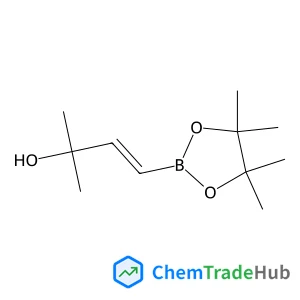
(E)-2-methyl-4-(4,4,5,5-tetramethyl-1,3,2-dioxaborolan-2-yl)but-3-en-2-ol
CAS Number:
581802-26-8
Molecular Formula:
C11H21BO3
![4-[(3-Chloro-2-fluorophenyl)amino]-7-methoxy-6-quinazolinyl acetate structure](https://static.chemtradehub.com/structs/740/740081-22-5-f58f.webp "4-[(3-Chloro-2-fluorophenyl)amino]-7-methoxy-6-quinazolinyl acetate structure")
4-[(3-Chloro-2-fluorophenyl)amino]-7-methoxy-6-quinazolinyl acetate
CAS Number:
740081-22-5
Molecular Formula:
C17H13ClFN3O3
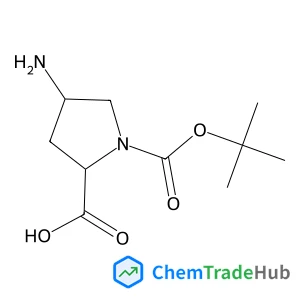
(2R,4R)-1-Boc-4-Aminopyrrolidine-2-carboxylic acid
CAS Number:
132622-98-1
Molecular Formula:
C10H18N2O4
Recommended Suppliers


Disclaimer
This page provides academic journal information for reference and research purposes only. We are not affiliated with any journal publishers and do not handle publication submissions. For publication-related inquiries, please contact the respective journal publishers directly.
If you notice any inaccuracies in the information displayed, please contact us at support@chemtradehub.com. We will promptly review and address your concerns.