












Electronically tunable N-heterocyclic carbeneligands: 1,3-diaryl vs. 4,5-diaryl substitution
Literature Information
Publication Date
2009-09-02
DOI
10.1039/B914732B
Impact Factor
6.222
Authors
James W. Ogle, Stephen A. Miller
View Original
Abstract
The catalytic activity of iridium-mediated transfer hydrogenation is readily tuned by electronic variation of the ligated tetraaryl-N-heterocyclic carbene and the installation of electron donating groups on the N-aryl substituents is more important than on the C-aryl substituents for effecting catalytic enhancement.
Related Literature
Big problem, little answer: overcoming bed agglomeration and reactor slagging during the gasification of barley straw under continuous operation
Hassan A. Alabdrabalameer, Juho Kauppinen, Toni Pikkarainen
2020-05-25
Paper
DOI: 10.1039/D0SE00155D
Insight into sulfur-rich selenium sulfide/pyrolyzed polyacrylonitrile cathodes for Li–S batteries
Wei Zhang, Shuping Li, Jia Xie
2020-05-06
Paper
DOI: 10.1039/D0SE00512F
Facile fabrication of graphitization-enhanced wrinkled paper-like N-doped porous carbon via a ZnCl2-modified NaCl-template method for use as an anode in lithium ion batteries
Shuai Ru, Xia Wang, Guoqing Ma, Junyu Tan, Haihong Xiao, Zhaoquan Ai
2020-04-22
Paper
DOI: 10.1039/D0SE00517G
Optimized conditions for liquid-phase microextraction based on solidification of floating organic droplet for extraction of nitrotoluene compounds by using response surface methodology
Laleh Adlnasab, Homeira Ebrahimzadeh, Yadollah Yamini
2011-10-31
Paper
DOI: 10.1039/C1AY05449J
A specific UPLC-ESI-MS/MS method for analysis of cyadox and its three main metabolites in fish samples
Linli Cheng, Zhanhui Wang, Jianzhong Shen, Linxia Li, Haixia Wu, Suxia Zhang
2011-12-15
Paper
DOI: 10.1039/C1AY05523B
Selective Fischer–Tropsch synthesis for jet fuel production over Y3+ modified Co/H-β catalysts
Meng Yang, Lingjun Zhu, Yexin Zhuo, Jiacheng Liang, Shurong Wang
2020-05-04
Paper
DOI: 10.1039/D0SE00468E
Low temperature recovery of acetone–butanol–ethanol (ABE) fermentation products via microwave induced membrane distillation on carbon nanotube immobilized membranes
Oindrila Gupta, Sagar Roy, Somenath Mitra
2020-05-05
Paper
DOI: 10.1039/D0SE00461H
In situ monitoring of polymerredox states by resonance μRaman spectroscopy and its applications in polymer modified microfluidic channels
Hella Logtenberg, Laurens-Jan C. Jellema, Maria J. Lopez-Martinez, Jetsuda Areephong, Elisabeth Verpoorte, Ben L. Feringa, Wesley R. Browne
2011-10-20
Paper
DOI: 10.1039/C1AY05475A
You might also like
Compound Q&A
What industries use (1R,3S)-1,3-Cyclopentanediol (CAS: 16326-97-9)?
(1R,3S)-1,3-Cyclopentanediol finds applications in various industries. In the ph...
16326-97-9(1R,3S)-1,3-Cyclopen...
Compound Q&A
What precautions should be taken when handling N'-[4-(Dimethylamino)phenyl]-N,N-dimethyl-1,4-benzenediamine (CAS: 637-31-0)?
When handling N'-[4-(Dimethylamino)phenyl]-N,N-dimethyl-1,4-benzenediamine, it i...
637-31-0N'-[4-(Dimethylamino...
Compound Q&A
Are there alternatives to 5-(2,4-Difluorophenyl)-2-methoxypyrimidine (CAS: 1352318-16-1) in synthesis?
There are several alternatives to 5-(2,4-Difluorophenyl)-2-methoxypyrimidine in ...
1352318-16-15-(2,4-Difluoropheny...
Compound Q&A
What regulatory guidelines apply to 1-(3-Methoxyphenoxy)propan-2-ol (CAS: 382141-68-6)?
1-(3-Methoxyphenoxy)propan-2-ol (CAS: 382141-68-6) must comply with the Globally...
382141-68-61-(3-Methoxyphenoxy)...
Compound Q&A
Is Tetrodotoxin Citrate (CAS: 18660-81-6) safe?
Tetrodotoxin Citrate is extremely dangerous and should be handled with extreme c...
18660-81-6Tetrodotoxin Citrate
Compound Q&A
What are the main uses of 2-Methyl-2-propanyl [(1R,3S)-3-hydroxycyclopentyl]carbamate (CAS: 225641-84-9)?
2-Methyl-2-propanyl [(1R,3S)-3-hydroxycyclopentyl]carbamate (CAS: 225641-84-9) i...
225641-84-92-Methyl-2-propanyl ...
Compound Q&A
How should waste containing 4-(2-Hydroxyhexafluoroisopropyl)Benzoic Acid (CAS: 16261-80-6) be handled?
Waste containing 4-(2-Hydroxyhexafluoroisopropyl)Benzoic Acid (CAS: 16261-80-6) ...
16261-80-64-(2-Hydroxyhexafluo...
Compound Q&A
How is 2-Methyl-2-proanyl {(2S)-1-[(benzyloxy)amino]-3-hydroxy-3-methyl-1-oxo-2-butanyl}carbamate (CAS: 102507-19-7) typically synthesized?
2-Methyl-2-proanyl {(2S)-1-[(benzyloxy)amino]-3-hydroxy-3-methyl-1-oxo-2-butanyl...
102507-19-72-Methyl-2-propanyl ...
Compound Q&A
What is Benzeneethanamine, α-ethyl-, hydrochloride (1:1) (CAS: 20735-15-3)?
Benzeneethanamine, α-ethyl-, hydrochloride (1:1) is an organic compound with the...
20735-15-3Benzeneethanamine, α...
Compound Q&A
Are there alternatives to 3-{(E)-[4-(Dimethylamino)phenyl]diazenyl}benzoic acid (CAS: 20691-84-3) in synthesis?
In the synthesis of compounds similar to 3-{(E)-[4-(Dimethylamino)phenyl]diazeny...
20691-84-33-{(E)-[4-(Dimethyla...
Source Journal
Chemical Communications

CiteScore:
8.6
Self-citation Rate:
4.7%
Articles per Year:
2458
ChemComm publishes urgent research which is of outstanding significance and interest to experts in the field, while also appealing to the journal’s broad chemistry readership. Our communication format is ideally suited to short, urgent studies that are of such importance that they require accelerated publication. Our scope covers all topics in chemistry, and research at the interface of chemistry and other disciplines (such as materials science, nanoscience, physics, engineering and biology) where there is a significant novelty in the chemistry aspects. Major topic areas covered include: Analytical Chemistry Catalysis Chemical Biology and medicinal chemistry Computational Chemistry and Machine Learning Energy and sustainable chemistry Environmental Chemistry Green Chemistry Inorganic Chemistry Materials Chemistry Nanoscience Organic Chemistry Physical Chemistry Polymer Chemistry Supramolecular Chemistry
Recommended Compounds
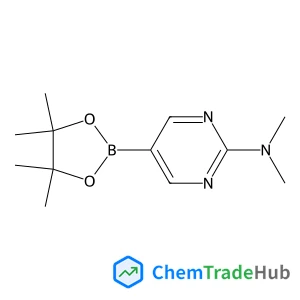
N,N-Dimethyl-5-(4,4,5,5-tetramethyl-1,3,2-dioxaborolan-2-yl)-2-pyrimidinamine
CAS Number:
1032759-30-0
Molecular Formula:
C12H20BN3O2

Recommended Suppliers




Disclaimer
This page provides academic journal information for reference and research purposes only. We are not affiliated with any journal publishers and do not handle publication submissions. For publication-related inquiries, please contact the respective journal publishers directly.
If you notice any inaccuracies in the information displayed, please contact us at support@chemtradehub.com. We will promptly review and address your concerns.