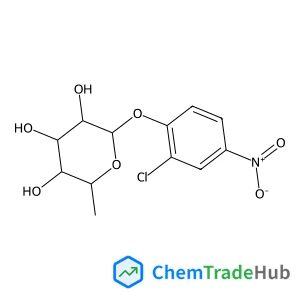
2-Chloro-4-nitrophenyl 6-deoxy-alpha-L-galactopyranoside
CAS Number:
157843-41-9
Molecular Formula:
C12H14ClNO7
Mitra Ghergherehchi, Saber Farjami Shayesteh
Defects are inevitably present in materials, and their existence in a material strongly affects its fundamental physical properties. We have systematically investigated the effects of surface adsorption, substitutional impurities, defect engineering, an electric field and strain engineering on the structural, electronic and magnetic properties of antimonene nanosheets, using spin-polarized density functional calculations based on first-principles. The adsorption or substitution of atoms can locally modify the atomic and electronic structures as well as induce a variety of electronic behaviors including metal, half-metal, ferromagnetic metal, dilute magnetic semiconductor and spin-glass semiconductor. Our calculations show that the presence of typical defects (vacancies and Stone–Wales defect) in antimonene affects the geometrical symmetry as well as the band gap in the electronic band structure and induces magnetism to antimonene. Moreover, by applying an external electric field and strain (uniaxial and biaxial), the electronic structure of antimonene can be easily modified. The calculation results presented in this paper provide a fundamental insight into the tunable nature of the electronic properties of antimonene, supporting its promise for use in future applications.
Chih-Yu Chang, Bo-Chou Tsai, Yu-Cheng Hsiao, Yu-Ching Huang
DOI: 10.1039/C6CP06486H
C. J. (Kees-Jan) Weststrate
DOI: 10.1039/C6CP06069B
Xue-Rong Shi, Norbert Köpfle, Dmitry Y. Zemlyanov, Axel Knop-Gericke, Michael Hävecker, Bernhard Klötzer, Simon Penner
DOI: 10.1039/C6CP07197J
Hal Suzuki, Misaki Ishida, Masatsugu Yamashita, Chiko Otani, Kazuhiko Kawachi, Yasuhiko Kasama, Eunsang Kwon
DOI: 10.1039/C6CP06949E
Alexander Rosu-Finsen, Demian Marchione, Tara L. Salter, James W. Stubbing, Wendy A. Brown, Martin R. S. McCoustra
DOI: 10.1039/C6CP05751A
Richard Dawes, Hua Guo
DOI: 10.1039/C6CP06232F
Nannan Wu, Hailong Lv, Jiurong Liu, Yuzhen Liu, Shenyu Wang, Wei Liu
DOI: 10.1039/C6CP06066H
Karin Fink, Valeriu Mereacre, Christopher E. Anson
DOI: 10.1039/C6CP03157A
Qiang Hao, Xiuxiu Niu, Changshun Nie, Simeng Hao, Wei Zou, Jiangman Ge, Daimei Chen, Wenqing Yao
DOI: 10.1039/C6CP06122B
Pavel Zelenovskiy, Igor Kornev, Semen Vasilev
DOI: 10.1039/C6CP04337B
When handling 2-Chloro-1,2-bis(4-methylphenyl)ethanone (CAS: 71193-32-3), it is ...
4-Ethoxy-3-(5-methyl-4-oxo-7-propyl-1,4-dihydroimidazo[5,1-f][1,2,4]triazin-2-yl...
Methyl 3-Oxo-4-Androsten-17-Carboxylate (CAS: 2681-55-2) should be stored in a c...
(R)-3-Amino-4-(3-hexylphenylamino)-4-oxobutylphosphonic acid is primarily used i...
2-Methyl-2-propanyl 3-amino-3-carbamoyl-1-azetidinecarboxylate (CAS: 1254120-14-...
There are alternative reagents that can be used in synthesis instead of (E)-4-(t...
[2-(3-Chlorophenyl)-1,3-thiazol-4-yl]methanol (CAS: 121202-20-8) is a crystallin...
The market and research trends for Methyl (2S)-[(4S)-2,2-dimethyl-1,3-dioxolan-4...
The market for 1-Bromo-2-isocyanatoethane (CAS: 42865-19-0) is driven by its use...
4-Nitro-D-phenylalanine hydrochloride (CAS: 147065-06-3) is primarily used in re...

Physical Chemistry Chemical Physics (PCCP) is an international journal co-owned by 19 physical chemistry and physics societies from around the world. This journal publishes original, cutting-edge research in physical chemistry, chemical physics and biophysical chemistry. To be suitable for publication in PCCP, articles must include significant innovation and/or insight into physical chemistry; this is the most important criterion that reviewers and Editors will judge against when evaluating submissions. The journal has a broad scope and welcomes contributions spanning experiment, theory, computation and data science. Topical coverage includes spectroscopy, dynamics, kinetics, statistical mechanics, thermodynamics, electrochemistry, catalysis, surface science, quantum mechanics, quantum computing and machine learning. Interdisciplinary research areas such as polymers and soft matter, materials, nanoscience, energy, surfaces/interfaces, and biophysical chemistry are welcomed if they demonstrate significant innovation and/or insight into physical chemistry. Joined experimental/theoretical studies are particularly appreciated when complementary and based on up-to-date approaches.