













Coexistence of structurally similar but electronically distinct isomers of delocalized cation radicals as a basis for the development of functional materials
Literature Information
Publication Date
2019-05-07
DOI
10.1039/C9CP02271F
Impact Factor
3.676
Authors
Marat R. Talipov, Esther Steiner
View Original
Abstract
Certain low-symmetry aromatic molecules with a small HOMO/HOMO−1 energy gap might co-exist as electronic isomers in their cation radical states that differ only in bond lengths yet have distinct optical and electronic properties. These electronic isomers are sensitive to the environment and might be used for the development of novel functional materials.
Related Literature
Dynamic nuclear polarisation by thermal mixing: quantum theory and macroscopic simulations
Alexander Karabanov, Grzegorz Kwiatkowski, Carlo U. Perotto, Daniel Wiśniewski, Jonathan McMaster, Walter Köckenberger
2016-10-14
Paper
DOI: 10.1039/C6CP04345C
High-mobility two-dimensional electron gas in SrGeO3- and BaSnO3-based perovskite oxide heterostructures: an ab initio study
Wu Tang, Jianli Cheng, Safdar Nazir, Kesong Yang
2016-10-27
Paper
DOI: 10.1039/C6CP05572A
Intramolecular torque, an indicator of the internal rotation direction of rotor molecules and similar systems
Rui-Qin Zhang, Yan-Ling Zhao, Fei Qi, Klaus Hermann, Michel A. Van Hove
2016-10-10
Communication
DOI: 10.1039/C6CP05996A
Sustainable one-pot integration of ZnO nanoparticles into carbon spheres: manipulation of the morphological, optical and electrochemical properties
Greta Patrinoiu, Jose M. Calderon-Moreno, Ruxandra Birjega, Daniela C. Culita, Simona Somacescu, Adina M. Musuc, Tanta Spataru, Oana Carp
2016-10-14
Paper
DOI: 10.1039/C6CP05911B
Enhancement of memory margins in the polymer composite of [6,6]-phenyl-C61-butyric acid methyl ester and polystyrene
Chunpeng Ai, Dianzhong Wen, Xuduo Bai
2016-10-19
Paper
DOI: 10.1039/C6CP06084F
A stochastic study of electron transfer kinetics in nano-particulate photocatalysis: a comparison of the quasi-equilibrium approximation with a random walking model
Baoshun Liu, Xiujian Zhao, Jiaguo Yu, Akira Fujishima
2016-11-15
Paper
DOI: 10.1039/C6CP06320A
A new, double-inversion mechanism of the F− + CH3Cl SN2 reaction in aqueous solution
Peng Liu, Dunyou Wang, Yulong Xu
2016-10-31
Paper
DOI: 10.1039/C6CP06195H
Ionic liquid induced G-quadruplex formation and stabilization: spectroscopic and simulation studies
Sagar Satpathi, Mandar Kulkarni, Arnab Mukherjee, Partha Hazra
2016-10-06
Paper
DOI: 10.1039/C6CP05732B
A soft X-ray spectroscopic perspective of electron localization and transport in tungsten doped bismuth vanadate single crystals
Alexander J. E. Rettie, Vijay R. Singh, Jianshi Zhou, Bethany Lamoureux, Hendrik Bluhm
2016-11-09
Paper
DOI: 10.1039/C6CP04526J
How does ammonia bind to the oxygen-evolving complex in the S2 state of photosynthetic water oxidation? Theoretical support and implications for the W1 substitution mechanism
Yu Guo, Lan-Lan He, Dong-Xia Zhao, Li-Dong Gong, Cui Liu, Zhong-Zhi Yang
2016-10-21
Paper
DOI: 10.1039/C6CP05725J
You might also like
Compound Q&A
What precautions should be taken when handling 2-Chloro-1,2-bis(4-methylphenyl)ethanone (CAS: 71193-32-3)?
When handling 2-Chloro-1,2-bis(4-methylphenyl)ethanone (CAS: 71193-32-3), it is ...
71193-32-32-Chloro-1,2-bis(4-m...
Compound Q&A
What industries use 4-Ethoxy-3-(5-methyl-4-oxo-7-propyl-1,4-dihydroimidazo[5,1-f][1,2,4]triazin-2-yl)benzenesulfonyl chloride (CAS: 224789-26-8)?
4-Ethoxy-3-(5-methyl-4-oxo-7-propyl-1,4-dihydroimidazo[5,1-f][1,2,4]triazin-2-yl...
224789-26-84-Ethoxy-3-(5-methyl...
Compound Q&A
How should Methyl 3-Oxo-4-Androsten-17-Carboxylate (CAS: 2681-55-2) be stored?
Methyl 3-Oxo-4-Androsten-17-Carboxylate (CAS: 2681-55-2) should be stored in a c...
2681-55-2Methyl 3-Oxo-4-Andro...
Compound Q&A
What are the main uses of (R)-3-Amino-4-(3-hexylphenylamino)-4-oxobutylphosphonic acid (CAS: 909725-61-7)?
(R)-3-Amino-4-(3-hexylphenylamino)-4-oxobutylphosphonic acid is primarily used i...
909725-61-7(R)-3-Amino-4-(3-hex...
Compound Q&A
What regulatory guidelines apply to 2-Methyl-2-propanyl 3-amino-3-carbamoyl-1-azetidinecarboxylate (CAS: 1254120-14-3)?
2-Methyl-2-propanyl 3-amino-3-carbamoyl-1-azetidinecarboxylate (CAS: 1254120-14-...
1254120-14-32-Methyl-2-propanyl ...
Compound Q&A
Are there alternatives to (E)-4-(tert-Butoxy)-4-oxobut-2-enoic acid (CAS: 135355-96-3) in synthesis?
There are alternative reagents that can be used in synthesis instead of (E)-4-(t...
135355-96-3(E)-4-(tert-Butoxy)-...
Compound Q&A
What are the physical and chemical properties of [2-(3-Chlorophenyl)-1,3-thiazol-4-yl]methanol (CAS: 121202-20-8)?
[2-(3-Chlorophenyl)-1,3-thiazol-4-yl]methanol (CAS: 121202-20-8) is a crystallin...
121202-20-8[2-(3-Chlorophenyl)-...
Compound Q&A
What is the market or research trend for Methyl (2S)-[(4S)-2,2-dimethyl-1,3-dioxolan-4-yl]{[(4-methylphenyl)sulfonyl]oxy}acetate (CAS: 166249-17-8)?
The market and research trends for Methyl (2S)-[(4S)-2,2-dimethyl-1,3-dioxolan-4...
166249-17-8Methyl (2S)-[(4S)-2,...
Compound Q&A
What is the market or research trend for 1-Bromo-2-isocyanatoethane (CAS: 42865-19-0)?
The market for 1-Bromo-2-isocyanatoethane (CAS: 42865-19-0) is driven by its use...
42865-19-01-Bromo-2-isocyanato...
Compound Q&A
What are the main uses of 4-Nitro-D-phenylalanine hydrochloride (CAS: 147065-06-3)?
4-Nitro-D-phenylalanine hydrochloride (CAS: 147065-06-3) is primarily used in re...
147065-06-34-Nitro-D-phenylalan...
Source Journal
Physical Chemistry Chemical Physics

CiteScore:
5.5
Self-citation Rate:
10.3%
Articles per Year:
3036
Physical Chemistry Chemical Physics (PCCP) is an international journal co-owned by 19 physical chemistry and physics societies from around the world. This journal publishes original, cutting-edge research in physical chemistry, chemical physics and biophysical chemistry. To be suitable for publication in PCCP, articles must include significant innovation and/or insight into physical chemistry; this is the most important criterion that reviewers and Editors will judge against when evaluating submissions. The journal has a broad scope and welcomes contributions spanning experiment, theory, computation and data science. Topical coverage includes spectroscopy, dynamics, kinetics, statistical mechanics, thermodynamics, electrochemistry, catalysis, surface science, quantum mechanics, quantum computing and machine learning. Interdisciplinary research areas such as polymers and soft matter, materials, nanoscience, energy, surfaces/interfaces, and biophysical chemistry are welcomed if they demonstrate significant innovation and/or insight into physical chemistry. Joined experimental/theoretical studies are particularly appreciated when complementary and based on up-to-date approaches.
Recommended Compounds
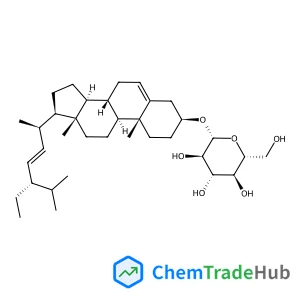
(3beta,22E)-Stigmasta-5,22-dien-3-yl beta-D-glucopyranoside
CAS Number:
19716-26-8
Molecular Formula:
C35H58O6

![4-[2-(Trichlorosilyl)ethyl]benzenesulfonyl chloride structure](https://static.chemtradehub.com/structs/797/79793-00-3-de16.webp "4-[2-(Trichlorosilyl)ethyl]benzenesulfonyl chloride structure")
4-[2-(Trichlorosilyl)ethyl]benzenesulfonyl chloride
CAS Number:
79793-00-3
Molecular Formula:
C8H8Cl4O2SSi

Recommended Suppliers





Disclaimer
This page provides academic journal information for reference and research purposes only. We are not affiliated with any journal publishers and do not handle publication submissions. For publication-related inquiries, please contact the respective journal publishers directly.
If you notice any inaccuracies in the information displayed, please contact us at support@chemtradehub.com. We will promptly review and address your concerns.