


Evaluation of molecular modelling methods to predict the sequence-selectivity of DNA minor groove binding ligands
Literature Information
Publication Date
2009-10-14
DOI
10.1039/B911702D
Impact Factor
3.676
Authors
Hao Wang, Charles A. Laughton
View Original
Abstract
The accurate prediction of ligand–receptor interaction energies by molecular modelling methods remains challenging. Predicting and understanding the sequence-selectivity of DNA minor groove-binding ligands constitutes a particularly interesting and potentially valuable aspect of this. Here, we use experimental data on the binding of Hoechst 33258 to the minor groove of various A/T-rich DNA duplexes to evaluate the reliability of a popular class of molecular modelling methods based on the energetic analysis of molecular dynamics (MD) simulations. We examine how performance depends on the use of explicit versus implicit solvent models, on the use of generalised Born versus Poisson–Boltzmann models to evaluate solvent-associated energetic terms, and the use of normal mode analysis to evaluate entropic factors. Quantitatively evaluating many different combinations of methodologies, we find that the most reliable results are obtained when the MD simulations are performed in explicit solvent, when the data is processed using the MM-PB/SA approach, and when normal mode analysis is used to estimate configurational entropy changes.
Recommended Journals

Lab on a Chip

Mini-Reviews in Medicinal Chemistry

Advanced Engineering Materials

Foundations of Chemistry

Photochemical & Photobiological Sciences

Current Pharmaceutical Biotechnology

Physical Chemistry Chemical Physics

Nature Reviews Drug Discovery

Molecules

Journal of Enzyme inhibition and Medicinal Chemistry
Related Literature
Correlation between polarity parameters and dielectric properties of [Na][TOTO]—a sodium ionic liquid
Oliver Zech, Johannes Hunger, Joshua R. Sangoro, Ciprian Iacob, Friedrich Kremer, Werner Kunz, Richard Buchner
2010-10-06
Paper
DOI: 10.1039/C0CP00840K
Exploring wavepacket dynamics behind strong-field momentum-dependent photodissociation in CH2BrI+
Jesús González-Vázquez, Leticia González, Sarah R. Nichols, Thomas C. Weinacht, Tamás Rozgonyi
2010-09-29
Paper
DOI: 10.1039/C0CP00303D
Evolution of self-diffusion and local structure in some amines over a wide temperature range at high pressures: a molecular dynamics simulation study
Huajie Feng, Xin Liu, Wei Gao, Xiaojuan Chen, Jing Wang, Liuping Chen, Hans-Dietrich Lüdemann
2010-10-18
Paper
DOI: 10.1039/C0CP00337A
Electrical and optical characterization of undoped BaTiO3 in the quenched state
K.-D. Becker, M. Schrader, H.-S. Kwon, H.-I. Yoo
2009-03-20
Paper
DOI: 10.1039/B823174E
B-Site cation diffusivity of Mn and Cr in perovskite-type LaMnO3 with cation-deficit nonstoichiometry
Shogo Miyoshi, Manfred Martin
2009-03-13
Paper
DOI: 10.1039/B901208G
Undoped diamondnanoparticles: origins of surface redox chemistry
Katherine B. Holt
2010-01-06
Perspective
DOI: 10.1039/B920075D
Optimum concentration gradient of the electrocatalyst, Nafion® and poly(tetrafluoroethylene) in a membrane-electrode-assembly for enhanced performance of direct methanolfuelcells
Jing Hua Liu, Min Ku Jeon, Ki Rak Lee, Seong Ihl Woo
2010-10-13
Paper
DOI: 10.1039/C0CP00370K
Site-specific Xe additions into Cu–ZSM-5 zeolite
Takashi Yumura, Hiroki Yamashita, Hiroe Torigoe, Hisayoshi Kobayashi, Yasushige Kuroda
2010-01-19
Paper
DOI: 10.1039/B919032E
You might also like
Compound Q&A
Is 6-(3-Fluorophenyl)picolinic acid (CAS: 887982-40-3) safe?
6-(3-Fluorophenyl)picolinic acid is generally considered safe for laboratory use...
887982-40-36-(3-Fluorophenyl)pi...
Compound Q&A
What industries use (3R)-3-Pyrrolidinol (CAS: 2799-21-5)?
(3R)-3-Pyrrolidinol is used in the pharmaceutical industry as a precursor for dr...
2799-21-5(3R)-3-Pyrrolidinol
Compound Q&A
What precautions should be taken when handling (4R,5R)-4,5-Diethoxycarbonyl-2,2-dimethyldioxolane (CAS: 59779-75-8)?
When handling (4R,5R)-4,5-Diethoxycarbonyl-2,2-dimethyldioxolane (CAS: 59779-75-...
59779-75-8(4R,5R)-4,5-Diethoxy...
Compound Q&A
How is 1-(6-Chloroimidazo[1,2-b]pyridazin-3-yl)ethanone (CAS: 90734-71-7) typically synthesized?
1-(6-Chloroimidazo[1,2-b]pyridazin-3-yl)ethanone is often synthesized via a mult...
90734-71-71-(6-Chloroimidazo[1...
Compound Q&A
What is the market or research trend for N-Ethyl-3,4-dimethylbenzylamine (CAS: 39180-83-1)?
The market for N-Ethyl-3,4-dimethylbenzylamine (CAS: 39180-83-1) remains steady,...
39180-83-1N-Ethyl-3,4-dimethyl...
Compound Q&A
What is Tert-butyl 3-(pyrrolidin-1-yl)azetidine-1-carboxylate (CAS: 1019008-21-9)?
Tert-butyl 3-(pyrrolidin-1-yl)azetidine-1-carboxylate is a chemical compound wit...
1019008-21-9Tert-butyl 3-(pyrrol...
Compound Q&A
What regulatory guidelines apply to 1-Bromo-3-chloro-2,4-dimethoxybenzene (CAS: 1228956-93-1)?
1-Bromo-3-chloro-2,4-dimethoxybenzene (CAS: 1228956-93-1) falls under the classi...
1228956-93-11-Bromo-3-chloro-2,4...
Compound Q&A
Is 8-Bromo-2-methyl-3,4-dihydroisoquinolin-1(2H)-one (CAS: 1368622-07-4) safe?
The safety of 8-Bromo-2-methyl-3,4-dihydroisoquinolin-1(2H)-one (CAS: 1368622-07...
1368622-07-48-Bromo-2-methyl-3,4...
Compound Q&A
Is Benzyl [(3S)-2,6-dioxo-3-piperidinyl]carbamate (CAS: 22785-43-9) safe?
Benzyl [(3S)-2,6-dioxo-3-piperidinyl]carbamate is generally safe when handled wi...
22785-43-9Benzyl [(3S)-2,6-dio...
Compound Q&A
How should 1-{[4-(4,4,5,5-Tetramethyl-1,3,2-dioxaborolan-2-yl)phenyl]sulfonyl}pyrrolidine (CAS: 928657-21-0) be stored?
1-{[4-(4,4,5,5-Tetramethyl-1,3,2-dioxaborolan-2-yl)phenyl]sulfonyl}pyrrolidine s...
928657-21-01-{[4-(4,4,5,5-Tetra...
Source Journal
Physical Chemistry Chemical Physics
CiteScore:
5.5
Self-citation Rate:
10.3%
Articles per Year:
3036
Physical Chemistry Chemical Physics (PCCP) is an international journal co-owned by 19 physical chemistry and physics societies from around the world. This journal publishes original, cutting-edge research in physical chemistry, chemical physics and biophysical chemistry. To be suitable for publication in PCCP, articles must include significant innovation and/or insight into physical chemistry; this is the most important criterion that reviewers and Editors will judge against when evaluating submissions. The journal has a broad scope and welcomes contributions spanning experiment, theory, computation and data science. Topical coverage includes spectroscopy, dynamics, kinetics, statistical mechanics, thermodynamics, electrochemistry, catalysis, surface science, quantum mechanics, quantum computing and machine learning. Interdisciplinary research areas such as polymers and soft matter, materials, nanoscience, energy, surfaces/interfaces, and biophysical chemistry are welcomed if they demonstrate significant innovation and/or insight into physical chemistry. Joined experimental/theoretical studies are particularly appreciated when complementary and based on up-to-date approaches.
Recommended Compounds
![2-Methyl-2-propanyl [(2S)-1-hydroxy-3-(4-hydroxyphenyl)-2-propanyl]carbamate structure](https://static.chemtradehub.com/structs/833/83345-46-4-eec2.webp "2-Methyl-2-propanyl [(2S)-1-hydroxy-3-(4-hydroxyphenyl)-2-propanyl]carbamate structure")
2-Methyl-2-propanyl [(2S)-1-hydroxy-3-(4-hydroxyphenyl)-2-propanyl]carbamate
CAS Number:
83345-46-4
Molecular Formula:
C14H21NO4

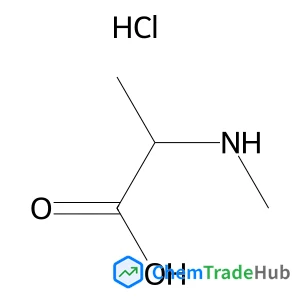
(R)-2-(Methylamino)propanoic acid hydrochloride
CAS Number:
1155878-14-0
Molecular Formula:
C4H10ClNO2

Recommended Suppliers






Disclaimer
This page provides academic journal information for reference and research purposes only. We are not affiliated with any journal publishers and do not handle publication submissions. For publication-related inquiries, please contact the respective journal publishers directly.
If you notice any inaccuracies in the information displayed, please contact us at support@chemtradehub.com. We will promptly review and address your concerns.