


Dependence of A-RNA simulations on the choice of the force field and salt strength
Literature Information
Publication Date
2009-09-24
DOI
10.1039/B911169G
Impact Factor
3.676
Authors
Kamila Réblová, Jiří Šponer
View Original
Abstract
We present an extensive molecular dynamics study (0.6 μs in total) on three A-RNA duplexes. The dependence of the A-RNA geometry on force fields (Parm99 and Parmbsc0) and salt strength conditions (∼0.18 M net-neutralizing Na+ and ∼0.3 M KCl) was investigated. The Parmbsc0 force field makes the A-RNA duplex more compact in comparison to the Parm99 by preventing temporary α/γ t/t flips common in Parm99 simulations. Nevertheless, since the α/γ t/t sub-state occurs to certain extent in experimental A-RNA structures, we consider both force fields as viable. The stabilization of the A-RNA helices caused by the Parmbsc0 force field includes visible reduction of the major groove width, increase of the base pair roll, larger helical inclination and small increases of twist. Therefore, the Parmbsc0 shifts the simulated duplexes more deeply into the A-form. Further narrowing of the deep major groove is observed in excess salt simulations, again accompanied by larger roll, inclination and twist. The cumulative difference between Parm99/lower-salt and Parmbsc0/higher-salt simulations is ∼4–8 Å for the average P⋯P distances, and −0.7 to −2.5°, −2.0 to −5.4°, −2.6 to −8.6° and 1.7 to 7.0° for the twist, roll, inclination and propeller, respectively. The effects of the force field and salt condition are sequence-dependent. Thus, the compactness of A-RNA is sensitive to the sequence and the salt strength which may, for example, modulate the end-to-end distance of the A-RNA helix. The simulations neatly reproduce the known base pair roll re-distribution in alternating purine-pyrimidine A-RNA helices.
Recommended Journals

Molecules

Faraday Discussions

Journal of Enzyme inhibition and Medicinal Chemistry

Nature Reviews Drug Discovery

Physical Chemistry Chemical Physics

Environmental Toxicology and Pharmacology

Angewandte Chemie International Edition

European Journal of Organic Chemistry

Current Pharmaceutical Biotechnology

Molecular Diversity
Related Literature
The role of the extra-framework cations in the adsorption of CO2 on faujasite Y
G. D. Pirngruber, P. Raybaud, Y. Belmabkhout, Jiří Čejka, Arnošt Zukal
2010-09-24
Paper
DOI: 10.1039/B927476F
Viscosity sensing in heated alkaline zeolite synthesis media
Lana R. A. Follens, Erwin K. Reichel, Christian Riesch, Jan Vermant, Johan A. Martens, Christine E. A. Kirschhock, Bernhard Jakoby
2008-12-24
Communication
DOI: 10.1039/B816040F
Electrical conductivity–defect structure correlation of variable-valence and fixed-valence acceptor-doped BaTiO3 in quenched state
Han-Ill Yoo, Tae-Sik Oh, Hyung-Soon Kwon, Dong-Kyu Shin, Jong-Sook Lee
2009-03-18
Paper
DOI: 10.1039/B822381P
XCC2—a new coupled cluster model for the second-order polarization propagator
Tatiana Korona
2010-10-15
Paper
DOI: 10.1039/C0CP00474J
J-aggregation of ionic liquid solutions of meso-tetrakis(4-sulfonatophenyl)porphyrin
Maroof Ali, Vinod Kumar, Sheila N. Baker, Gary A. Baker, Siddharth Pandey
2009-12-21
Paper
DOI: 10.1039/B920500D
The influence of the chemical compression on the electric properties of molecular systems within the supermolecular approximation: the LiH molecule as a case study
Anna Kaczmarek, Wojciech Bartkowiak
2009-03-12
Paper
DOI: 10.1039/B819346K
Ionic liquids and reactions at the electrochemical interface
2010-01-14
Perspective
DOI: 10.1039/B923053J
Site-specific Xe additions into Cu–ZSM-5 zeolite
Takashi Yumura, Hiroki Yamashita, Hiroe Torigoe, Hisayoshi Kobayashi, Yasushige Kuroda
2010-01-19
Paper
DOI: 10.1039/B919032E
Analysis of the adsorption state and desorption kinetics of NO2 over Fe–zeolitecatalyst by FT-IR and temperature-programmed desorption
Masaoki Iwasaki, Hirofumi Shinjoh
2010-01-18
Paper
DOI: 10.1039/B923938C
A liposome-based energy conversion system for accelerating the multi-enzyme reactions‡
Ryuhei Matsumoto, Masaya Kakuta, Taiki Sugiyama, Yoshio Goto, Hideki Sakai, Yuichi Tokita, Tsuyonobu Hatazawa, Seiya Tsujimura, Osamu Shirai, Kenji Kano
2010-09-17
Communication
DOI: 10.1039/C0CP00556H
You might also like
Compound Q&A
Is 6-(3-Fluorophenyl)picolinic acid (CAS: 887982-40-3) safe?
6-(3-Fluorophenyl)picolinic acid is generally considered safe for laboratory use...
887982-40-36-(3-Fluorophenyl)pi...
Compound Q&A
What industries use (3R)-3-Pyrrolidinol (CAS: 2799-21-5)?
(3R)-3-Pyrrolidinol is used in the pharmaceutical industry as a precursor for dr...
2799-21-5(3R)-3-Pyrrolidinol
Compound Q&A
What precautions should be taken when handling (4R,5R)-4,5-Diethoxycarbonyl-2,2-dimethyldioxolane (CAS: 59779-75-8)?
When handling (4R,5R)-4,5-Diethoxycarbonyl-2,2-dimethyldioxolane (CAS: 59779-75-...
59779-75-8(4R,5R)-4,5-Diethoxy...
Compound Q&A
How is 1-(6-Chloroimidazo[1,2-b]pyridazin-3-yl)ethanone (CAS: 90734-71-7) typically synthesized?
1-(6-Chloroimidazo[1,2-b]pyridazin-3-yl)ethanone is often synthesized via a mult...
90734-71-71-(6-Chloroimidazo[1...
Compound Q&A
What is the market or research trend for N-Ethyl-3,4-dimethylbenzylamine (CAS: 39180-83-1)?
The market for N-Ethyl-3,4-dimethylbenzylamine (CAS: 39180-83-1) remains steady,...
39180-83-1N-Ethyl-3,4-dimethyl...
Compound Q&A
What is Tert-butyl 3-(pyrrolidin-1-yl)azetidine-1-carboxylate (CAS: 1019008-21-9)?
Tert-butyl 3-(pyrrolidin-1-yl)azetidine-1-carboxylate is a chemical compound wit...
1019008-21-9Tert-butyl 3-(pyrrol...
Compound Q&A
What regulatory guidelines apply to 1-Bromo-3-chloro-2,4-dimethoxybenzene (CAS: 1228956-93-1)?
1-Bromo-3-chloro-2,4-dimethoxybenzene (CAS: 1228956-93-1) falls under the classi...
1228956-93-11-Bromo-3-chloro-2,4...
Compound Q&A
Is 8-Bromo-2-methyl-3,4-dihydroisoquinolin-1(2H)-one (CAS: 1368622-07-4) safe?
The safety of 8-Bromo-2-methyl-3,4-dihydroisoquinolin-1(2H)-one (CAS: 1368622-07...
1368622-07-48-Bromo-2-methyl-3,4...
Compound Q&A
Is Benzyl [(3S)-2,6-dioxo-3-piperidinyl]carbamate (CAS: 22785-43-9) safe?
Benzyl [(3S)-2,6-dioxo-3-piperidinyl]carbamate is generally safe when handled wi...
22785-43-9Benzyl [(3S)-2,6-dio...
Compound Q&A
How should 1-{[4-(4,4,5,5-Tetramethyl-1,3,2-dioxaborolan-2-yl)phenyl]sulfonyl}pyrrolidine (CAS: 928657-21-0) be stored?
1-{[4-(4,4,5,5-Tetramethyl-1,3,2-dioxaborolan-2-yl)phenyl]sulfonyl}pyrrolidine s...
928657-21-01-{[4-(4,4,5,5-Tetra...
Source Journal
Physical Chemistry Chemical Physics
CiteScore:
5.5
Self-citation Rate:
10.3%
Articles per Year:
3036
Physical Chemistry Chemical Physics (PCCP) is an international journal co-owned by 19 physical chemistry and physics societies from around the world. This journal publishes original, cutting-edge research in physical chemistry, chemical physics and biophysical chemistry. To be suitable for publication in PCCP, articles must include significant innovation and/or insight into physical chemistry; this is the most important criterion that reviewers and Editors will judge against when evaluating submissions. The journal has a broad scope and welcomes contributions spanning experiment, theory, computation and data science. Topical coverage includes spectroscopy, dynamics, kinetics, statistical mechanics, thermodynamics, electrochemistry, catalysis, surface science, quantum mechanics, quantum computing and machine learning. Interdisciplinary research areas such as polymers and soft matter, materials, nanoscience, energy, surfaces/interfaces, and biophysical chemistry are welcomed if they demonstrate significant innovation and/or insight into physical chemistry. Joined experimental/theoretical studies are particularly appreciated when complementary and based on up-to-date approaches.
Recommended Compounds
![2-[({[(2-Methyl-2-propanyl)oxy]carbonyl}amino)methyl]isonicotinic acid structure](https://static.chemtradehub.com/structs/473/473924-63-9-973b.webp "2-[({[(2-Methyl-2-propanyl)oxy]carbonyl}amino)methyl]isonicotinic acid structure")
2-[({[(2-Methyl-2-propanyl)oxy]carbonyl}amino)methyl]isonicotinic acid
CAS Number:
473924-63-9
Molecular Formula:
C12H16N2O4
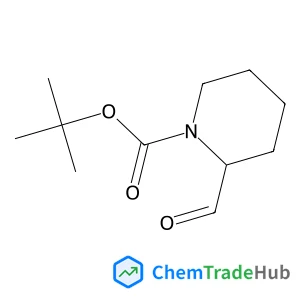
2-Methyl-2-propanyl (2R)-2-formyl-1-piperidinecarboxylate
CAS Number:
134526-69-5
Molecular Formula:
C11H19NO3
Recommended Suppliers



Disclaimer
This page provides academic journal information for reference and research purposes only. We are not affiliated with any journal publishers and do not handle publication submissions. For publication-related inquiries, please contact the respective journal publishers directly.
If you notice any inaccuracies in the information displayed, please contact us at support@chemtradehub.com. We will promptly review and address your concerns.