












Chiral Pd aqua complex-catalyzed asymmetric C–C bond-forming reactions: a Brønsted acid–base cooperative system
Literature Information
Publication Date
2009-08-17
DOI
10.1039/B911015A
Impact Factor
6.222
Authors
Mikiko Sodeoka, Yoshitaka Hamashima
View Original
Abstract
Chiral cationic Pd aqua complexes can function as acid–base catalysts, effectively activating active methylene and methine compounds to give chiral Pd enolates. It is noteworthy that such enolate formation occurs with concomitant formation of a strong protic acid. Although the reactivity of the Pd enolate itself is not sufficient for reactions with carbon-based electrophiles, its cooperative action with the protic acid to activate the electrophiles allows the desired C–C bond-forming reactions to proceed smoothly in a highly enantioselective manner. Based on this mechanistic feature, reactions with acetals have been developed; these are difficult to achieve using conventional basic enolate chemistry.
Related Literature
Controlled growth of novel hyper-branched nanostructures in nanoporous alumina membrane
Junping Zhang, Cynthia S. Day, David L. Carroll
2009-10-20
Communication
DOI: 10.1039/B913917F
Tin(ii) chloride assisted synthesis of N-protected γ-amino β-keto esters through semipinacol rearrangement
Anupam Bandyopadhyay, Neha Agrawal, Sachitanand M. Mali, Sandip V. Jadhav, Hosahudya N. Gopi
2010-08-24
Paper
DOI: 10.1039/C0OB00199F
Synthesis of homogeneous antifreeze glycopeptidesvia a ligation–desulfurisation strategy
James Garner, Katrina A. Jolliffe, Margaret M. Harding, Richard J. Payne
2009-10-21
Communication
DOI: 10.1039/B918021D
NHC-catalysed annulation of enals to tethered dienones: efficient synthesis of bicyclic dienes
Vijay Nair, Sreekumar Vellalath, Beneesh P. Babu, Vimal Varghese, Rony Rajan Paul, Eringathodi Suresh
2010-08-24
Paper
DOI: 10.1039/C0OB00180E
Multiple convergence in polyketide biosynthesis: a third folding mode to the anthraquinonechrysophanol‡
Gerhard Bringmann, Tobias A. M. Gulder, Andreas Hamm, Michael Goodfellow, Hans-Peter Fiedler
2009-10-05
Communication
DOI: 10.1039/B910501H
A domino synthesis of benzoquinolinamide in the presence of iodine
Li-Yan Zeng, Chun Cai
2010-09-06
Communication
DOI: 10.1039/C0OB00364F
Synthesis of oligoribonucleotides with phosphonate-modified linkages
Ondřej Páv, Ivana Košiová, Ivan Barvík, Radek Pohl, Miloš Buděšínský, Ivan Rosenberg
2011-06-15
Paper
DOI: 10.1039/C1OB05488K
Radical formation of amino acid precursors in interstellar regions? Ser, Cys and Asp
Daniel J. Knowles, Tianfang Wang, John H. Bowie
2010-08-31
Paper
DOI: 10.1039/C0OB00232A
Combinatorial approach toward synthesis of small molecule libraries as bacterial transglycosylase inhibitors
Hao-Wei Shih, Kuo-Ting Chen, Shao-Kang Chen, Chia-Ying Huang, Ting-Jen R Cheng, Che Ma, Chi-Huey Wong, Wei-Chieh Cheng
2010-03-29
Paper
DOI: 10.1039/C000622J
Rauhut–Currier type homo- and heterocouplings involving nitroalkenes and nitrodienes
Pramod Shanbhag, Pradeep R. Nareddy, Mamta Dadwal, Shaikh M. Mobin, Irishi N. N. Namboothiri
2010-08-24
Paper
DOI: 10.1039/C0OB00062K
You might also like
Compound Q&A
What industries use (1R,3S)-1,3-Cyclopentanediol (CAS: 16326-97-9)?
(1R,3S)-1,3-Cyclopentanediol finds applications in various industries. In the ph...
16326-97-9(1R,3S)-1,3-Cyclopen...
Compound Q&A
What precautions should be taken when handling N'-[4-(Dimethylamino)phenyl]-N,N-dimethyl-1,4-benzenediamine (CAS: 637-31-0)?
When handling N'-[4-(Dimethylamino)phenyl]-N,N-dimethyl-1,4-benzenediamine, it i...
637-31-0N'-[4-(Dimethylamino...
Compound Q&A
Are there alternatives to 5-(2,4-Difluorophenyl)-2-methoxypyrimidine (CAS: 1352318-16-1) in synthesis?
There are several alternatives to 5-(2,4-Difluorophenyl)-2-methoxypyrimidine in ...
1352318-16-15-(2,4-Difluoropheny...
Compound Q&A
What regulatory guidelines apply to 1-(3-Methoxyphenoxy)propan-2-ol (CAS: 382141-68-6)?
1-(3-Methoxyphenoxy)propan-2-ol (CAS: 382141-68-6) must comply with the Globally...
382141-68-61-(3-Methoxyphenoxy)...
Compound Q&A
Is Tetrodotoxin Citrate (CAS: 18660-81-6) safe?
Tetrodotoxin Citrate is extremely dangerous and should be handled with extreme c...
18660-81-6Tetrodotoxin Citrate
Compound Q&A
What are the main uses of 2-Methyl-2-propanyl [(1R,3S)-3-hydroxycyclopentyl]carbamate (CAS: 225641-84-9)?
2-Methyl-2-propanyl [(1R,3S)-3-hydroxycyclopentyl]carbamate (CAS: 225641-84-9) i...
225641-84-92-Methyl-2-propanyl ...
Compound Q&A
How should waste containing 4-(2-Hydroxyhexafluoroisopropyl)Benzoic Acid (CAS: 16261-80-6) be handled?
Waste containing 4-(2-Hydroxyhexafluoroisopropyl)Benzoic Acid (CAS: 16261-80-6) ...
16261-80-64-(2-Hydroxyhexafluo...
Compound Q&A
How is 2-Methyl-2-proanyl {(2S)-1-[(benzyloxy)amino]-3-hydroxy-3-methyl-1-oxo-2-butanyl}carbamate (CAS: 102507-19-7) typically synthesized?
2-Methyl-2-proanyl {(2S)-1-[(benzyloxy)amino]-3-hydroxy-3-methyl-1-oxo-2-butanyl...
102507-19-72-Methyl-2-propanyl ...
Compound Q&A
What is Benzeneethanamine, α-ethyl-, hydrochloride (1:1) (CAS: 20735-15-3)?
Benzeneethanamine, α-ethyl-, hydrochloride (1:1) is an organic compound with the...
20735-15-3Benzeneethanamine, α...
Compound Q&A
Are there alternatives to 3-{(E)-[4-(Dimethylamino)phenyl]diazenyl}benzoic acid (CAS: 20691-84-3) in synthesis?
In the synthesis of compounds similar to 3-{(E)-[4-(Dimethylamino)phenyl]diazeny...
20691-84-33-{(E)-[4-(Dimethyla...
Source Journal
Chemical Communications

CiteScore:
8.6
Self-citation Rate:
4.7%
Articles per Year:
2458
ChemComm publishes urgent research which is of outstanding significance and interest to experts in the field, while also appealing to the journal’s broad chemistry readership. Our communication format is ideally suited to short, urgent studies that are of such importance that they require accelerated publication. Our scope covers all topics in chemistry, and research at the interface of chemistry and other disciplines (such as materials science, nanoscience, physics, engineering and biology) where there is a significant novelty in the chemistry aspects. Major topic areas covered include: Analytical Chemistry Catalysis Chemical Biology and medicinal chemistry Computational Chemistry and Machine Learning Energy and sustainable chemistry Environmental Chemistry Green Chemistry Inorganic Chemistry Materials Chemistry Nanoscience Organic Chemistry Physical Chemistry Polymer Chemistry Supramolecular Chemistry
Recommended Compounds
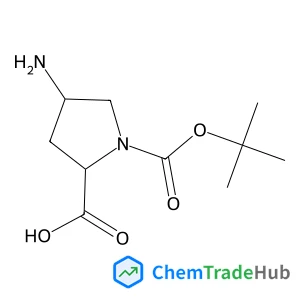
(2R,4R)-1-Boc-4-Aminopyrrolidine-2-carboxylic acid
CAS Number:
132622-98-1
Molecular Formula:
C10H18N2O4
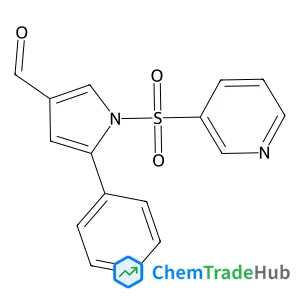
5-Phenyl-1-(pyridin-3-ylsulfonyl)-1H-pyrrole-3-carbaldehyde
CAS Number:
881676-90-0
Molecular Formula:
C16H12N2O3S
Recommended Suppliers





Disclaimer
This page provides academic journal information for reference and research purposes only. We are not affiliated with any journal publishers and do not handle publication submissions. For publication-related inquiries, please contact the respective journal publishers directly.
If you notice any inaccuracies in the information displayed, please contact us at support@chemtradehub.com. We will promptly review and address your concerns.