












Radical formation of amino acid precursors in interstellar regions? Ser, Cys and Asp
Literature Information
Publication Date
2010-08-31
DOI
10.1039/C0OB00232A
Impact Factor
3.876
Authors
Daniel J. Knowles, Tianfang Wang, John H. Bowie
View Original
Abstract
It is proposed that the glycine precursor NH2CH2CN may be synthesised in interstellar dust clouds by the radical combination reactions NH2˙ + ˙CH2CN → NH2CH2CN (ΔG = −302 kJ mol−1) and/or NH2CH2˙ + ˙CN → NH2CH2CN (ΔG = −414 kJ mol−1). All calculations at the CCSD(T)/aug-cc-pVDZ//B3LYP/6-31+G(d) level of theory. This paper extends that concept to radical/radical coupling reactions to form Ser, Cys and Asp precursor nitriles. The hydrogen abstraction process NH2CH2CN + HO˙ → NH2˙CHCN + H2O (ΔG = −130 kJ mol−1) is suggested to precede the radical coupling reactions NH2˙CHCN + R˙ → NH2CHRCN (R˙ = ˙CH2OH, ˙CH2SH and ˙CH2CN) to form nitrile precursors of the amino acids Ser, Cys and Asp. These three reactions are all favourable (ΔG = −240, −227 and −223 kJ mol−1). The radical species ˙CH2NH2, ˙CH2OH, ˙CH2SH and ˙CH2CN are shown to be stable for the microsecond timeframe by a combination of theoretical calculations and the experimental mass spectrometric neutralization/reionization procedure.
Recommended Journals
Related Literature
Recent progress in self-supported two-dimensional transition metal oxides and (oxy)hydroxides as oxygen evolution reaction catalysts
Jie Zhang, Conghui Si, Tianyi Kou, Jianfeng Wang, Zhonghua Zhang
2020-03-23
Review Article
DOI: 10.1039/C9SE01312A
Fluorinated oligothiophene donors for high-performance nonfullerene small-molecule organic solar cells
Yuying Chang, Cenqi Yan, Qianguang Yang, Zhipeng Kan, Ranbir Singh, Manish Kumar, Gang Li, Shirong Lu, Tainan Duan
2020-04-07
Communication
DOI: 10.1039/D0SE00335B
Cobalt(ii) ions and cobalt nanoparticle embedded porous organic polymers: an efficient electrocatalyst for water-splitting reactions
Krishnan Giribabu, Murugavel Kathiresan, Kyusik Yun
2020-05-11
Paper
DOI: 10.1039/D0SE00580K
Sheltering proteins from protease-mediated degradation and a de novo strategy for preventing acute liver injury
Bojiao Tang, Sijie Zhou, Jianghui Qin, Wujun Geng
2021-05-11
Communication
DOI: 10.1039/D1BM00063B
The estimation of pentosans and its application to the analysis of foods
Paper
DOI: 10.1039/AN8992400178
Big problem, little answer: overcoming bed agglomeration and reactor slagging during the gasification of barley straw under continuous operation
Hassan A. Alabdrabalameer, Juho Kauppinen, Toni Pikkarainen
2020-05-25
Paper
DOI: 10.1039/D0SE00155D
Novel Ru nanoparticle catalysts for the catalytic transfer hydrogenation of biomass-derived furanic compounds
Nishita Lucas
2020-05-04
Paper
DOI: 10.1039/D0SE00361A
Polymer reinforced carbon fiber interfaces for high energy density structural lithium-ion batteries
Kathleen Moyer, Nora Ait Boucherbil, Murtaza Zohair, Janna Eaves-Rathert, Cary L. Pint
2020-03-31
Communication
DOI: 10.1039/D0SE00263A
You might also like
Compound Q&A
What industries use (1R,3S)-1,3-Cyclopentanediol (CAS: 16326-97-9)?
(1R,3S)-1,3-Cyclopentanediol finds applications in various industries. In the ph...
16326-97-9(1R,3S)-1,3-Cyclopen...
Compound Q&A
What precautions should be taken when handling N'-[4-(Dimethylamino)phenyl]-N,N-dimethyl-1,4-benzenediamine (CAS: 637-31-0)?
When handling N'-[4-(Dimethylamino)phenyl]-N,N-dimethyl-1,4-benzenediamine, it i...
637-31-0N'-[4-(Dimethylamino...
Compound Q&A
Are there alternatives to 5-(2,4-Difluorophenyl)-2-methoxypyrimidine (CAS: 1352318-16-1) in synthesis?
There are several alternatives to 5-(2,4-Difluorophenyl)-2-methoxypyrimidine in ...
1352318-16-15-(2,4-Difluoropheny...
Compound Q&A
What regulatory guidelines apply to 1-(3-Methoxyphenoxy)propan-2-ol (CAS: 382141-68-6)?
1-(3-Methoxyphenoxy)propan-2-ol (CAS: 382141-68-6) must comply with the Globally...
382141-68-61-(3-Methoxyphenoxy)...
Compound Q&A
Is Tetrodotoxin Citrate (CAS: 18660-81-6) safe?
Tetrodotoxin Citrate is extremely dangerous and should be handled with extreme c...
18660-81-6Tetrodotoxin Citrate
Compound Q&A
What are the main uses of 2-Methyl-2-propanyl [(1R,3S)-3-hydroxycyclopentyl]carbamate (CAS: 225641-84-9)?
2-Methyl-2-propanyl [(1R,3S)-3-hydroxycyclopentyl]carbamate (CAS: 225641-84-9) i...
225641-84-92-Methyl-2-propanyl ...
Compound Q&A
How should waste containing 4-(2-Hydroxyhexafluoroisopropyl)Benzoic Acid (CAS: 16261-80-6) be handled?
Waste containing 4-(2-Hydroxyhexafluoroisopropyl)Benzoic Acid (CAS: 16261-80-6) ...
16261-80-64-(2-Hydroxyhexafluo...
Compound Q&A
How is 2-Methyl-2-proanyl {(2S)-1-[(benzyloxy)amino]-3-hydroxy-3-methyl-1-oxo-2-butanyl}carbamate (CAS: 102507-19-7) typically synthesized?
2-Methyl-2-proanyl {(2S)-1-[(benzyloxy)amino]-3-hydroxy-3-methyl-1-oxo-2-butanyl...
102507-19-72-Methyl-2-propanyl ...
Compound Q&A
What is Benzeneethanamine, α-ethyl-, hydrochloride (1:1) (CAS: 20735-15-3)?
Benzeneethanamine, α-ethyl-, hydrochloride (1:1) is an organic compound with the...
20735-15-3Benzeneethanamine, α...
Compound Q&A
Are there alternatives to 3-{(E)-[4-(Dimethylamino)phenyl]diazenyl}benzoic acid (CAS: 20691-84-3) in synthesis?
In the synthesis of compounds similar to 3-{(E)-[4-(Dimethylamino)phenyl]diazeny...
20691-84-33-{(E)-[4-(Dimethyla...
Source Journal
Organic & Biomolecular Chemistry

CiteScore:
3.4
Self-citation Rate:
10.3%
Articles per Year:
1041
Organic & Biomolecular Chemistry (OBC) publishes original and high impact research and reviews in organic chemistry. We welcome research that shows new or significantly improved protocols or methodologies in total synthesis, synthetic methodology or physical and theoretical organic chemistry as well as research that shows a significant advance in the organic chemistry or molecular design aspects of chemical biology, catalysis, supramolecular and macromolecular chemistry, theoretical chemistry, mechanism-oriented physical organic chemistry, medicinal chemistry or natural products. Articles published in the journal should report new work which makes a highly-significant impact in the field. Routine and incremental work is generally not suitable for publication in the journal. More details about key areas of our scope are below. In all cases authors should include in their article clear rationale for why their research has been carried out.
Recommended Compounds
![[4-(Isobutyrylamino)phenyl]boronic acid structure](https://static.chemtradehub.com/structs/874/874219-50-8-6ab5.webp "[4-(Isobutyrylamino)phenyl]boronic acid structure")
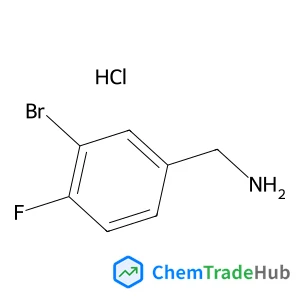
1-(3-Bromo-4-fluorophenyl)methanamine hydrochloride (1:1)
CAS Number:
202865-68-7
Molecular Formula:
C7H8BrClFN
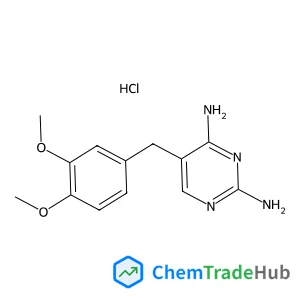
5-(3,4-Dimethoxybenzyl)-2,4-pyrimidinediamine hydrochloride (1:1)
CAS Number:
2507-23-5
Molecular Formula:
C13H17ClN4O2
Recommended Suppliers






Disclaimer
This page provides academic journal information for reference and research purposes only. We are not affiliated with any journal publishers and do not handle publication submissions. For publication-related inquiries, please contact the respective journal publishers directly.
If you notice any inaccuracies in the information displayed, please contact us at support@chemtradehub.com. We will promptly review and address your concerns.