












![[4-Amino-2-(methylsulfanyl)-5-pyrimidinyl]methanol structure](https://static.chemtradehub.com/structs/588/588-36-3-fc73.webp "[4-Amino-2-(methylsulfanyl)-5-pyrimidinyl]methanol structure")
Inelastic neutron scattering and Raman spectroscopic investigation of l-alanine alaninium nitrate, a homologue of a ferroelectric material
Literature Information
Publication Date
2009-08-21
DOI
10.1039/B905070A
Impact Factor
3.676
Authors
Matthew R. Hudson, Damian G. Allis, Wayne Ouellette, Bruce S. Hudson
View Original
Abstract
The 2 : 1 amino acid salt of L-alanine with nitric acid was crystallized and the vibrational spectrum measured at 25 K by incoherent inelastic neutron scattering (INS) spectroscopy. The spectrum was simulated using solid-state density functional theory based on a new 90 K structure determination. A feature observed at approximately 450 cm−1 in the INS spectrum of L-alanine alaninium nitrate is noticeably absent in the calculation. Raman spectroscopy reveals spectral differences between the spectra at 77 and 293 K with a 450 cm−1 feature appearing at low temperature. The nature of these spectral changes and the disagreement between the INS spectrum and its simulation are discussed in relation to an apparent structural change involving motion of a proton at low (<90 K) temperature.
Related Literature
Delineating the role of ripples on the thermal expansion of 2D honeycomb materials: graphene, 2D h-BN and monolayer (ML)-MoS2
P. Anees, M. C. Valsakumar, B. K. Panigrahi
2017-03-24
Paper
DOI: 10.1039/C6CP08635G
GaS0.5Te0.5 monolayer as an efficient water splitting photocatalyst
Yujie Bai, Qinfang Zhang, Gaixia Luo, Yali Bu, Lei Zhu, Lele Fan, Baolin Wang
2017-05-22
Paper
DOI: 10.1039/C7CP01627A
Understanding doping strategies in the design of organic electrode materials for Li and Na ion batteries: an electronic structure perspective
Johann Lüder, Mun Ho Cheow, Sergei Manzhos
2017-05-10
Paper
DOI: 10.1039/C7CP01554B
Mechanical and vibrational characterization of amyloid-like HET-s nanosheets based on the skewed plate theory
Hyun Joon Chang, Myeongsang Lee, Jae In Kim, Sungsoo Na
2017-04-03
Paper
DOI: 10.1039/C7CP01418J
A thermodynamic model to predict electron mobility in superfluid helium
Frédéric Aitken, Ferdinand Volino, Luis Guillermo Mendoza-Luna, Klaus von Haeften, Jussi Eloranta
2017-05-23
Paper
DOI: 10.1039/C7CP03067C
Charge transfer quantification in a SnOx/CuPc semiconductor heterostructure: investigation of buried interface energy structure by photoelectron spectroscopies
Lucyna Grządziel, Adnan Sarfraz
2017-04-26
Paper
DOI: 10.1039/C7CP01688C
Multichromophoric hybrid species made of perylene bisimide derivatives and Ru(ii) and Os(ii) polypyridine subunits
Francesco Nastasi, Giuseppina La Ganga, Sebastiano Campagna, Zois Syrgiannis, Francesco Rigodanza, Stefania Vitale, Antonino Licciardello
2017-05-03
Paper
DOI: 10.1039/C7CP01597F
Electron transfer in silicon-bridged adjacent chromophores: the source for blue-green emission
Malgorzata Bayda, Gonzalo Angulo, Jerzy Karolczak, Jacek Koput, Jacek Dobkowski, Bronislaw Marciniak
2017-04-03
Paper
DOI: 10.1039/C7CP00590C
Identification of the smallest peptide with a zwitterion as the global minimum: a first-principles study on arginine-containing peptides
Hongbao Li, Jun Jiang
2017-04-06
Paper
DOI: 10.1039/C7CP01380A
Chiral supramolecular organization from a sheet-like achiral gel: a study of chiral photoinduction
Jorge Royes, Víctor Polo, Santiago Uriel, Luis Oriol, Milagros Piñol, Rosa M. Tejedor
2017-05-05
Paper
DOI: 10.1039/C7CP01739A
You might also like
Compound Q&A
How should waste containing N-Methoxy-N-methyl-1,3-thiazole-5-carboxamide (CAS: 898825-89-3) be handled?
Waste containing N-Methoxy-N-methyl-1,3-thiazole-5-carboxamide (CAS: 898825-89-3...
898825-89-3N-Methoxy-N-methyl-1...
Compound Q&A
How should N-(4-Biphenylyl)dibenzo[b,d]furan-4-amine (CAS: 1318338-47-4) be stored?
N-(4-Biphenylyl)dibenzo[b,d]furan-4-amine should be stored in a tightly sealed c...
1318338-47-4N-(4-Biphenylyl)dibe...
Compound Q&A
What is the market or research trend for 3-Acetamido-5-amino-2,4,6-triiodobenzoic acid (CAS: 1713-07-1)?
The market for 3-Acetamido-5-amino-2,4,6-triiodobenzoic acid (CAS: 1713-07-1) is...
1713-07-13-Acetamido-5-amino-...
Compound Q&A
How should Benzyl 2-O-acetyl-3,4,6-tri-O-benzyl-beta-D-galactopyranoside (CAS: 61820-03-9) be stored?
Benzyl 2-O-acetyl-3,4,6-tri-O-benzyl-beta-D-galactopyranoside (CAS: 61820-03-9) ...
61820-03-9Benzyl 2-O-acetyl-3,...
Compound Q&A
What regulatory guidelines apply to 2-Ethylpiperazine dihydrochloride (CAS: 438050-52-3)?
2-Ethylpiperazine dihydrochloride (CAS: 438050-52-3) is regulated under the Glob...
438050-52-32-Ethylpiperazine di...
Compound Q&A
What regulatory guidelines apply to 1,1'-[1,3-Phenylenebis(methylene)]bis(3-methyl-1H-pyrrole-2,5-dione) (CAS: 119462-56-5)?
1,1'-[1,3-Phenylenebis(methylene)]bis(3-methyl-1H-pyrrole-2,5-dione) (CAS: 11946...
119462-56-51,1'-[1,3-Phenyleneb...
Compound Q&A
Are there alternatives to 5-Fluoro-2-(1-pyrrolidinyl)pyridine (CAS: 1287217-79-1) in synthesis?
Several alternatives can be used in the synthesis of 5-Fluoro-2-(1-pyrrolidinyl)...
1287217-79-15-Fluoro-2-(1-pyrrol...
Compound Q&A
What precautions should be taken when handling 1-((2R,3R,4R,5R)-5-((bis(4-methoxyphenyl)(phenyl)methoxy)methyl)-4-hydroxy-3-methoxytetrahydrofuran-2-yl)-5-methylpyrimidine-2,4(1H,3H)-dione (CAS: 153631-19-7)?
Proper personal protective equipment (PPE) must be worn when handling this compo...
153631-19-71-((2R,3R,4R,5R)-5-(...
Compound Q&A
What precautions should be taken when handling 6-Bromoimidazo[1,2-a]pyridin-8-amine (CAS: 676371-00-9)?
When handling 6-Bromoimidazo[1,2-a]pyridin-8-amine, it is important to wear appr...
676371-00-96-Bromoimidazo[1,2-a...
Compound Q&A
Are there alternatives to (2S,4R)-4-(4-Nitrobenzyl)pyrrolidine-2-carboxylic acid hydrochloride (CAS: 1049740-22-8) in synthesis?
Alternatives to (2S,4R)-4-(4-Nitrobenzyl)pyrrolidine-2-carboxylic acid hydrochlo...
1049740-22-8(2S,4R)-4-(4-Nitrobe...
Source Journal
Physical Chemistry Chemical Physics

CiteScore:
5.5
Self-citation Rate:
10.3%
Articles per Year:
3036
Physical Chemistry Chemical Physics (PCCP) is an international journal co-owned by 19 physical chemistry and physics societies from around the world. This journal publishes original, cutting-edge research in physical chemistry, chemical physics and biophysical chemistry. To be suitable for publication in PCCP, articles must include significant innovation and/or insight into physical chemistry; this is the most important criterion that reviewers and Editors will judge against when evaluating submissions. The journal has a broad scope and welcomes contributions spanning experiment, theory, computation and data science. Topical coverage includes spectroscopy, dynamics, kinetics, statistical mechanics, thermodynamics, electrochemistry, catalysis, surface science, quantum mechanics, quantum computing and machine learning. Interdisciplinary research areas such as polymers and soft matter, materials, nanoscience, energy, surfaces/interfaces, and biophysical chemistry are welcomed if they demonstrate significant innovation and/or insight into physical chemistry. Joined experimental/theoretical studies are particularly appreciated when complementary and based on up-to-date approaches.
Recommended Compounds
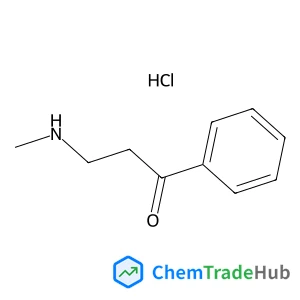
3-(Methylamino)-1-phenyl-1-propanone hydrochloride (1:1)
CAS Number:
2538-50-3
Molecular Formula:
C10H14ClNO
![[4-(Heptyloxy)phenyl]boronic acid structure](https://static.chemtradehub.com/structs/136/136370-19-9-ad33.webp "[4-(Heptyloxy)phenyl]boronic acid structure")
![4-{2-[4-(2-Methyl-2-propanyl)phenyl]ethoxy}quinazoline structure](https://static.chemtradehub.com/structs/120/120928-09-8-d3db.webp "4-{2-[4-(2-Methyl-2-propanyl)phenyl]ethoxy}quinazoline structure")
4-{2-[4-(2-Methyl-2-propanyl)phenyl]ethoxy}quinazoline
CAS Number:
120928-09-8
Molecular Formula:
C20H22N2O
Recommended Suppliers




Disclaimer
This page provides academic journal information for reference and research purposes only. We are not affiliated with any journal publishers and do not handle publication submissions. For publication-related inquiries, please contact the respective journal publishers directly.
If you notice any inaccuracies in the information displayed, please contact us at support@chemtradehub.com. We will promptly review and address your concerns.