












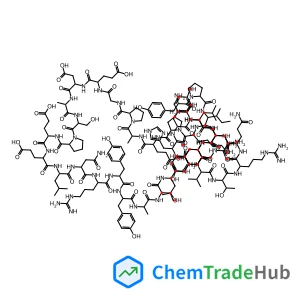
Renewable surface fluorescence sandwich immunoassay biosensor for rapid sensitive botulinum toxin detection in an automated fluidic format
Literature Information
Publication Date
2009-03-05
DOI
10.1039/B900794F
Impact Factor
4.616
Authors
Jay W. Grate, Marvin G. Warner, Richard M. Ozanich, Jr., Keith D. Miller, Heather A. Colburn, Brian Dockendorff, Kathryn C. Antolick, Norman C. Anheier Jr., Michael A. Lind, Jianlong Lou, James D. Marks, Cynthia J. Bruckner-Lea
View Original
Abstract
A renewable surface biosensor for rapid detection of botulinum neurotoxin serotype A is described based on fluidic automation of a fluorescence sandwich immunoassay, using a recombinant protein fragment of the toxin heavy chain (∼50 kDa) as a structurally valid simulant. Monoclonal antibodies AR4 and RAZ1 bind to separate non-overlapping epitopes of the full botulinum holotoxin (∼150 kDa). Both of the targeted epitopes are located on the recombinant fragment. The AR4 antibody was covalently bound to Sepharose beads and used as the capture antibody. A rotating rod flow cell was used to capture these beads delivered as a suspension by a sequential injection flow system, creating a 3.6 µL column. After perfusing the bead column with sample and washing away the matrix, the column was perfused with Alexa 647 dye-labeled RAZ1 antibody as the reporter. Optical fibers coupled to the rotating rod flow cell at a 90° angle to one another delivered excitation light from a HeNe laser (633 nm) using one fiber and collected fluorescent emission light for detection with the other. After each measurement, the used Sepharose beads are released and replaced with fresh beads. In a rapid screening approach to sample analysis, the toxin simulant was detected to concentrations of 10 pM in less than 20 minutes using this system.
Recommended Journals
Related Literature
Liquid–liquid coexistence curves of re-entrant phase transitions beyond the asymptotic range: tetrahydrofuran + water and tetrahydrofuran + heavy water
2002-02-15
Paper
DOI: 10.1039/B109349E
On the chemical properties of sedimentary sulfur in estuarine environments
G. Billon, B. Ouddane, L. Gengembre, A. Boughriet
2002-01-23
Paper
DOI: 10.1039/B108638N
Synchrotron radiation studies of the kinetics of cBN crystallization in the NH4F–BN system
2002-02-06
Paper
DOI: 10.1039/B107483K
Thermodynamic properties and dielectric constants in water/methanol mixtures by integral equation theory and molecular dynamics simulations
2002-02-06
Paper
DOI: 10.1039/B108724J
Co-existence of hydrated electron and metal di-cation in [Mg(H2O)n]+
2002-03-07
Paper
DOI: 10.1039/B109774C
Infrared and Raman spectra, conformational stability, vibrational assignment, ab initio calculations and r0 structural parameters for N-methylpropargyl amine
Gamil A. Guirgis, Stephen Bell, Chao Zheng, James R. Durig
2002-03-19
Paper
DOI: 10.1039/B109222G
Gibbs solution of the van der Waals–Maxwell problem and universality of the liquid–gas coexistence curve
Vitaly B. Rogankov, Leonid Z. Boshkov
2002-02-18
Paper
DOI: 10.1039/B107989C
Excited-state hydrogen detachment and hydrogen transfer driven by repulsive 1πσ* states: A new paradigm for nonradiative decay in aromatic biomolecules
A. L. Sobolewski, W. Domcke, C. Dedonder-Lardeux, C. Jouvet
2002-02-28
Invited Article
DOI: 10.1039/B110941N
Experimental and theoretical study on the reaction Sc + NO → ScO + N
Gwang-Hi Jeung, Paul Luc, Raymond Vetter, Kyoung Hoon Kim, Yoon Sup Lee
2002-01-14
Paper
DOI: 10.1039/B107190D
Nanostructuring of a sodium dodecyl sulfate-covered Au(111) electrode
Marc Petri, Dieter M. Kolb
2002-02-22
Paper
DOI: 10.1039/B110142K
You might also like
Compound Q&A
What regulatory guidelines apply to 6-Bromo-2-methylimidazo[1,2-a]pyrimidine (CAS: 1111638-05-1)?
6-Bromo-2-methylimidazo[1,2-a]pyrimidine (CAS: 1111638-05-1) falls under various...
1111638-05-16-Bromo-2-methylimid...
Compound Q&A
Are there alternatives to 1-Pyrrolidineethanol, β-methyl-α-phenyl-, (αS,βR) (CAS: 123620-80-4) in synthesis?
While there are no direct alternatives, similar compounds like 1-Pyrrolidineetha...
123620-80-41-Pyrrolidineethanol...
Compound Q&A
Is 4-Methyl-2,6-bis(2-methyl-2-propanyl)phenyl methylcarbamate (CAS: 1918-11-2) safe?
4-Methyl-2,6-bis(2-methyl-2-propanyl)phenyl methylcarbamate (CAS: 1918-11-2) is ...
1918-11-24-Methyl-2,6-bis(2-m...
Compound Q&A
How should 2-(3-Bromo-4-fluorophenyl)-1,3-dioxolane (CAS: 77771-04-1) be stored?
2-(3-Bromo-4-fluorophenyl)-1,3-dioxolane (CAS: 77771-04-1) should be stored in a...
77771-04-12-(3-Bromo-4-fluorop...
Compound Q&A
What are the physical and chemical properties of 4,5,6,7-Tetrahydro-1H-indazole hydrochloride (CAS: 18161-11-0)?
4,5,6,7-Tetrahydro-1H-indazole hydrochloride is a white crystalline solid with a...
18161-11-04,5,6,7-Tetrahydro-1...
Compound Q&A
What is (2R)-1-Methoxy-3-phenyl-2-propanamine (CAS: 59919-07-2)?
(2R)-1-Methoxy-3-phenyl-2-propanamine is a chiral organic compound with the CAS ...
59919-07-2(2R)-1-Methoxy-3-phe...
Compound Q&A
What industries use Ethyl 1-(1-phenylethyl)-1H-imidazole-5-carboxylate (CAS: 56649-47-9)?
Ethyl 1-(1-phenylethyl)-1H-imidazole-5-carboxylate is used in various industries...
56649-47-9Ethyl 1-(1-phenyleth...
Compound Q&A
What regulatory guidelines apply to 4-[(1E,3S)-1-(4-Hydroxyphenyl)-1,4-pentadien-3-yl]phenol (CAS: 17676-24-3)?
4-[(1E,3S)-1-(4-Hydroxyphenyl)-1,4-pentadien-3-yl]phenol (CAS: 17676-24-3) falls...
17676-24-34-[(1E,3S)-1-(4-Hydr...
Compound Q&A
What industries use (S)-3-Amino-5-phenylpentanoic acid hydrochloride (CAS: 331846-97-0)?
(S)-3-Amino-5-phenylpentanoic acid hydrochloride is primarily used in the pharma...
331846-97-0(S)-3-Amino-5-phenyl...
Compound Q&A
How is 7-methoxy-1-benzothiophene-2-carboxylic acid (CAS: 88791-07-5) typically synthesized?
7-Methoxy-1-benzothiophene-2-carboxylic acid is typically synthesized by reactin...
88791-07-57-methoxy-1-benzothi...
Source Journal
Analyst

CiteScore:
7.8
Self-citation Rate:
5.6%
Articles per Year:
653
Analyst publishes analytical and bioanalytical research that reports premier fundamental discoveries and inventions, and the applications of those discoveries, unconfined by traditional discipline barriers.
Recommended Compounds
![(3R)-4-(4-Chlorophenyl)-3-({[(2-methyl-2-propanyl)oxy]carbonyl}amino)butanoic acid structure](https://static.chemtradehub.com/structs/218/218608-96-9-f871.webp "(3R)-4-(4-Chlorophenyl)-3-({[(2-methyl-2-propanyl)oxy]carbonyl}amino)butanoic acid structure")
(3R)-4-(4-Chlorophenyl)-3-({[(2-methyl-2-propanyl)oxy]carbonyl}amino)butanoic acid
CAS Number:
218608-96-9
Molecular Formula:
C15H20ClNO4
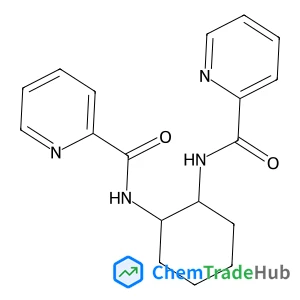
N,N'-(1R,2R)-1,2-Cyclohexanediyldi(2-pyridinecarboxamide)
CAS Number:
218290-24-5
Molecular Formula:
C18H20N4O2
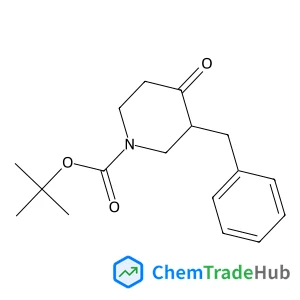
2-Methyl-2-propanyl 3-benzyl-4-oxo-1-piperidinecarboxylate
CAS Number:
193274-82-7
Molecular Formula:
C17H23NO3
Recommended Suppliers








Disclaimer
This page provides academic journal information for reference and research purposes only. We are not affiliated with any journal publishers and do not handle publication submissions. For publication-related inquiries, please contact the respective journal publishers directly.
If you notice any inaccuracies in the information displayed, please contact us at support@chemtradehub.com. We will promptly review and address your concerns.