


Excited-state hydrogen detachment and hydrogen transfer driven by repulsive 1πσ* states: A new paradigm for nonradiative decay in aromatic biomolecules
Literature Information
Publication Date
2002-02-28
DOI
10.1039/B110941N
Impact Factor
3.676
Authors
A. L. Sobolewski, W. Domcke, C. Dedonder-Lardeux, C. Jouvet
View Original
Abstract
The combined results of ab initio electronic-structure calculations and spectroscopic investigations of jet-cooled molecules and clusters provide strong evidence of a surprisingly simple and general mechanistic picture of the nonradiative decay of biomolecules such as nucleic bases and aromatic amino acids. The key role in this picture is played by excited singlet states of πσ* character, which have repulsive potential-energy functions with respect to the stretching of OH or NH bonds. The 1πσ* potential-energy functions intersect not only the bound potential-energy functions of the 1ππ* excited states, but also that of the electronic ground state. Via predissociation of the 1ππ* states and a conical intersection with the ground state, the 1πσ* states trigger an ultrafast internal-conversion process, which is essential for the photostability of biomolecules. In protic solvents, the 1πσ* states promote a hydrogen-transfer process from the chromophore to the solvent. Calculations for chromophore–water clusters have shown that a spontaneous charge-separation process takes place in the solvent shell, yielding a microsolvated hydronium cation and a microsolvated electron. These results suggest that the basic mechanisms of the complex photochemistry of biomolecules in liquid water can be revealed by experimental and theoretical investigations of relatively small chromophore–water clusters.
Recommended Journals

Journal of Saudi Chemical Society

Crystallography Reports

Russian Journal of Applied Chemistry

Saudi Pharmaceutical Journal

Nature Medicine

Organic Process Research & Development

Journal of Natural Medicines

Russian Journal of General Chemistry

Drug Discovery Today

Current Opinion in Colloid & Interface Science
Related Literature
Copper-catalyzed diastereoselective hydrothioetherification of oxa(aza)benzonorbornadienes
Yongqi Yao, Wen Yang, Yun Tan, Shuqi Chen, Donghan Chen, Dingqiao Yang
2020-04-20
Paper
DOI: 10.1039/D0OB00659A
A hybrid polymer to target blood group dependence of cholera toxin
Diksha Haksar, Linda Quarles van Ufford, Roland J. Pieters
2019-11-28
Communication
DOI: 10.1039/C9OB02369K
1-(2H-Azirine-2-carbonyl)benzotriazoles: building blocks for the synthesis of pyrrole-containing heterocycles‡
Ekaterina E. Galenko, Firuza M. Shakirova, Vladimir A. Bodunov, Mikhail S. Novikov, Alexander F. Khlebnikov
2020-03-03
Paper
DOI: 10.1039/D0OB00206B
Synthesis of trehalose glycolipids
Santanu Jana, Suvarn S. Kulkarni
2020-02-20
Review Article
DOI: 10.1039/D0OB00041H
Synthesis of 3-fluoro-2,5-disubstituted furans through ring expansion of gem-difluorocyclopropyl ketones
Tsuyuka Sugiishi, Chihori Matsumura, Hideki Amii
2020-02-28
Communication
DOI: 10.1039/C9OB02713K
Tandem addition/cyclization for synthesis of 2-aroyl benzofurans and 2-aroyl indoles by carbopalladation of nitriles
Julin Gong, Kun Hu, Yinlin Shao, Renhao Li, Yetong Zhang, Maolin Hu, Jiuxi Chen
2019-12-13
Paper
DOI: 10.1039/C9OB02408E
Highly selective staining and quantification of intracellular lipid droplets with a compact push–pull fluorophore based on benzothiadiazole
S. Israel Suarez, Caroline C. Warner, Heather Brown-Harding, Andrea M. Thooft, Brett VanVeller, John C. Lukesh, III
2019-12-12
Paper
DOI: 10.1039/C9OB02486G
Rh-Catalyzed C–H activation/intramolecular condensation for the construction of benzo[f]pyrazolo[1,5-a][1,3]diazepines
Yi Ning, Xinwei He, Youpeng Zuo, Jian Wang, Qiang Tang, Mengqing Xie, Ruxue Li, Yongjia Shang
2020-03-20
Paper
DOI: 10.1039/D0OB00382D
You might also like
Compound Q&A
What regulatory guidelines apply to 6-Bromo-2-methylimidazo[1,2-a]pyrimidine (CAS: 1111638-05-1)?
6-Bromo-2-methylimidazo[1,2-a]pyrimidine (CAS: 1111638-05-1) falls under various...
1111638-05-16-Bromo-2-methylimid...
Compound Q&A
Are there alternatives to 1-Pyrrolidineethanol, β-methyl-α-phenyl-, (αS,βR) (CAS: 123620-80-4) in synthesis?
While there are no direct alternatives, similar compounds like 1-Pyrrolidineetha...
123620-80-41-Pyrrolidineethanol...
Compound Q&A
Is 4-Methyl-2,6-bis(2-methyl-2-propanyl)phenyl methylcarbamate (CAS: 1918-11-2) safe?
4-Methyl-2,6-bis(2-methyl-2-propanyl)phenyl methylcarbamate (CAS: 1918-11-2) is ...
1918-11-24-Methyl-2,6-bis(2-m...
Compound Q&A
How should 2-(3-Bromo-4-fluorophenyl)-1,3-dioxolane (CAS: 77771-04-1) be stored?
2-(3-Bromo-4-fluorophenyl)-1,3-dioxolane (CAS: 77771-04-1) should be stored in a...
77771-04-12-(3-Bromo-4-fluorop...
Compound Q&A
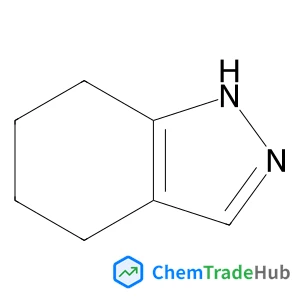
What are the physical and chemical properties of 4,5,6,7-Tetrahydro-1H-indazole hydrochloride (CAS: 18161-11-0)?
4,5,6,7-Tetrahydro-1H-indazole hydrochloride is a white crystalline solid with a...
18161-11-04,5,6,7-Tetrahydro-1...
Compound Q&A
What is (2R)-1-Methoxy-3-phenyl-2-propanamine (CAS: 59919-07-2)?
(2R)-1-Methoxy-3-phenyl-2-propanamine is a chiral organic compound with the CAS ...
59919-07-2(2R)-1-Methoxy-3-phe...
Compound Q&A
What industries use Ethyl 1-(1-phenylethyl)-1H-imidazole-5-carboxylate (CAS: 56649-47-9)?
Ethyl 1-(1-phenylethyl)-1H-imidazole-5-carboxylate is used in various industries...
56649-47-9Ethyl 1-(1-phenyleth...
Compound Q&A
What regulatory guidelines apply to 4-[(1E,3S)-1-(4-Hydroxyphenyl)-1,4-pentadien-3-yl]phenol (CAS: 17676-24-3)?
4-[(1E,3S)-1-(4-Hydroxyphenyl)-1,4-pentadien-3-yl]phenol (CAS: 17676-24-3) falls...
17676-24-34-[(1E,3S)-1-(4-Hydr...
Compound Q&A
What industries use (S)-3-Amino-5-phenylpentanoic acid hydrochloride (CAS: 331846-97-0)?
(S)-3-Amino-5-phenylpentanoic acid hydrochloride is primarily used in the pharma...
331846-97-0(S)-3-Amino-5-phenyl...
Compound Q&A
How is 7-methoxy-1-benzothiophene-2-carboxylic acid (CAS: 88791-07-5) typically synthesized?
7-Methoxy-1-benzothiophene-2-carboxylic acid is typically synthesized by reactin...
88791-07-57-methoxy-1-benzothi...
Source Journal
Physical Chemistry Chemical Physics

CiteScore:
5.5
Self-citation Rate:
10.3%
Articles per Year:
3036
Physical Chemistry Chemical Physics (PCCP) is an international journal co-owned by 19 physical chemistry and physics societies from around the world. This journal publishes original, cutting-edge research in physical chemistry, chemical physics and biophysical chemistry. To be suitable for publication in PCCP, articles must include significant innovation and/or insight into physical chemistry; this is the most important criterion that reviewers and Editors will judge against when evaluating submissions. The journal has a broad scope and welcomes contributions spanning experiment, theory, computation and data science. Topical coverage includes spectroscopy, dynamics, kinetics, statistical mechanics, thermodynamics, electrochemistry, catalysis, surface science, quantum mechanics, quantum computing and machine learning. Interdisciplinary research areas such as polymers and soft matter, materials, nanoscience, energy, surfaces/interfaces, and biophysical chemistry are welcomed if they demonstrate significant innovation and/or insight into physical chemistry. Joined experimental/theoretical studies are particularly appreciated when complementary and based on up-to-date approaches.
Recommended Compounds
Recommended Suppliers






Disclaimer
This page provides academic journal information for reference and research purposes only. We are not affiliated with any journal publishers and do not handle publication submissions. For publication-related inquiries, please contact the respective journal publishers directly.
If you notice any inaccuracies in the information displayed, please contact us at support@chemtradehub.com. We will promptly review and address your concerns.