


![(3R)-4-(4-Chlorophenyl)-3-({[(2-methyl-2-propanyl)oxy]carbonyl}amino)butanoic acid structure](https://static.chemtradehub.com/structs/218/218608-96-9-f871.webp "(3R)-4-(4-Chlorophenyl)-3-({[(2-methyl-2-propanyl)oxy]carbonyl}amino)butanoic acid structure")
(3R)-4-(4-Chlorophenyl)-3-({[(2-methyl-2-propanyl)oxy]carbonyl}amino)butanoic acid
CAS Number:
218608-96-9
Molecular Formula:
C15H20ClNO4
Marc Petri, Dieter M. Kolb
In situ scanning tunneling microscopy (STM) and electrochemical measurements were used to investigate the properties of adsorbed sodium dodecyl sulfate (SDS) on Au(111) in sulfuric acid solutions and the effect of this adlayer on the copper deposition. The results confirm former studies by Burgess et al. that SDS molecules are adsorbed in hemimicellar aggregates (state I) at potentials between ESCE = −0.2 and +0.3 V and they form a condensed layer at ESCE > +0.45 V (state II). The adsorbed SDS film represents a kinetic barrier for the copper deposition. With the tip of the STM it is possible to remove the tarnishing SDS film in a predetermined area and thus make this area available for copper bulk deposition. In this way, the electrode was nanostructured with copper clusters and copper lines without harming the gold surface. In this preliminary study, the influence of the tunneling current and other parameters, which affect the nanostructuring process, is presented.

Russian Journal of Coordination Chemistry

Journal of Natural Medicines

Russian Journal of Organic Chemistry

Russian Journal of Bioorganic Chemistry

Nature Medicine

Current Opinion in Solid State & Materials Science

Acta Materialia

Chemistry Education Research and Practice

New Journal of Chemistry

Journal of Peptide Science
Ruonan Peng, Fengjun Xu, Richard Hailstone, Yujie Men, Ke Du
DOI: 10.1039/D3NH00365E
Jiawei Tang, Duo Wang, Jing Zhang, Litao Sun, Baisheng Sa, Bobby G. Sumpter, Jingsong Huang, Weiwei Sun
DOI: 10.1039/D3NH00364G
Yanyan Liu, Shuyue Wang, Minghao Sun, Min Ling, Shaodong Zhou, Chengdu Liang
DOI: 10.1039/D3TA05203F
Mengyang Niu, Zheng Zhao, Baokai Wang, Chang Yu, Mengyi Li, Jiajun Hu, Lifeng Zhu, Xu Hao, Shiqin Wan, Ming Yue, Weiwei Xuan, Qipeng Lu, Wenbin Cao, Kexin Chen, Qi Wang
DOI: 10.1039/D3TA04770A
Jian Liu, Shicao Zhao, Bowen Duan, Xudong He, Chunming Yang, Xuemei Pu, Xinben Zhang, Yonghao Xiao, Fude Nie, Wen Qian, Geng Li
DOI: 10.1039/D3TA05002E
Yujiao Xia, Xingyu Yu, Yunyun Xu, Xiaoli Fan, Bin Gao, Cheng Jiang, Mingyue Zhang, Xianli Huang, Hao Gong, Jianping He, Tao Wang
DOI: 10.1039/D3TA05032G
Nusik Gedikoglu, Pablo Salcedo-Abraira, Nathalie Guillou, Nicolas Dupré, Christophe Payen, Philippe Poizot, Thomas Devic
DOI: 10.1039/D3TA05353A
DOI: 10.1039/D3NH00371J
6-Bromo-2-methylimidazo[1,2-a]pyrimidine (CAS: 1111638-05-1) falls under various...
While there are no direct alternatives, similar compounds like 1-Pyrrolidineetha...
4-Methyl-2,6-bis(2-methyl-2-propanyl)phenyl methylcarbamate (CAS: 1918-11-2) is ...
2-(3-Bromo-4-fluorophenyl)-1,3-dioxolane (CAS: 77771-04-1) should be stored in a...
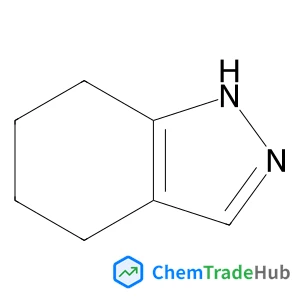
4,5,6,7-Tetrahydro-1H-indazole hydrochloride is a white crystalline solid with a...
(2R)-1-Methoxy-3-phenyl-2-propanamine is a chiral organic compound with the CAS ...
Ethyl 1-(1-phenylethyl)-1H-imidazole-5-carboxylate is used in various industries...
4-[(1E,3S)-1-(4-Hydroxyphenyl)-1,4-pentadien-3-yl]phenol (CAS: 17676-24-3) falls...
(S)-3-Amino-5-phenylpentanoic acid hydrochloride is primarily used in the pharma...
7-Methoxy-1-benzothiophene-2-carboxylic acid is typically synthesized by reactin...

Physical Chemistry Chemical Physics (PCCP) is an international journal co-owned by 19 physical chemistry and physics societies from around the world. This journal publishes original, cutting-edge research in physical chemistry, chemical physics and biophysical chemistry. To be suitable for publication in PCCP, articles must include significant innovation and/or insight into physical chemistry; this is the most important criterion that reviewers and Editors will judge against when evaluating submissions. The journal has a broad scope and welcomes contributions spanning experiment, theory, computation and data science. Topical coverage includes spectroscopy, dynamics, kinetics, statistical mechanics, thermodynamics, electrochemistry, catalysis, surface science, quantum mechanics, quantum computing and machine learning. Interdisciplinary research areas such as polymers and soft matter, materials, nanoscience, energy, surfaces/interfaces, and biophysical chemistry are welcomed if they demonstrate significant innovation and/or insight into physical chemistry. Joined experimental/theoretical studies are particularly appreciated when complementary and based on up-to-date approaches.

![2-Methyl-2-propanyl 4-{2-fluoro-5-[(4-oxo-3,4-dihydro-1-phthalazinyl)methyl]benzoyl}-1-piperazinecarboxylate structure](https://static.chemtradehub.com/structs/763/763114-04-1-65a9.webp "2-Methyl-2-propanyl 4-{2-fluoro-5-[(4-oxo-3,4-dihydro-1-phthalazinyl)methyl]benzoyl}-1-piperazinecarboxylate structure")




