












First-principles simulations of hydrogen peroxide formation catalyzed by small neutral gold clusters
Literature Information
Publication Date
2009-05-27
DOI
10.1039/B822765A
Impact Factor
3.676
Authors
Katarzyna A. Kacprzak
View Original
Abstract
Energetics and dynamical pathways for hydrogen peroxide formation from H2 and O2 bound to neutral gold dimers and tetramers have been investigated by applying several strategies: T = 0 K geometry optimizations, constrained Car–Parrinello molecular dynamics simulations at T = 300 K and metadynamics at T = 300 K. The competing reaction channels for water and hydrogen peroxide formation have been found and characterized. In each case, the reaction barriers for Au cluster catalyzed proton transfer are less than 1 eV. Water formation is a competitive reaction channel, and the relative weight of H2O and H2O2 products may depend on the chosen Au cluster size. Dynamic simulations demonstrate the significance of the geometric fluxionality of small catalytic Au clusters. These results indicate that neutral Au clusters could work as catalysts in aerobic H2O2 formation in ambient conditions.
Related Literature
Self-discharge of electrochemical double layer capacitors
Andrzej Lewandowski, Pawel Jakobczyk, Maciej Galinski, Marcin Biegun
2013-03-22
Perspective
DOI: 10.1039/C3CP44612C
Spectromicroscopy of pulses transporting alkali metal in a surface reaction
S. Günther, Hong Liu, T. O. Menteş, A. Locatelli, R. Imbihl
2013-04-03
Paper
DOI: 10.1039/C3CP44478C
C60fullerene aggregation in aqueous solution
Yuriy I. Prylutskyy, Anatoly S. Buchelnikov, Dmitry P. Voronin, Viktor V. Kostjukov, Uwe Ritter, John A. Parkinson, Maxim P. Evstigneev
2013-04-16
Paper
DOI: 10.1039/C3CP50187F
Organic spin-valves: from unipolar to bipolar devices
Z. Valy Vardeny
2013-04-25
Perspective
DOI: 10.1039/C3CP50639H
A variable temperature synchrotron X-ray diffraction study of the ferroelastic double perovskite Ba2GdMoO6
Thomas K. Wallace, Ross H. Colman, Abbie C. Mclaughlin
2013-01-03
Paper
DOI: 10.1039/C2CP43732E
A multi-scale molecular dynamics study of the assembly of micron-size supraparticles from 30 nm alkyl-coated nanoparticles
Damien Thompson, Mateusz Sikora, Piotr Szymczak, Marek Cieplak
2013-04-09
Paper
DOI: 10.1039/C3CP50523E
Lone-pair distribution and plumbite network formation in high lead silicate glass, 80PbO·20SiO2
Oliver L. G. Alderman, Alex C. Hannon, Diane Holland, Steve Feller, Gloria Lehr, Adam J. Vitale, Uwe Hoppe, Martin v. Zimmerman, Anke Watenphul
2013-04-29
Paper
DOI: 10.1039/C3CP51348C
Molecular dynamics investigation of the disordered crystal structure of hexagonal LiBH4
Keith Refson
2013-01-29
Paper
DOI: 10.1039/C3CP44520H
Field effect transistors and RC filters from pencil-trace on paper
Narendra Kurra, Dipanwita Dutta, Giridhar U. Kulkarni
2013-03-25
Paper
DOI: 10.1039/C3CP50675D
You might also like
Compound Q&A
What precautions should be taken when handling 2-Chloro-1,2-bis(4-methylphenyl)ethanone (CAS: 71193-32-3)?
When handling 2-Chloro-1,2-bis(4-methylphenyl)ethanone (CAS: 71193-32-3), it is ...
71193-32-32-Chloro-1,2-bis(4-m...
Compound Q&A
What industries use 4-Ethoxy-3-(5-methyl-4-oxo-7-propyl-1,4-dihydroimidazo[5,1-f][1,2,4]triazin-2-yl)benzenesulfonyl chloride (CAS: 224789-26-8)?
4-Ethoxy-3-(5-methyl-4-oxo-7-propyl-1,4-dihydroimidazo[5,1-f][1,2,4]triazin-2-yl...
224789-26-84-Ethoxy-3-(5-methyl...
Compound Q&A
How should Methyl 3-Oxo-4-Androsten-17-Carboxylate (CAS: 2681-55-2) be stored?
Methyl 3-Oxo-4-Androsten-17-Carboxylate (CAS: 2681-55-2) should be stored in a c...
2681-55-2Methyl 3-Oxo-4-Andro...
Compound Q&A
What are the main uses of (R)-3-Amino-4-(3-hexylphenylamino)-4-oxobutylphosphonic acid (CAS: 909725-61-7)?
(R)-3-Amino-4-(3-hexylphenylamino)-4-oxobutylphosphonic acid is primarily used i...
909725-61-7(R)-3-Amino-4-(3-hex...
Compound Q&A
What regulatory guidelines apply to 2-Methyl-2-propanyl 3-amino-3-carbamoyl-1-azetidinecarboxylate (CAS: 1254120-14-3)?
2-Methyl-2-propanyl 3-amino-3-carbamoyl-1-azetidinecarboxylate (CAS: 1254120-14-...
1254120-14-32-Methyl-2-propanyl ...
Compound Q&A
Are there alternatives to (E)-4-(tert-Butoxy)-4-oxobut-2-enoic acid (CAS: 135355-96-3) in synthesis?
There are alternative reagents that can be used in synthesis instead of (E)-4-(t...
135355-96-3(E)-4-(tert-Butoxy)-...
Compound Q&A
What are the physical and chemical properties of [2-(3-Chlorophenyl)-1,3-thiazol-4-yl]methanol (CAS: 121202-20-8)?
[2-(3-Chlorophenyl)-1,3-thiazol-4-yl]methanol (CAS: 121202-20-8) is a crystallin...
121202-20-8[2-(3-Chlorophenyl)-...
Compound Q&A
What is the market or research trend for Methyl (2S)-[(4S)-2,2-dimethyl-1,3-dioxolan-4-yl]{[(4-methylphenyl)sulfonyl]oxy}acetate (CAS: 166249-17-8)?
The market and research trends for Methyl (2S)-[(4S)-2,2-dimethyl-1,3-dioxolan-4...
166249-17-8Methyl (2S)-[(4S)-2,...
Compound Q&A
What is the market or research trend for 1-Bromo-2-isocyanatoethane (CAS: 42865-19-0)?
The market for 1-Bromo-2-isocyanatoethane (CAS: 42865-19-0) is driven by its use...
42865-19-01-Bromo-2-isocyanato...
Compound Q&A
What are the main uses of 4-Nitro-D-phenylalanine hydrochloride (CAS: 147065-06-3)?
4-Nitro-D-phenylalanine hydrochloride (CAS: 147065-06-3) is primarily used in re...
147065-06-34-Nitro-D-phenylalan...
Source Journal
Physical Chemistry Chemical Physics

CiteScore:
5.5
Self-citation Rate:
10.3%
Articles per Year:
3036
Physical Chemistry Chemical Physics (PCCP) is an international journal co-owned by 19 physical chemistry and physics societies from around the world. This journal publishes original, cutting-edge research in physical chemistry, chemical physics and biophysical chemistry. To be suitable for publication in PCCP, articles must include significant innovation and/or insight into physical chemistry; this is the most important criterion that reviewers and Editors will judge against when evaluating submissions. The journal has a broad scope and welcomes contributions spanning experiment, theory, computation and data science. Topical coverage includes spectroscopy, dynamics, kinetics, statistical mechanics, thermodynamics, electrochemistry, catalysis, surface science, quantum mechanics, quantum computing and machine learning. Interdisciplinary research areas such as polymers and soft matter, materials, nanoscience, energy, surfaces/interfaces, and biophysical chemistry are welcomed if they demonstrate significant innovation and/or insight into physical chemistry. Joined experimental/theoretical studies are particularly appreciated when complementary and based on up-to-date approaches.
Recommended Compounds
![4-[2-(Trichlorosilyl)ethyl]benzenesulfonyl chloride structure](https://static.chemtradehub.com/structs/797/79793-00-3-de16.webp "4-[2-(Trichlorosilyl)ethyl]benzenesulfonyl chloride structure")
4-[2-(Trichlorosilyl)ethyl]benzenesulfonyl chloride
CAS Number:
79793-00-3
Molecular Formula:
C8H8Cl4O2SSi


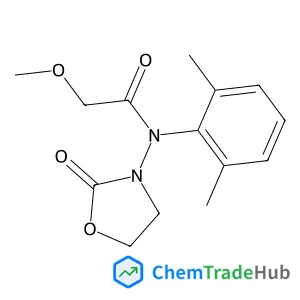
N-(2,6-Dimethylphenyl)-2-methoxy-N-(2-oxo-1,3-oxazolidin-3-yl)acetamide
CAS Number:
77732-09-3
Molecular Formula:
C14H18N2O4
Recommended Suppliers






Disclaimer
This page provides academic journal information for reference and research purposes only. We are not affiliated with any journal publishers and do not handle publication submissions. For publication-related inquiries, please contact the respective journal publishers directly.
If you notice any inaccuracies in the information displayed, please contact us at support@chemtradehub.com. We will promptly review and address your concerns.