












Vinylidenerutheniums with an electrostructurally-flexible NO ligand and their ruthenacyclobutene formation
Literature Information
Publication Date
2009-03-30
DOI
10.1039/B821561H
Impact Factor
6.222
Authors
Mamoru Yamaguchi, Yasuhiro Arikawa, Yoshimasa Nishimura, Keisuke Umakoshi, Masayoshi Onishi
View Original
Abstract
Vinylidene ruthenium complexes were prepared from trichloronitrosylbis(phosphine)rutheniums and terminal alkynes, subsequent cycloaddition of methyl propiolate to the vinylidene complexes giving rise to unusual ruthenacyclobutene species; in these transformations, an interesting electrostructurally-flexible behaviour of the NO ligand was observed.
Recommended Journals
Related Literature
An expeditious one-step entry to the tetracyclic core of integrastatins
C. V. Ramana, Challa Nageswara Reddy, Rajesh G. Gonnade
2008-05-12
Communication
DOI: 10.1039/B801755G
Valence isomer of a β-diketiminate-supported phosphinidene: a case of C–H activation and ring contraction
Zheng Lu, Michael Findlater, Alan H. Cowley
2007-05-08
Communication
DOI: 10.1039/B704266C
Synthesis of allyl selenides by palladium-catalyzed decarboxylative coupling
Shelli R. Waetzig, Jon A. Tunge
2008-06-10
Communication
DOI: 10.1039/B806949B
A multi-stage growth model leading to high-yield production of carbon nanotubes
Yajun Tian, Huaixin Yang, Shuanglin Zhan, Yunfa Chen
2008-05-16
Communication
DOI: 10.1039/B801966E
Synthetic studies and biosynthetic speculation on marine alkaloid chartelline
Shigeo Kajii, Toshio Nishikawa, Minoru Isobe
2008-05-09
Communication
DOI: 10.1039/B803797C
Nickel-catalyzed cross-coupling reactions of benzylic zinc reagents with aromatic bromides, chlorides and tosylates
Matthias A. Schade, Albrecht Metzger, Stephan Hug, Paul Knochel
2008-04-24
Communication
DOI: 10.1039/B803072C
Synthesis and self-assembly of propeller-shaped amphiphilic molecules
Kyung-Soo Moon, Eunji Lee, Myongsoo Lee
2008-04-23
Communication
DOI: 10.1039/B801108G
Copper-mediated controlled radical ring-opening polymerization (RROP) of a vinylcycloalkane
Nikhil Kumar Singha, Amalin Kavitha, Prodip Sarker, Stephen Rimmer
2008-05-21
Communication
DOI: 10.1039/B801149D
Ammonium salts as an inexpensive and convenient nitrogen source in the Cu-catalyzed amination of aryl halides at room temperature
Jinho Kim, Sukbok Chang
2008-05-23
Communication
DOI: 10.1039/B804637A
Tetrameric molecular bowl assembled from glycoluril building blocks
Neng-Fang She, Xiang-Gao Meng, Meng Gao, An-Xin Wu, Lyle Isaacs
2008-04-04
Communication
DOI: 10.1039/B800785C
You might also like
Compound Q&A
Are there alternatives to 1-(4-Chlorophenyl)-N-hydroxymethanimine (CAS: 3848-36-0) in synthesis?
When considering alternatives to 1-(4-Chlorophenyl)-N-hydroxymethanimine (CAS: 3...
3848-36-01-(4-Chlorophenyl)-N...
Compound Q&A
How should (1R,9S,10S,12S,14E,16S,19R,20R,21S,22R)-3,9,21-Trihydroxy-5,10,12,14,16,20,22-heptamethyl-23,24-dioxatetracyclo[17.3.1.1~6,9~.0~2,7~]tetracosa-2,5,7,14-tetraen-4-one (CAS: 183202-73-5) be stored?
This compound should be stored in a cool, dry place away from direct sunlight. I...
183202-73-5(1R,9S,10S,12S,14E,1...
Compound Q&A
How is 3-(4-Bromophenyl)-5-(2-fluorophenyl)-1,2,4-oxadiazole (CAS: 419553-16-5) typically synthesized?
3-(4-Bromophenyl)-5-(2-fluorophenyl)-1,2,4-oxadiazole is synthesized through a m...
419553-16-53-(4-Bromophenyl)-5-...
Compound Q&A
How is 5-Chloro-2-(4-chlorophenyl)-4-methyl-6-[3-(1-piperidinyl)propoxy]pyrimidine (CAS: 1639220-19-1) typically synthesized?
5-Chloro-2-(4-chlorophenyl)-4-methyl-6-[3-(1-piperidinyl)propoxy]pyrimidine (CAS...
1639220-19-15-Chloro-2-(4-chloro...
Compound Q&A
What industries use 2-Chloro-4-(difluoromethoxy)pyridine (CAS: 1206978-15-5)?
2-Chloro-4-(difluoromethoxy)pyridine is used in the pharmaceutical industry for ...
1206978-15-52-Chloro-4-(difluoro...
Compound Q&A
What regulatory guidelines apply to 3-Chloro-6-methylpyridazine (CAS: 1121-79-5)?
3-Chloro-6-methylpyridazine (CAS: 1121-79-5) is classified under the Globally Ha...
1121-79-53-Chloro-6-methylpyr...
Compound Q&A
Are there alternatives to Methyl 4,5-dimethyl-2-nitrobenzoate in synthesis?
Several alternatives can be used in the synthesis of Methyl 4,5-dimethyl-2-nitro...
90922-74-0Methyl 4,5-dimethyl-...
Compound Q&A
Are there alternatives to (2E,2'E)-3,3'-(1,4-Phenylene)bisacrylaldehyde in synthesis?
Alternatives to (2E,2'E)-3,3'-(1,4-Phenylene)bisacrylaldehyde include other acry...
63405-68-5(2E,2'E)-3,3'-(1,4-P...
Compound Q&A
What is 3-Amino-5-chloropyridin-2-ol hydrochloride (CAS: 1261906-29-9)?
3-Amino-5-chloropyridin-2-ol hydrochloride is an organic compound with the CAS n...
1261906-29-93-Amino-5-chloropyri...
Compound Q&A
What precautions should be taken when handling 6,7-Difluoro-2,3-dihydro-4H-chromen-4-one (CAS: 1092349-93-3)?
When handling 6,7-Difluoro-2,3-dihydro-4H-chromen-4-one, it is essential to wear...
1092349-93-36,7-Difluoro-2,3-dih...
Source Journal
Chemical Communications

CiteScore:
8.6
Self-citation Rate:
4.7%
Articles per Year:
2458
ChemComm publishes urgent research which is of outstanding significance and interest to experts in the field, while also appealing to the journal’s broad chemistry readership. Our communication format is ideally suited to short, urgent studies that are of such importance that they require accelerated publication. Our scope covers all topics in chemistry, and research at the interface of chemistry and other disciplines (such as materials science, nanoscience, physics, engineering and biology) where there is a significant novelty in the chemistry aspects. Major topic areas covered include: Analytical Chemistry Catalysis Chemical Biology and medicinal chemistry Computational Chemistry and Machine Learning Energy and sustainable chemistry Environmental Chemistry Green Chemistry Inorganic Chemistry Materials Chemistry Nanoscience Organic Chemistry Physical Chemistry Polymer Chemistry Supramolecular Chemistry
Recommended Compounds
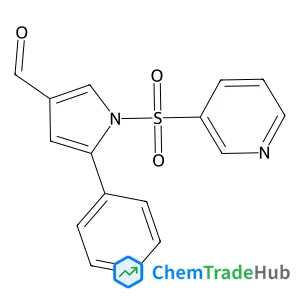
5-Phenyl-1-(pyridin-3-ylsulfonyl)-1H-pyrrole-3-carbaldehyde
CAS Number:
881676-90-0
Molecular Formula:
C16H12N2O3S
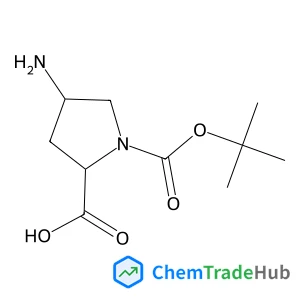
(2R,4R)-1-Boc-4-Aminopyrrolidine-2-carboxylic acid
CAS Number:
132622-98-1
Molecular Formula:
C10H18N2O4
Recommended Suppliers




Disclaimer
This page provides academic journal information for reference and research purposes only. We are not affiliated with any journal publishers and do not handle publication submissions. For publication-related inquiries, please contact the respective journal publishers directly.
If you notice any inaccuracies in the information displayed, please contact us at support@chemtradehub.com. We will promptly review and address your concerns.