












Reactivity in the confined spaces of zeolites: the interplay between spectroscopy and theory to develop structure–activity relationships for catalysis
Literature Information
Publication Date
2009-03-13
DOI
10.1039/B821297J
Impact Factor
3.676
Authors
Mercedes Boronat, Patricia Concepción, Avelino Corma, María Teresa Navarro, Michael Renz, Susana Valencia
View Original
Abstract
The Lewis acid properties of a series of isolated and well-defined Sn centers in different micro- and mesoporous materials have been investigated by means of DFT calculations and IR spectroscopy of probe molecules, and the results have been related to the experimentally measured catalytic activity of these materials for different reactions. Different types of Sn centers have been detected and modelled: inactive fully coordinated Sn atoms in framework positions that weakly interact with Lewis bases, and highly active strong Lewis acid sites associated with Sn centers with one or two hydrolyzed Sn–O–Si bridges. The relative amount of strong and weak sites depends on the zeolite structure, and can be modified by the catalyst pre-treatment conditions. On the other hand, it has been established that Sn-containing mesoporous materials obtained either by direct synthesis or by post-synthesis incorporation of Sn, show a similar distribution of centers. Finally, the influence of solvent and free space available around the active site on the diastereoselectivity of the cyclization of citronellal to isopulegol were investigated, and some hints were obtained on how to improve the catalyst performance.
Related Literature
Electron transport in polycyclic aromatic hydrocarbons/boron nitride hybrid structures: density functional theory combined with the nonequilibrium Green's function
S. F. K. S. Panahi, Afshin Namiranian, Maryam Soleimani, Maryam Jamaati
2018-01-10
Paper
DOI: 10.1039/C7CP07260K
Effects of surface hydroxylation on adhesion at zinc/silica interfaces
Alexey Koltsov, Jean-Michel Mataigne
2018-05-18
Paper
DOI: 10.1039/C8CP02139B
Short-range ion dynamics in methylammonium lead iodide by multinuclear solid state NMR and 127I NQR
Alessandro Senocrate, Igor Moudrakovski, Joachim Maier
2018-07-11
Paper
DOI: 10.1039/C8CP01535J
Unraveling doping induced anatase–rutile phase transition in TiO2 using electron, X-ray and gamma-ray as spectroscopic probes
D. Banerjee, Santosh K. Gupta, N. Patra, Sk Wasim Raja, N. Pathak, D. Bhattacharyya, P. K. Pujari, S. V. Thakare, S. N. Jha
2018-10-25
Paper
DOI: 10.1039/C8CP04310H
Zr2Si: an antiferromagnetic Dirac MXene
Xiaofei Shao, Xiaobiao Liu, Xiaoming Zhang, Junru Wang, Mingwen Zhao
2018-01-17
Paper
DOI: 10.1039/C7CP08108A
Correction: Necessary and sufficient conditions for the successful three-phase photocatalytic reduction of CO2 by H2O over heterogeneous photocatalysts
2018-07-26
Correction
DOI: 10.1039/C8CP91824D
Effects of point defects on the magnetoelectronic structures of MXenes from first principles
Arkamita Bandyopadhyay, Dibyajyoti Ghosh
2018-01-04
Paper
DOI: 10.1039/C7CP07165E
Effects of adatom and gas molecule adsorption on the physical properties of tellurene: a first principles investigation
Xiao Hua Wang, Da Wei Wang, Ai Jun Yang, Nikhil Koratkar, Ji Feng Chu, Pin Lei Lv, Ming Zhe Rong
2018-01-04
Paper
DOI: 10.1039/C7CP07906K
The ortho-benzyne cation is not planar
D. Kaiser, E. Reusch, P. Hemberger, A. Bodi, E. Welz, B. Engels, I. Fischer
2018-01-09
Paper
DOI: 10.1039/C7CP08055G
You might also like
Compound Q&A
Is 6-(3-Fluorophenyl)picolinic acid (CAS: 887982-40-3) safe?
6-(3-Fluorophenyl)picolinic acid is generally considered safe for laboratory use...
887982-40-36-(3-Fluorophenyl)pi...
Compound Q&A
What industries use (3R)-3-Pyrrolidinol (CAS: 2799-21-5)?
(3R)-3-Pyrrolidinol is used in the pharmaceutical industry as a precursor for dr...
2799-21-5(3R)-3-Pyrrolidinol
Compound Q&A
What precautions should be taken when handling (4R,5R)-4,5-Diethoxycarbonyl-2,2-dimethyldioxolane (CAS: 59779-75-8)?
When handling (4R,5R)-4,5-Diethoxycarbonyl-2,2-dimethyldioxolane (CAS: 59779-75-...
59779-75-8(4R,5R)-4,5-Diethoxy...
Compound Q&A
How is 1-(6-Chloroimidazo[1,2-b]pyridazin-3-yl)ethanone (CAS: 90734-71-7) typically synthesized?
1-(6-Chloroimidazo[1,2-b]pyridazin-3-yl)ethanone is often synthesized via a mult...
90734-71-71-(6-Chloroimidazo[1...
Compound Q&A
What is the market or research trend for N-Ethyl-3,4-dimethylbenzylamine (CAS: 39180-83-1)?
The market for N-Ethyl-3,4-dimethylbenzylamine (CAS: 39180-83-1) remains steady,...
39180-83-1N-Ethyl-3,4-dimethyl...
Compound Q&A
What is Tert-butyl 3-(pyrrolidin-1-yl)azetidine-1-carboxylate (CAS: 1019008-21-9)?
Tert-butyl 3-(pyrrolidin-1-yl)azetidine-1-carboxylate is a chemical compound wit...
1019008-21-9Tert-butyl 3-(pyrrol...
Compound Q&A
What regulatory guidelines apply to 1-Bromo-3-chloro-2,4-dimethoxybenzene (CAS: 1228956-93-1)?
1-Bromo-3-chloro-2,4-dimethoxybenzene (CAS: 1228956-93-1) falls under the classi...
1228956-93-11-Bromo-3-chloro-2,4...
Compound Q&A
Is 8-Bromo-2-methyl-3,4-dihydroisoquinolin-1(2H)-one (CAS: 1368622-07-4) safe?
The safety of 8-Bromo-2-methyl-3,4-dihydroisoquinolin-1(2H)-one (CAS: 1368622-07...
1368622-07-48-Bromo-2-methyl-3,4...
Compound Q&A
Is Benzyl [(3S)-2,6-dioxo-3-piperidinyl]carbamate (CAS: 22785-43-9) safe?
Benzyl [(3S)-2,6-dioxo-3-piperidinyl]carbamate is generally safe when handled wi...
22785-43-9Benzyl [(3S)-2,6-dio...
Compound Q&A
How should 1-{[4-(4,4,5,5-Tetramethyl-1,3,2-dioxaborolan-2-yl)phenyl]sulfonyl}pyrrolidine (CAS: 928657-21-0) be stored?
1-{[4-(4,4,5,5-Tetramethyl-1,3,2-dioxaborolan-2-yl)phenyl]sulfonyl}pyrrolidine s...
928657-21-01-{[4-(4,4,5,5-Tetra...
Source Journal
Physical Chemistry Chemical Physics

CiteScore:
5.5
Self-citation Rate:
10.3%
Articles per Year:
3036
Physical Chemistry Chemical Physics (PCCP) is an international journal co-owned by 19 physical chemistry and physics societies from around the world. This journal publishes original, cutting-edge research in physical chemistry, chemical physics and biophysical chemistry. To be suitable for publication in PCCP, articles must include significant innovation and/or insight into physical chemistry; this is the most important criterion that reviewers and Editors will judge against when evaluating submissions. The journal has a broad scope and welcomes contributions spanning experiment, theory, computation and data science. Topical coverage includes spectroscopy, dynamics, kinetics, statistical mechanics, thermodynamics, electrochemistry, catalysis, surface science, quantum mechanics, quantum computing and machine learning. Interdisciplinary research areas such as polymers and soft matter, materials, nanoscience, energy, surfaces/interfaces, and biophysical chemistry are welcomed if they demonstrate significant innovation and/or insight into physical chemistry. Joined experimental/theoretical studies are particularly appreciated when complementary and based on up-to-date approaches.
Recommended Compounds

(11alpha,13E)-11-Hydroxy-9,15-dioxoprost-13-en-1-oic acid
CAS Number:
22973-19-9
Molecular Formula:
C20H32O5

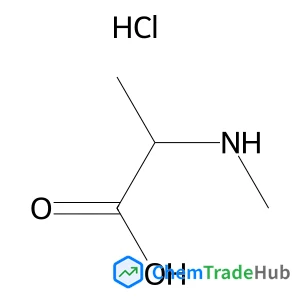
(R)-2-(Methylamino)propanoic acid hydrochloride
CAS Number:
1155878-14-0
Molecular Formula:
C4H10ClNO2
Recommended Suppliers



Disclaimer
This page provides academic journal information for reference and research purposes only. We are not affiliated with any journal publishers and do not handle publication submissions. For publication-related inquiries, please contact the respective journal publishers directly.
If you notice any inaccuracies in the information displayed, please contact us at support@chemtradehub.com. We will promptly review and address your concerns.