












Back cover
Literature Information
Publication Date
DOI
10.1039/B814465F
Impact Factor
6.222
Authors
View Original
Abstract
The first page of this article is displayed as the abstract.
Related Literature
Effect of SO2 introduction into CeO2 on its surface acidity and redox property for the selective catalytic reduction of NO with NH3
Xuejun Zhang, Dujuan Mo, Zhongxian Song, Wei Liu, Haiyang Li, Nana Guan, Mengru Zhang, Ruihua Guo, Zhenzhen Huang
2023-11-27
Paper
DOI: 10.1039/D3NJ03924B
A cross-linkable phthalonitrile derivative as a precursor to synthesize nitrogen-doped carbon nanodots for Ni ion detection
Zilin Fan, Qimeng Ran, Xiaoling Xu, Yin Tang
2023-11-14
Paper
DOI: 10.1039/D3NJ03723A
High stereoselectivity synthesis of Z-3-methyleneisoindolin-1-ones on a Cu/ETS-10 catalyst via domino coupling–cyclization without the use of protective groups and ligands
Huiling Hu, Changjun Liu, Chaojie Zhu, Chenghong Liu, Tiandi Tang
2023-12-06
Paper
DOI: 10.1039/D3NJ04522F
Ionic liquid-catalysed regioselective oxygenation of quinoxalin-2(1H)-ones under visible-light conditions
2023-11-13
Communication
DOI: 10.1039/D3NJ04496C
High dehydrogenation of ammonia borane by core–shell heterostructure catalysts formed by carbon template-assisted synthesis
Hui-Ling Zheng, Zi-Hao Zhang, Chen-Gang Feng, Hong-Lin Zhu, Yue-Qing Zheng
2023-11-15
Paper
DOI: 10.1039/D3NJ03802E
A novel MWCNT-encapsulated (2-aminoethyl)piperazine-decorated zinc(ii) phthalocyanine composite: development of an electrochemical sensor for detecting the antipsychotic drug promazine in environmental samples
Mounesh, K. V. Yatish, Anup Pandith, Gaber E. Eldesoky, Bhari Mallanna Nagaraja
2023-10-17
Paper
DOI: 10.1039/D3TB01859H
Exploring the antimicrobial potential of isoniazid loaded Cu-based metal–organic frameworks as a novel strategy for effective killing of Mycobacterium tuberculosis
Pawan Kumar, Ananyaashree Behera, Pranav Tiwari, Sibi Karthik, Mainak Biswas
2023-10-24
Paper
DOI: 10.1039/D3TB02292G
Composite structure of a-MoSX@Ni9S8/NF nanoflower rods for efficient HER under a thermal field
Xiaohao Jiang, Rongtao Xiao, Honggui Wang, Ya Zhang
2023-11-03
Paper
DOI: 10.1039/D3NJ03860B
You might also like
Compound Q&A
What precautions should be taken when handling 4-(2-Furylmethyl)thiomorpholine 1,1-dioxide (CAS: 79206-94-3)?
When handling 4-(2-Furylmethyl)thiomorpholine 1,1-dioxide (CAS: 79206-94-3), it ...
79206-94-34-(2-Furylmethyl)thi...
Compound Q&A
What precautions should be taken when handling 4-Chloro-N-[2-(4-morpholinyl)ethyl]benzamide (CAS: 71320-77-9)?
When handling 4-Chloro-N-[2-(4-morpholinyl)ethyl]benzamide (CAS: 71320-77-9), it...
71320-77-94-Chloro-N-[2-(4-mor...
Compound Q&A
How should waste containing 2-[2-(2-Methoxyethoxy)ethoxy]ethyl 4-methylbenzenesulfonate (CAS: 62921-74-8) be handled?
Waste containing this compound (CAS: 62921-74-8) should be handled according to ...
62921-74-82-[2-(2-Methoxyethox...
Compound Q&A
How should waste containing (S)-Methyl 2-amino-3-cyclohexylpropanoate be handled?
Waste containing (S)-Methyl 2-amino-3-cyclohexylpropanoate should be collected i...
40056-18-6(S)-Methyl 2-amino-3...
Compound Q&A
How is 5-({4-[(2S,4R)-4-Hydroxy-2-methyltetrahydro-2H-pyran-4-yl]-2-thienyl}sulfanyl)-1-methyl-1,3-dihydro-2H-indol-2-one (CAS: 166882-70-8) typically synthesized?
This compound can be synthesized using a multi-step process involving the conjug...
166882-70-85-({4-[(2S,4R)-4-Hyd...
Compound Q&A
Are there alternatives to (2E)-3-(3,4-Dichlorophenyl)acrylic acid (CAS: 7312-27-8) in synthesis?
There are several alternatives to (2E)-3-(3,4-Dichlorophenyl)acrylic acid in syn...
7312-27-8(2E)-3-(3,4-Dichloro...
Compound Q&A
How should Ethyl 6-(2-nitrophenyl)imidazo[2,1-b][1,3]thiazole-3-carboxylate (CAS: 925437-84-9) be stored?
Ethyl 6-(2-nitrophenyl)imidazo[2,1-b][1,3]thiazole-3-carboxylate (CAS: 925437-84...
925437-84-9Ethyl 6-(2-nitrophen...
Compound Q&A
How should waste containing 2-(1,3-Thiazol-2-yl)ethanamine (CAS: 18453-07-1) be handled?
Waste containing 2-(1,3-Thiazol-2-yl)ethanamine (CAS: 18453-07-1) should be coll...
18453-07-12-(1,3-Thiazol-2-yl)...
Compound Q&A
How is Methyl 5-iodo-2-methylbenzoate (CAS: 103440-54-6) typically synthesized?
Methyl 5-iodo-2-methylbenzoate can be synthesized through the iodination of meth...
103440-54-6Methyl 5-iodo-2-meth...
Compound Q&A
How is 5-Chloro[1,2,4]triazolo[1,5-a]pyridine (CAS: 1427399-34-5) typically synthesized?
5-Chloro[1,2,4]triazolo[1,5-a]pyridine is commonly synthesized via the condensat...
1427399-34-55-Chloro[1,2,4]triaz...
Source Journal
Chemical Communications

CiteScore:
8.6
Self-citation Rate:
4.7%
Articles per Year:
2458
ChemComm publishes urgent research which is of outstanding significance and interest to experts in the field, while also appealing to the journal’s broad chemistry readership. Our communication format is ideally suited to short, urgent studies that are of such importance that they require accelerated publication. Our scope covers all topics in chemistry, and research at the interface of chemistry and other disciplines (such as materials science, nanoscience, physics, engineering and biology) where there is a significant novelty in the chemistry aspects. Major topic areas covered include: Analytical Chemistry Catalysis Chemical Biology and medicinal chemistry Computational Chemistry and Machine Learning Energy and sustainable chemistry Environmental Chemistry Green Chemistry Inorganic Chemistry Materials Chemistry Nanoscience Organic Chemistry Physical Chemistry Polymer Chemistry Supramolecular Chemistry
Recommended Compounds
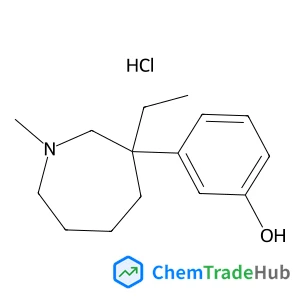
3-(3-Ethyl-1-methyl-3-azepanyl)phenol hydrochloride (1:1)
CAS Number:
59263-76-2
Molecular Formula:
C15H24ClNO

(3beta,7beta,12beta)-3,7,12-Trihydroxy-11,15,23-trioxolanost-8-en-26-oic acid
CAS Number:
98665-22-6
Molecular Formula:
C30H44O8
Recommended Suppliers






Disclaimer
This page provides academic journal information for reference and research purposes only. We are not affiliated with any journal publishers and do not handle publication submissions. For publication-related inquiries, please contact the respective journal publishers directly.
If you notice any inaccuracies in the information displayed, please contact us at support@chemtradehub.com. We will promptly review and address your concerns.