



Exploring the antimicrobial potential of isoniazid loaded Cu-based metal–organic frameworks as a novel strategy for effective killing of Mycobacterium tuberculosis
Literature Information
Publication Date
2023-10-24
DOI
10.1039/D3TB02292G
Impact Factor
6.331
Authors
Pawan Kumar, Ananyaashree Behera, Pranav Tiwari, Sibi Karthik, Mainak Biswas
View Original
Abstract
Tuberculosis (TB) remains one of the most infectious pathogens with the highest human mortality and morbidity. Biofilm formation during Mycobacterium tuberculosis (Mtb) infection is responsible for bacterial growth, communication, and, most essentially, increased resistance/tolerance to antibiotics leading to higher bacterial persistence. Thus, biofilm growth is presently considered a key virulence factor in the case of chronic disease. Metal–Organic Frameworks (MOFs) have recently emerged as a highly efficient system to improve existing antibiotics' therapeutic efficacy and reduce adverse effects. In this regard, we have synthesized Cu-MOF (IITI-3) using a solvothermal approach. IITI-3 was well characterized by various spectroscopic techniques. Herein, IITI-3 was first encapsulated with isoniazid (INH) to form INH@IITI-3 with 10 wt% loading within 1 hour. INH@IITI-3 was well characterized by PXRD, TGA, FTIR, and BET surface area analysis. Furthermore, the drug release kinetics studies of INH@IITI-3 have been performed at pH 5.8 and 7.4 to mimic the small intestine and blood pH, respectively. The results show that drug release follows first-order kinetics. Furthermore, the antimycobacterial activity of INH@IITI-3 demonstrated significant bacterial killing and altered the structural morphology of the bacteria. Moreover, INH@IITI-3 was able to inhibit the mycobacterial biofilm formation upon treatment and showed less cytotoxicity toward the murine RAW264.7 macrophages. Thus, this work significantly opens up new possibilities for the applications of INH@IITI-3 in biofilm infections in Mtb and further contributes to TB therapeutics.
Recommended Journals

Organic Preparations and Procedures International

Fibre Chemistry

Pure and Applied Chemistry

Proceedings of the National Academy of Sciences of the United States of America

Journal of Catalysis

European Journal of Wood and Wood Products

Journal of Heterocyclic Chemistry

Nature

Kinetics and Catalysis

Planta Medica
Related Literature
A DFT analysis of the ground and charge-transfer excited states of Sc3N@Ih–C80 fullerene coupled with metal-free and zinc-phthalocyanine
Carlos Diaz, Neetha Mohan
2018-09-14
Paper
DOI: 10.1039/C8CP03849J
Electronic structure and rovibrational predissociation of the 21Π state in KLi
P. Jasik, J. Kozicki, T. Kilich, J. E. Sienkiewicz, N. E. Henriksen
2018-06-25
Paper
DOI: 10.1039/C8CP02551G
Detection and characterization at nM concentration of oligomers formed by hIAPP, Aβ(1–40) and their equimolar mixture using SERS and MD simulations
Luisa D’Urso, Marcello Condorelli, Orazio Puglisi, Carmelo Tempra, Giuseppe Compagnini, Carmelo La Rosa
2018-07-18
Paper
DOI: 10.1039/C7CP08552D
Analysis of epoxy functionalized layers synthesized by plasma polymerization of allyl glycidyl ether
Anton Manakhov, David Nečas, Sergey Ershov, Zakhar Popov
2018-07-09
Paper
DOI: 10.1039/C8CP01452C
Palladium nanoparticle formation processes in fluoropolymers by thermal decomposition of organometallic precursors
Fan W. Zeng, Dajie Zhang, James B. Spicer
2018-09-04
Paper
DOI: 10.1039/C8CP04997A
X-Ray scattering and physicochemical studies of trialkylamine/carboxylic acid mixtures: nanoscale structure in pseudoprotic ionic liquids and related solutions
Kevin G. Yager
2018-06-25
Paper
DOI: 10.1039/C8CP02854K
A facile synthesis of segmented silver nanowires and enhancement of the performance of polymer solar cells
You Wei, Qi-lun Zhang, Hui-jun Wan, Ying-nan Zhang, Shu-wen Zheng, Yong Zhang
2018-06-25
Paper
DOI: 10.1039/C8CP02734J
Chemical kinetics in an atmospheric pressure helium plasma containing humidity
Sandra Schröter, Apiwat Wijaikhum, Andrew West, Nicolas Minesi, James Dedrick, Erik Wagenaars, Nelson de Oliveira, Laurent Nahon, Mark J. Kushner, Jean-Paul Booth, Kari Niemi, Timo Gans, Deborah O'Connell
2018-09-13
Paper
DOI: 10.1039/C8CP02473A
Correction: Convective heat transfer in a measurement cell for scanning electrochemical microscopy
Javor K. Novev, Richard G. Compton
2018-09-28
Correction
DOI: 10.1039/C8CP91865A
Arsenene nanoribbon edge-resolved strong magnetism
Xi Zhang, Yongli Huang, Chang Q. Sun
2018-09-10
Paper
DOI: 10.1039/C8CP04891F
You might also like
Compound Q&A
What precautions should be taken when handling 4-(2-Furylmethyl)thiomorpholine 1,1-dioxide (CAS: 79206-94-3)?
When handling 4-(2-Furylmethyl)thiomorpholine 1,1-dioxide (CAS: 79206-94-3), it ...
79206-94-34-(2-Furylmethyl)thi...
Compound Q&A
What precautions should be taken when handling 4-Chloro-N-[2-(4-morpholinyl)ethyl]benzamide (CAS: 71320-77-9)?
When handling 4-Chloro-N-[2-(4-morpholinyl)ethyl]benzamide (CAS: 71320-77-9), it...
71320-77-94-Chloro-N-[2-(4-mor...
Compound Q&A
How should waste containing 2-[2-(2-Methoxyethoxy)ethoxy]ethyl 4-methylbenzenesulfonate (CAS: 62921-74-8) be handled?
Waste containing this compound (CAS: 62921-74-8) should be handled according to ...
62921-74-82-[2-(2-Methoxyethox...
Compound Q&A
How should waste containing (S)-Methyl 2-amino-3-cyclohexylpropanoate be handled?
Waste containing (S)-Methyl 2-amino-3-cyclohexylpropanoate should be collected i...
40056-18-6(S)-Methyl 2-amino-3...
Compound Q&A
How is 5-({4-[(2S,4R)-4-Hydroxy-2-methyltetrahydro-2H-pyran-4-yl]-2-thienyl}sulfanyl)-1-methyl-1,3-dihydro-2H-indol-2-one (CAS: 166882-70-8) typically synthesized?
This compound can be synthesized using a multi-step process involving the conjug...
166882-70-85-({4-[(2S,4R)-4-Hyd...
Compound Q&A
Are there alternatives to (2E)-3-(3,4-Dichlorophenyl)acrylic acid (CAS: 7312-27-8) in synthesis?
There are several alternatives to (2E)-3-(3,4-Dichlorophenyl)acrylic acid in syn...
7312-27-8(2E)-3-(3,4-Dichloro...
Compound Q&A
How should Ethyl 6-(2-nitrophenyl)imidazo[2,1-b][1,3]thiazole-3-carboxylate (CAS: 925437-84-9) be stored?
Ethyl 6-(2-nitrophenyl)imidazo[2,1-b][1,3]thiazole-3-carboxylate (CAS: 925437-84...
925437-84-9Ethyl 6-(2-nitrophen...
Compound Q&A
How should waste containing 2-(1,3-Thiazol-2-yl)ethanamine (CAS: 18453-07-1) be handled?
Waste containing 2-(1,3-Thiazol-2-yl)ethanamine (CAS: 18453-07-1) should be coll...
18453-07-12-(1,3-Thiazol-2-yl)...
Compound Q&A
How is Methyl 5-iodo-2-methylbenzoate (CAS: 103440-54-6) typically synthesized?
Methyl 5-iodo-2-methylbenzoate can be synthesized through the iodination of meth...
103440-54-6Methyl 5-iodo-2-meth...
Compound Q&A
How is 5-Chloro[1,2,4]triazolo[1,5-a]pyridine (CAS: 1427399-34-5) typically synthesized?
5-Chloro[1,2,4]triazolo[1,5-a]pyridine is commonly synthesized via the condensat...
1427399-34-55-Chloro[1,2,4]triaz...
Source Journal
Journal of Materials Chemistry B

CiteScore:
12
Self-citation Rate:
4.9%
Articles per Year:
831
Journal of Materials Chemistry A, B & C cover high quality studies across all fields of materials chemistry. The journals focus on those theoretical or experimental studies that report new understanding, applications, properties and synthesis of materials. The journals have a strong history of publishing quality reports of interest to interdisciplinary communities and providing an efficient and rigorous service through peer review and publication. The journals are led by an international team of Editors-in-Chief and Associate Editors who are all active researchers in their fields. Journal of Materials Chemistry A, B & C are separated by the intended application of the material studied. Broadly, applications in energy and sustainability are of interest to Journal of Materials Chemistry A, applications in biology and medicine are of interest to Journal of Materials Chemistry B, and applications in optical, magnetic and electronic devices are of interest to Journal of Materials Chemistry C. More than one Journal of Materials Chemistry journal may be suitable for certain fields and researchers are encouraged to submit their paper to the journal that they feel best fits for their particular article. Example topic areas within the scope of Journal of Materials Chemistry B are listed below. This list is neither exhaustive nor exclusive. Antifouling coatings Biocompatible materials Bioelectronics Bioimaging Biomimetics Biomineralisation Bionics Biosensors Diagnostics Drug delivery Gene delivery Immunobiology Nanomedicine Regenerative medicine & Tissue engineering Scaffolds Soft robotics Stem cells Therapeutic devices image block All articles published in Journal of Materials Chemistry B from 2019 onwards will be indexed in MEDLINE®. Articles that primarily focus on providing insight into the underlying science and performance of biomaterials within a biological environment are more suited to our companion journal, Biomaterials Science.
Recommended Compounds
![4-{2-[4-(2-Methyl-2-propanyl)phenyl]ethoxy}quinazoline structure](https://static.chemtradehub.com/structs/120/120928-09-8-d3db.webp "4-{2-[4-(2-Methyl-2-propanyl)phenyl]ethoxy}quinazoline structure")
4-{2-[4-(2-Methyl-2-propanyl)phenyl]ethoxy}quinazoline
CAS Number:
120928-09-8
Molecular Formula:
C20H22N2O

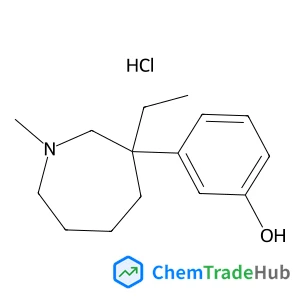
3-(3-Ethyl-1-methyl-3-azepanyl)phenol hydrochloride (1:1)
CAS Number:
59263-76-2
Molecular Formula:
C15H24ClNO

Recommended Suppliers




Disclaimer
This page provides academic journal information for reference and research purposes only. We are not affiliated with any journal publishers and do not handle publication submissions. For publication-related inquiries, please contact the respective journal publishers directly.
If you notice any inaccuracies in the information displayed, please contact us at support@chemtradehub.com. We will promptly review and address your concerns.