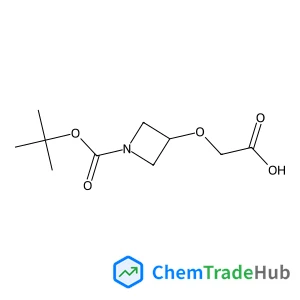
![6-Bromo-2,3-dihydro-1H-pyrido[2,3-b][1,4]oxazine structure](https://static.chemtradehub.com/structs/120/1203499-17-5-b4d1.webp "6-Bromo-2,3-dihydro-1H-pyrido[2,3-b][1,4]oxazine structure")
6-Bromo-2,3-dihydro-1H-pyrido[2,3-b][1,4]oxazine
CAS Number:
1203499-17-5
Molecular Formula:
C7H7BrN2O
Marc von Hobe, Fred Stroh, Helmut Beckers, Thorsten Benter, Helge Willner
UV/Vis absorption spectra of ClOOCl isolated in neon matrices were measured in the wavelength range 220–400 nm. The purity of the trapped samples was checked by infrared and UV/Vis matrix spectroscopy as well as low-temperature Raman spectroscopy. At wavelengths below 290 nm, the results agree with the UV spectrum recently published by Pope et al. [J. Phys. Chem. A, 2007, 111, 4322–4332]. However, the observed absorption in the long wavelength tail of the spectrum—relevant for polar stratospheric ozone loss—is substantially higher than reported by Pope et al. Our results suggest the existence of a ClOOCl electronic state manifold leading to an absorption band similar to those of the near UV spectrum of Cl2. The differences to previous studies can be accounted for quantitatively by contributions to the reported absorption spectra caused by impurities. The observed band in the long wavelength tail is supported by several high-level ab initio calculations. However, questions arise concerning absolute values of the ClOOCl cross sections, an issue that needs to be revisited in future studies. With calculated photolysis rates based on our spectrum scaled to previous cross sections at the peak absorption, the known polar catalytic ozone-destruction cycles to a large extent account for the observed ozone depletion in the spring polar stratosphere.
Huangjing Zhao, Youngjune Park, Dong Hyun Lee, Ah-Hyung Alissa Park
DOI: 10.1039/C3CP52459K
Min Zhou, Fan Pu, Zhao Wang, Tingwei Cai, Hao Chen, Haiyong Zhang, Shiyou Guan
DOI: 10.1039/C3CP51276B
Minhua Shao, Brandon H. Smith, Sandra Guerrero, Lesia Protsailo, Dong Su, Keiichi Kaneko, Jonathan H. Odell, Michael P. Humbert, Kotaro Sasaki, Jesse Marzullo, Robert M. Darling
DOI: 10.1039/C3CP52252K
Hui-Hsuan Hsieh, You-Cheng Hseu, Ko-Shao Chen, Gou-Jen Wang, Yi-Syuan Wei, Ko Hsin Chang, Yeu-Wei Harn
DOI: 10.1039/C3CP50956G
Ahmad Fahs, Guy Louarn
DOI: 10.1039/C3CP51007G
Chang-Lyoul Lee, Shinuk Cho, Seung-Hwan Oh, Seung-Hyeon Moon, Ahmed Elbarbary
DOI: 10.1039/C3CP52151F
David P. Anderson, Jason F. Alvino, Oliver Shipper, Baira Donoeva, Jan-Yves Ruzicka, Hassan Al Qahtani, Hugh H. Harris, Bruce Cowie, Jade B. Aitken, Vladimir B. Golovko, Gregory F. Metha, Gunther G. Andersson
DOI: 10.1039/C3CP52497C
Matthias Schnurr, Christopher Witte, Leif Schröder
DOI: 10.1039/C3CP51227D
Mitsuhiro Ebara, Shinji Tanaka, Taka-Aki Asoh, Akihiko Kikuchi
DOI: 10.1039/C3CP50165E
DOI: 10.1039/C3CP51650D
When considering alternatives to 1-(4-Chlorophenyl)-N-hydroxymethanimine (CAS: 3...
This compound should be stored in a cool, dry place away from direct sunlight. I...
3-(4-Bromophenyl)-5-(2-fluorophenyl)-1,2,4-oxadiazole is synthesized through a m...
5-Chloro-2-(4-chlorophenyl)-4-methyl-6-[3-(1-piperidinyl)propoxy]pyrimidine (CAS...
2-Chloro-4-(difluoromethoxy)pyridine is used in the pharmaceutical industry for ...
3-Chloro-6-methylpyridazine (CAS: 1121-79-5) is classified under the Globally Ha...
Several alternatives can be used in the synthesis of Methyl 4,5-dimethyl-2-nitro...
Alternatives to (2E,2'E)-3,3'-(1,4-Phenylene)bisacrylaldehyde include other acry...
3-Amino-5-chloropyridin-2-ol hydrochloride is an organic compound with the CAS n...
When handling 6,7-Difluoro-2,3-dihydro-4H-chromen-4-one, it is essential to wear...

Physical Chemistry Chemical Physics (PCCP) is an international journal co-owned by 19 physical chemistry and physics societies from around the world. This journal publishes original, cutting-edge research in physical chemistry, chemical physics and biophysical chemistry. To be suitable for publication in PCCP, articles must include significant innovation and/or insight into physical chemistry; this is the most important criterion that reviewers and Editors will judge against when evaluating submissions. The journal has a broad scope and welcomes contributions spanning experiment, theory, computation and data science. Topical coverage includes spectroscopy, dynamics, kinetics, statistical mechanics, thermodynamics, electrochemistry, catalysis, surface science, quantum mechanics, quantum computing and machine learning. Interdisciplinary research areas such as polymers and soft matter, materials, nanoscience, energy, surfaces/interfaces, and biophysical chemistry are welcomed if they demonstrate significant innovation and/or insight into physical chemistry. Joined experimental/theoretical studies are particularly appreciated when complementary and based on up-to-date approaches.
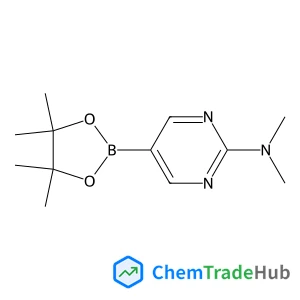

![[4-(Isobutyrylamino)phenyl]boronic acid structure](https://static.chemtradehub.com/structs/874/874219-50-8-6ab5.webp "[4-(Isobutyrylamino)phenyl]boronic acid structure")