












Functionalized 129Xe as a potential biosensor for membrane fluidity
Literature Information
Publication Date
2013-06-07
DOI
10.1039/C3CP51227D
Impact Factor
3.676
Authors
Matthias Schnurr, Christopher Witte, Leif Schröder
View Original
Abstract
Using spin hyperpolarized xenon (129Xe) we investigate the impact of the local molecular environment on reversible host–guest interactions. We label Xe guest atoms that are temporarily bound to cryptophane-A hosts using the Hyper-CEST technique. By varying the length of the saturation pulse and utilizing an inverse Laplace transform we can determine depolarization times for the noble gas in different local environments, in this case biomembranes possessing different fluidity. We extend this technique to magnetic resonance imaging, mapping the spatial distribution of the different biomembranes. Such decays measured in biomembranes of 200 μM 1-palmitoyl-2-oleoyl-sn-glycero-3-phosphocholine (POPC) and 1,2-dipalmitoyl-sn-glycero-3-phosphocholine (DPPC) were characterized by mono-exponential decays with time constants of τPOPC = 3.00+0.77−0.61 s and τDPPC = 22.15+5.19−4.16 s. Analyzing both environments simultaneously yielded a bi-exponential decay. This approach may give further insights into saturation transfer dynamics of reversibly bound Xe with applications extending into biomedical diagnostics.
Related Literature
Investigation of the mechanical effects of targeted drugs on cancerous cells based on atomic force microscopy
Jiajing Zhu, Yanling Tian, Xianping Liu
2021-05-28
Paper
DOI: 10.1039/D1AY00649E
Flow-through PCR on a 3D qiandu-shaped polydimethylsiloxane (PDMS) microdevice employing a single heater: toward microscale multiplex PCR
Wenming Wu, Kieu The Loan Trinh, Nae Yoon Lee
2012-02-23
Paper
DOI: 10.1039/C2AN35077G
The effect of anticancer drugs on seven cell lines monitored by FTIR spectroscopy
Allison Derenne, Magali Verdonck, Erik Goormaghtigh
2012-05-03
Paper
DOI: 10.1039/C2AN35116A
Development of a novel test for the identification of hereditary erythrocyte membrane defects by TGA/Chemometrics
Stefano Materazzi, Patrizia Caprari, Giuseppina Gullifa, Sara Massimi, Elena Carcassi, Roberta Risoluti
2020-05-27
Paper
DOI: 10.1039/D0AN00649A
NMR-based metabolomics and fluxomics: developments and future prospects
2020-03-02
Critical Review
DOI: 10.1039/D0AN00142B
An integrating strategy for serum metabolomics and microarray analysis to expand the understanding of diet-induced obesity
Wuping Liu, Jingjing Xu, Tao Dai, Guiping Shen, Jianghua Feng
2021-06-15
Paper
DOI: 10.1039/D1AY00821H
Carbon dot-based colorimetric sensor array for the discrimination of different water samples
Masoud Shariati-Rad, Zahra Ghorbani
2019-10-11
Paper
DOI: 10.1039/C9AY01439J
High-temporal-range drug-induced cardiac side-effect evaluation using simultaneous HL-1-based impedance and long-term electrophysiology recording systems
Xinwei Wei, Yuxiang Pan, Tao Liang, Ying Gan, Keqiang Gao, Yong Qiu
2019-09-16
Paper
DOI: 10.1039/C9AY01592B
Library based identification and characterisation of polymers with nano-FTIR and IR-sSNOM imaging
Michaela Meyns, Sebastian Primpke, Gunnar Gerdts
2019-09-25
Paper
DOI: 10.1039/C9AY01193E
You might also like
Compound Q&A
Are there alternatives to 1-(4-Chlorophenyl)-N-hydroxymethanimine (CAS: 3848-36-0) in synthesis?
When considering alternatives to 1-(4-Chlorophenyl)-N-hydroxymethanimine (CAS: 3...
3848-36-01-(4-Chlorophenyl)-N...
Compound Q&A
How should (1R,9S,10S,12S,14E,16S,19R,20R,21S,22R)-3,9,21-Trihydroxy-5,10,12,14,16,20,22-heptamethyl-23,24-dioxatetracyclo[17.3.1.1~6,9~.0~2,7~]tetracosa-2,5,7,14-tetraen-4-one (CAS: 183202-73-5) be stored?
This compound should be stored in a cool, dry place away from direct sunlight. I...
183202-73-5(1R,9S,10S,12S,14E,1...
Compound Q&A
How is 3-(4-Bromophenyl)-5-(2-fluorophenyl)-1,2,4-oxadiazole (CAS: 419553-16-5) typically synthesized?
3-(4-Bromophenyl)-5-(2-fluorophenyl)-1,2,4-oxadiazole is synthesized through a m...
419553-16-53-(4-Bromophenyl)-5-...
Compound Q&A
How is 5-Chloro-2-(4-chlorophenyl)-4-methyl-6-[3-(1-piperidinyl)propoxy]pyrimidine (CAS: 1639220-19-1) typically synthesized?
5-Chloro-2-(4-chlorophenyl)-4-methyl-6-[3-(1-piperidinyl)propoxy]pyrimidine (CAS...
1639220-19-15-Chloro-2-(4-chloro...
Compound Q&A
What industries use 2-Chloro-4-(difluoromethoxy)pyridine (CAS: 1206978-15-5)?
2-Chloro-4-(difluoromethoxy)pyridine is used in the pharmaceutical industry for ...
1206978-15-52-Chloro-4-(difluoro...
Compound Q&A
What regulatory guidelines apply to 3-Chloro-6-methylpyridazine (CAS: 1121-79-5)?
3-Chloro-6-methylpyridazine (CAS: 1121-79-5) is classified under the Globally Ha...
1121-79-53-Chloro-6-methylpyr...
Compound Q&A
Are there alternatives to Methyl 4,5-dimethyl-2-nitrobenzoate in synthesis?
Several alternatives can be used in the synthesis of Methyl 4,5-dimethyl-2-nitro...
90922-74-0Methyl 4,5-dimethyl-...
Compound Q&A
Are there alternatives to (2E,2'E)-3,3'-(1,4-Phenylene)bisacrylaldehyde in synthesis?
Alternatives to (2E,2'E)-3,3'-(1,4-Phenylene)bisacrylaldehyde include other acry...
63405-68-5(2E,2'E)-3,3'-(1,4-P...
Compound Q&A
What is 3-Amino-5-chloropyridin-2-ol hydrochloride (CAS: 1261906-29-9)?
3-Amino-5-chloropyridin-2-ol hydrochloride is an organic compound with the CAS n...
1261906-29-93-Amino-5-chloropyri...
Compound Q&A
What precautions should be taken when handling 6,7-Difluoro-2,3-dihydro-4H-chromen-4-one (CAS: 1092349-93-3)?
When handling 6,7-Difluoro-2,3-dihydro-4H-chromen-4-one, it is essential to wear...
1092349-93-36,7-Difluoro-2,3-dih...
Source Journal
Physical Chemistry Chemical Physics

CiteScore:
5.5
Self-citation Rate:
10.3%
Articles per Year:
3036
Physical Chemistry Chemical Physics (PCCP) is an international journal co-owned by 19 physical chemistry and physics societies from around the world. This journal publishes original, cutting-edge research in physical chemistry, chemical physics and biophysical chemistry. To be suitable for publication in PCCP, articles must include significant innovation and/or insight into physical chemistry; this is the most important criterion that reviewers and Editors will judge against when evaluating submissions. The journal has a broad scope and welcomes contributions spanning experiment, theory, computation and data science. Topical coverage includes spectroscopy, dynamics, kinetics, statistical mechanics, thermodynamics, electrochemistry, catalysis, surface science, quantum mechanics, quantum computing and machine learning. Interdisciplinary research areas such as polymers and soft matter, materials, nanoscience, energy, surfaces/interfaces, and biophysical chemistry are welcomed if they demonstrate significant innovation and/or insight into physical chemistry. Joined experimental/theoretical studies are particularly appreciated when complementary and based on up-to-date approaches.
Recommended Compounds
![2-{[(1R,2S)-2-Aminocyclohexyl]amino}-4-{[3-(2H-1,2,3-triazol-2-yl)phenyl]amino}-5-pyrimidinecarboxamide structure](https://static.chemtradehub.com/structs/137/1370261-96-3-40df.webp "2-{[(1R,2S)-2-Aminocyclohexyl]amino}-4-{[3-(2H-1,2,3-triazol-2-yl)phenyl]amino}-5-pyrimidinecarboxamide structure")
2-{[(1R,2S)-2-Aminocyclohexyl]amino}-4-{[3-(2H-1,2,3-triazol-2-yl)phenyl]amino}-5-pyrimidinecarboxamide
CAS Number:
1370261-96-3
Molecular Formula:
C19H23N9O
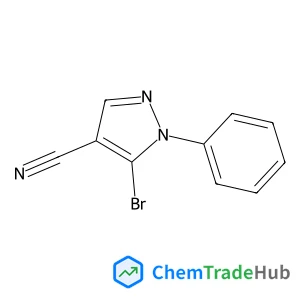
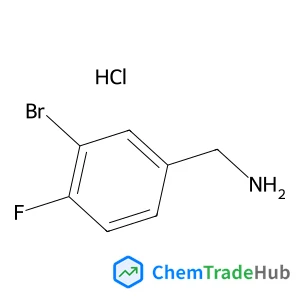
1-(3-Bromo-4-fluorophenyl)methanamine hydrochloride (1:1)
CAS Number:
202865-68-7
Molecular Formula:
C7H8BrClFN
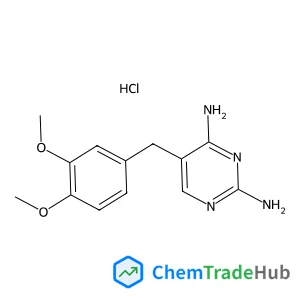
5-(3,4-Dimethoxybenzyl)-2,4-pyrimidinediamine hydrochloride (1:1)
CAS Number:
2507-23-5
Molecular Formula:
C13H17ClN4O2
Recommended Suppliers




Disclaimer
This page provides academic journal information for reference and research purposes only. We are not affiliated with any journal publishers and do not handle publication submissions. For publication-related inquiries, please contact the respective journal publishers directly.
If you notice any inaccuracies in the information displayed, please contact us at support@chemtradehub.com. We will promptly review and address your concerns.