


First- and second-order phase transitions in the adlayer of biadipate on Au(111)
Literature Information
Publication Date
2008-11-26
DOI
10.1039/B813883D
Impact Factor
3.676
Authors
R.J. Nichols
View Original
Abstract
The adsorption of biadipate on Au(111) was studied by cyclic voltammetry and chronocoulometry. The biadipate adlayer undergoes a potential-driven phase transition. It is shown that the phase transition can be either of the first- or second-order depending on the biadipate concentration. At low surfactant concentrations, the first-order transition is characterised by a discontinuity in the charge density–potential curve and by the presence of very sharp peaks in the voltammetric response. At higher concentrations, these peaks are no longer observed but a discontinuity in the capacity curve is still noticeable, in agreement with a second-order transition.
Recommended Journals

Russian Journal of Applied Chemistry

Russian Journal of General Chemistry

Crystallography Reports

Chemistry Education Research and Practice

Russian Journal of Organic Chemistry

Current Opinion in Solid State & Materials Science

New Journal of Chemistry

Journal of Peptide Science

Russian Journal of Bioorganic Chemistry

Journal of Saudi Chemical Society
Related Literature
Structural and spectroscopic characterization of potassium fluoroborohydrides
Richard H. Heyn, Ivan Saldan, Magnus H. Sørby, Christoph Frommen, Bjørnar Arstad, Aud M. Bougza, Helmer Fjellvåg, Bjørn C. Hauback
2013-05-17
Communication
DOI: 10.1039/C3CP52070F
Propagation of nanopores during anodic etching of n-InP in KOH
Robert P. Lynch, Nathan Quill, Shohei Nakahara, D. Noel Buckley
2013-07-31
Paper
DOI: 10.1039/C3CP52253A
1-Propanol probing methodology: two-dimensional characterization of the effect of solute on H2O
2013-06-04
Perspective
DOI: 10.1039/C3CP51650D
Temperature dependence of high field 13C dynamic nuclear polarization processes with trityl radicals below 35 Kelvin
Shamon A. Walker, Devin T. Edwards, Ting Ann Siaw, Brandon D. Armstrong
2013-07-24
Paper
DOI: 10.1039/C3CP51628H
Studies of bimolecular reaction dynamics using pulsed high-intensity vacuum-ultraviolet lasers for photoionization detection
Daniel R. Albert, H. Floyd Davis
2013-07-12
Perspective
DOI: 10.1039/C3CP51930A
Starburst triarylamine based dyes bearing a 3,4-ethylenedioxythiophene linker for efficient dye-sensitized solar cells
Li-Lin Tan, Hong-Yan Chen, Li-Feng Hao, Yong Shen, Li-Min Xiao, Jun-Min Liu, Dai-Bin Kuang, Cheng-Yong Su
2013-05-10
Paper
DOI: 10.1039/C3CP51633D
Luminescence spectroscopy of singlet oxygen enables monitoring of oxygen consumption in biological systems consisting of fatty acids
Anita Gollmer, Johannes Regensburger, Tim Maisch, Wolfgang Bäumler
2013-05-14
Paper
DOI: 10.1039/C3CP50841B
You might also like
Compound Q&A
Are there alternatives to 1-(4-Chlorophenyl)-N-hydroxymethanimine (CAS: 3848-36-0) in synthesis?
When considering alternatives to 1-(4-Chlorophenyl)-N-hydroxymethanimine (CAS: 3...
3848-36-01-(4-Chlorophenyl)-N...
Compound Q&A
How should (1R,9S,10S,12S,14E,16S,19R,20R,21S,22R)-3,9,21-Trihydroxy-5,10,12,14,16,20,22-heptamethyl-23,24-dioxatetracyclo[17.3.1.1~6,9~.0~2,7~]tetracosa-2,5,7,14-tetraen-4-one (CAS: 183202-73-5) be stored?
This compound should be stored in a cool, dry place away from direct sunlight. I...
183202-73-5(1R,9S,10S,12S,14E,1...
Compound Q&A
How is 3-(4-Bromophenyl)-5-(2-fluorophenyl)-1,2,4-oxadiazole (CAS: 419553-16-5) typically synthesized?
3-(4-Bromophenyl)-5-(2-fluorophenyl)-1,2,4-oxadiazole is synthesized through a m...
419553-16-53-(4-Bromophenyl)-5-...
Compound Q&A
How is 5-Chloro-2-(4-chlorophenyl)-4-methyl-6-[3-(1-piperidinyl)propoxy]pyrimidine (CAS: 1639220-19-1) typically synthesized?
5-Chloro-2-(4-chlorophenyl)-4-methyl-6-[3-(1-piperidinyl)propoxy]pyrimidine (CAS...
1639220-19-15-Chloro-2-(4-chloro...
Compound Q&A
What industries use 2-Chloro-4-(difluoromethoxy)pyridine (CAS: 1206978-15-5)?
2-Chloro-4-(difluoromethoxy)pyridine is used in the pharmaceutical industry for ...
1206978-15-52-Chloro-4-(difluoro...
Compound Q&A
What regulatory guidelines apply to 3-Chloro-6-methylpyridazine (CAS: 1121-79-5)?
3-Chloro-6-methylpyridazine (CAS: 1121-79-5) is classified under the Globally Ha...
1121-79-53-Chloro-6-methylpyr...
Compound Q&A
Are there alternatives to Methyl 4,5-dimethyl-2-nitrobenzoate in synthesis?
Several alternatives can be used in the synthesis of Methyl 4,5-dimethyl-2-nitro...
90922-74-0Methyl 4,5-dimethyl-...
Compound Q&A
Are there alternatives to (2E,2'E)-3,3'-(1,4-Phenylene)bisacrylaldehyde in synthesis?
Alternatives to (2E,2'E)-3,3'-(1,4-Phenylene)bisacrylaldehyde include other acry...
63405-68-5(2E,2'E)-3,3'-(1,4-P...
Compound Q&A
What is 3-Amino-5-chloropyridin-2-ol hydrochloride (CAS: 1261906-29-9)?
3-Amino-5-chloropyridin-2-ol hydrochloride is an organic compound with the CAS n...
1261906-29-93-Amino-5-chloropyri...
Compound Q&A
What precautions should be taken when handling 6,7-Difluoro-2,3-dihydro-4H-chromen-4-one (CAS: 1092349-93-3)?
When handling 6,7-Difluoro-2,3-dihydro-4H-chromen-4-one, it is essential to wear...
1092349-93-36,7-Difluoro-2,3-dih...
Source Journal
Physical Chemistry Chemical Physics

CiteScore:
5.5
Self-citation Rate:
10.3%
Articles per Year:
3036
Physical Chemistry Chemical Physics (PCCP) is an international journal co-owned by 19 physical chemistry and physics societies from around the world. This journal publishes original, cutting-edge research in physical chemistry, chemical physics and biophysical chemistry. To be suitable for publication in PCCP, articles must include significant innovation and/or insight into physical chemistry; this is the most important criterion that reviewers and Editors will judge against when evaluating submissions. The journal has a broad scope and welcomes contributions spanning experiment, theory, computation and data science. Topical coverage includes spectroscopy, dynamics, kinetics, statistical mechanics, thermodynamics, electrochemistry, catalysis, surface science, quantum mechanics, quantum computing and machine learning. Interdisciplinary research areas such as polymers and soft matter, materials, nanoscience, energy, surfaces/interfaces, and biophysical chemistry are welcomed if they demonstrate significant innovation and/or insight into physical chemistry. Joined experimental/theoretical studies are particularly appreciated when complementary and based on up-to-date approaches.
Recommended Compounds
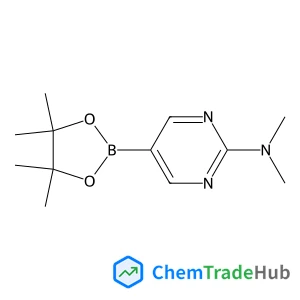
N,N-Dimethyl-5-(4,4,5,5-tetramethyl-1,3,2-dioxaborolan-2-yl)-2-pyrimidinamine
CAS Number:
1032759-30-0
Molecular Formula:
C12H20BN3O2
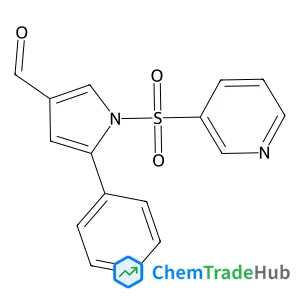
5-Phenyl-1-(pyridin-3-ylsulfonyl)-1H-pyrrole-3-carbaldehyde
CAS Number:
881676-90-0
Molecular Formula:
C16H12N2O3S
Recommended Suppliers





Disclaimer
This page provides academic journal information for reference and research purposes only. We are not affiliated with any journal publishers and do not handle publication submissions. For publication-related inquiries, please contact the respective journal publishers directly.
If you notice any inaccuracies in the information displayed, please contact us at support@chemtradehub.com. We will promptly review and address your concerns.