












Luminescence spectroscopy of singlet oxygen enables monitoring of oxygen consumption in biological systems consisting of fatty acids
Literature Information
Publication Date
2013-05-14
DOI
10.1039/C3CP50841B
Impact Factor
3.676
Authors
Anita Gollmer, Johannes Regensburger, Tim Maisch, Wolfgang Bäumler
View Original
Abstract
The interaction of singlet oxygen (1O2) generated in a photosensitized process with well-known reference photosensitizers Perinaphthenone (PN) and TMPyP is investigated in a model system consisting of fatty acids and the respective exogenous photosensitizer (PS) in solution by direct detection of the luminescence photons of 1O2 at 1270 nm. Such a model system is a first approach to mimic the complex environment of 1O2 in a biological cell which consists mainly of water, proteins, sugars and lipids. Firstly, the important issue of oxygen consumption is evaluated which has to be considered during luminescence detection of 1O2. It is known that the luminescence signal of 1O2 is dependent on the oxygen concentration of the environment. Cellular components such as lipids represent oxygen consumers due to peroxidation of their unsaturated double bonds. Secondly, the experimental conditions for this model system regarding oxygen consumption are optimized to estimate the rates and rate constants of the coupled system. Thirdly, the triplet decay of the PS can provide more precise information about the actual oxygen concentration close to the PS and can be used, therefore, as a more precise method to determine the oxygen concentration in more complex systems such as a biological cell. The aim is to get a better understanding of photosensitized reactions of 1O2 with cellular components to further improve methodologies, in particular at a cellular level using luminescence spectroscopy. In conclusion, luminescence detection might be a helpful tool to monitor precisely and promptly changes in oxygen concentration in a complex environment.
Related Literature
An enhanced capillary electrophoresis method for characterizing natural organic matter
Barbara A. Cottrell, Wei Ran Cheng, Buuan Lam, William J. Cooper, Andre J. Simpson
2012-12-18
Paper
DOI: 10.1039/C2AN36144B
A dual-mode biosensor combining transition metal carbonyl-based SERS and a colorimetric readout for thiol detection
Duo Lin, Jiahui Zhou, Yun Yu, Weiwei Chen, Pei-Hsuan Liao, Hao Huang, Kien Voon Kong
2019-10-03
Communication
DOI: 10.1039/C9AY01466G
A microfluidic platform integrating pressure-driven and electroosmotic-driven flow with inline filters for affinity separations
Weijia Leng, Kimberly Evans, Michael G. Roper
2019-10-29
Paper
DOI: 10.1039/C9AY01758E
The effect of anticancer drugs on seven cell lines monitored by FTIR spectroscopy
Allison Derenne, Magali Verdonck, Erik Goormaghtigh
2012-05-03
Paper
DOI: 10.1039/C2AN35116A
Flow-through PCR on a 3D qiandu-shaped polydimethylsiloxane (PDMS) microdevice employing a single heater: toward microscale multiplex PCR
Wenming Wu, Kieu The Loan Trinh, Nae Yoon Lee
2012-02-23
Paper
DOI: 10.1039/C2AN35077G
A novel aptamer-based competition strategy for ultrasensitive electrochemical detection of leukemia cells
Jia-Ju Fu, Tingting Zheng, Jun-Jie Zhu
2013-08-05
Paper
DOI: 10.1039/C3AN01255G
You might also like
Compound Q&A
Are there alternatives to 1-(4-Chlorophenyl)-N-hydroxymethanimine (CAS: 3848-36-0) in synthesis?
When considering alternatives to 1-(4-Chlorophenyl)-N-hydroxymethanimine (CAS: 3...
3848-36-01-(4-Chlorophenyl)-N...
Compound Q&A
How should (1R,9S,10S,12S,14E,16S,19R,20R,21S,22R)-3,9,21-Trihydroxy-5,10,12,14,16,20,22-heptamethyl-23,24-dioxatetracyclo[17.3.1.1~6,9~.0~2,7~]tetracosa-2,5,7,14-tetraen-4-one (CAS: 183202-73-5) be stored?
This compound should be stored in a cool, dry place away from direct sunlight. I...
183202-73-5(1R,9S,10S,12S,14E,1...
Compound Q&A
How is 3-(4-Bromophenyl)-5-(2-fluorophenyl)-1,2,4-oxadiazole (CAS: 419553-16-5) typically synthesized?
3-(4-Bromophenyl)-5-(2-fluorophenyl)-1,2,4-oxadiazole is synthesized through a m...
419553-16-53-(4-Bromophenyl)-5-...
Compound Q&A
How is 5-Chloro-2-(4-chlorophenyl)-4-methyl-6-[3-(1-piperidinyl)propoxy]pyrimidine (CAS: 1639220-19-1) typically synthesized?
5-Chloro-2-(4-chlorophenyl)-4-methyl-6-[3-(1-piperidinyl)propoxy]pyrimidine (CAS...
1639220-19-15-Chloro-2-(4-chloro...
Compound Q&A
What industries use 2-Chloro-4-(difluoromethoxy)pyridine (CAS: 1206978-15-5)?
2-Chloro-4-(difluoromethoxy)pyridine is used in the pharmaceutical industry for ...
1206978-15-52-Chloro-4-(difluoro...
Compound Q&A
What regulatory guidelines apply to 3-Chloro-6-methylpyridazine (CAS: 1121-79-5)?
3-Chloro-6-methylpyridazine (CAS: 1121-79-5) is classified under the Globally Ha...
1121-79-53-Chloro-6-methylpyr...
Compound Q&A
Are there alternatives to Methyl 4,5-dimethyl-2-nitrobenzoate in synthesis?
Several alternatives can be used in the synthesis of Methyl 4,5-dimethyl-2-nitro...
90922-74-0Methyl 4,5-dimethyl-...
Compound Q&A
Are there alternatives to (2E,2'E)-3,3'-(1,4-Phenylene)bisacrylaldehyde in synthesis?
Alternatives to (2E,2'E)-3,3'-(1,4-Phenylene)bisacrylaldehyde include other acry...
63405-68-5(2E,2'E)-3,3'-(1,4-P...
Compound Q&A
What is 3-Amino-5-chloropyridin-2-ol hydrochloride (CAS: 1261906-29-9)?
3-Amino-5-chloropyridin-2-ol hydrochloride is an organic compound with the CAS n...
1261906-29-93-Amino-5-chloropyri...
Compound Q&A
What precautions should be taken when handling 6,7-Difluoro-2,3-dihydro-4H-chromen-4-one (CAS: 1092349-93-3)?
When handling 6,7-Difluoro-2,3-dihydro-4H-chromen-4-one, it is essential to wear...
1092349-93-36,7-Difluoro-2,3-dih...
Source Journal
Physical Chemistry Chemical Physics

CiteScore:
5.5
Self-citation Rate:
10.3%
Articles per Year:
3036
Physical Chemistry Chemical Physics (PCCP) is an international journal co-owned by 19 physical chemistry and physics societies from around the world. This journal publishes original, cutting-edge research in physical chemistry, chemical physics and biophysical chemistry. To be suitable for publication in PCCP, articles must include significant innovation and/or insight into physical chemistry; this is the most important criterion that reviewers and Editors will judge against when evaluating submissions. The journal has a broad scope and welcomes contributions spanning experiment, theory, computation and data science. Topical coverage includes spectroscopy, dynamics, kinetics, statistical mechanics, thermodynamics, electrochemistry, catalysis, surface science, quantum mechanics, quantum computing and machine learning. Interdisciplinary research areas such as polymers and soft matter, materials, nanoscience, energy, surfaces/interfaces, and biophysical chemistry are welcomed if they demonstrate significant innovation and/or insight into physical chemistry. Joined experimental/theoretical studies are particularly appreciated when complementary and based on up-to-date approaches.
Recommended Compounds


N,N-Dimethyl-5-(4,4,5,5-tetramethyl-1,3,2-dioxaborolan-2-yl)-2-pyrimidinamine
CAS Number:
1032759-30-0
Molecular Formula:
C12H20BN3O2

tert-Butyl 4-(2-(p-Tolylsulfonyl)hydrazono)piperidine-1-carboxylate
CAS Number:
1046478-89-0
Molecular Formula:
C17H25N3O4S
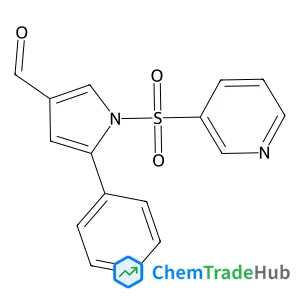
5-Phenyl-1-(pyridin-3-ylsulfonyl)-1H-pyrrole-3-carbaldehyde
CAS Number:
881676-90-0
Molecular Formula:
C16H12N2O3S
Recommended Suppliers





Disclaimer
This page provides academic journal information for reference and research purposes only. We are not affiliated with any journal publishers and do not handle publication submissions. For publication-related inquiries, please contact the respective journal publishers directly.
If you notice any inaccuracies in the information displayed, please contact us at support@chemtradehub.com. We will promptly review and address your concerns.