


Bulk heterojunction organic solar cells based on merocyanine colorants
Literature Information
Publication Date
2008-11-06
DOI
10.1039/B813341G
Impact Factor
6.222
Authors
Nils M. Kronenberg, Manuela Deppisch, Frank Würthner, Hans W. A. Lademann, Kaja Deing, Klaus Meerholz
View Original
Abstract
Traditional low-molecular weight colorants that are widely applied in textile coloration, for printing purposes and nonlinear optics, now afford bulk heterojunction solar cells in combination with soluble C60fullerene derivative PCBM with power conversion efficiencies up to 1.7% under standard solar radiation.
Recommended Journals

Russian Journal of Coordination Chemistry

Journal of Natural Medicines

Current Opinion in Colloid & Interface Science

Russian Journal of Organic Chemistry

Crystallography Reports

Nature Medicine

Organic Process Research & Development

Journal of Peptide Science

Drug Discovery Today

Journal of Saudi Chemical Society
Related Literature
Substrate mediated reduction of copper-amyloid-β complex in Alzheimer’s disease
Victor A. Streltsov, Joseph N. Varghese
2008-05-14
Communication
DOI: 10.1039/B803911A
Polycarbide nickel clusters containing interstitial Ni(η2-C2)4 and Ni2(μ-η2-C2)4 acetylide moieties: mimicking the supersaturated Ni–C solutions preceding the catalytic growth of CNTs with the structures of [HNi25(C2)4(CO)32]3− and [Ni22(C2)4(CO)28Cl]3−
Cristina Femoni, Maria Carmela Iapalucci, Giuliano Longoni, Stefano Zacchini
2008-05-08
Communication
DOI: 10.1039/B803992E
Rhenium-based molecular rectangular boxes with large inner cavity and high shape selectivity towards benzene molecule
Rong-Tang Liao, Woei-Chyuan Yang, P. Thanasekaran, Chen-Chuan Tsai, M. Sathiyendiran, Yen-Hsiang Liu, T. Rajendran, Hsiu-Mei Lin, Tien-Wen Tseng, Kuang-Lieh Lu
2008-05-09
Communication
DOI: 10.1039/B802777C
Room temperature fabrication of porous ZnO photoelectrodes for flexible dye-sensitized solar cells
Xizhe Liu, Yanhong Luo, Hong Li, Yuzun Fan, Zhexun Yu, Yuan Lin, Liquan Chen, Qingbo Meng
2007-04-30
Communication
DOI: 10.1039/B700472A
Supported ionic liquidcatalyst (Pd-SILC) for highly efficient and recyclable Suzuki–Miyaura reaction
Hisahiro Hagiwara, Keon Hyeok Ko, Takashi Hoshi, Toshio Suzuki
2007-05-01
Communication
DOI: 10.1039/B704098A
A chemo- and regio-selective three-component dihydropyrimidinone synthesis
Chris D. Bailey, Chris E. Houlden, Grégory L. J. Bar, Guy C. Lloyd-Jones, Kevin I. Booker-Milburn
2007-06-19
Communication
DOI: 10.1039/B707361E
The relationships between oxidase and synthase activities of flavin dependent thymidylate synthase (FDTS)
Anatoly Chernyshev, Todd Fleischmann, Eric M. Koehn, Scott A. Lesley, Amnon Kohen
2007-04-25
Communication
DOI: 10.1039/B700977A
Synthesis and catalytic properties of MIL-100(Fe), an iron(iii) carboxylate with large pores
Patricia Horcajada, Suzy Surblé, Christian Serre, Do-Young Hong, You-Kyong Seo, Jong-San Chang, Jean-Marc Grenèche, Irene Margiolaki, Gérard Férey
2007-05-15
Communication
DOI: 10.1039/B704325B
Copper-free click chemistry for the in situ crosslinking of photodegradable star polymers
Jeremiah A. Johnson, Jeremy M. Baskin, Jeffrey T. Koberstein
2008-04-24
Communication
DOI: 10.1039/B803043J
Sulfonated N-heterocyclic carbenes for Suzuki coupling in water
Christoph Fleckenstein, Sutapa Roy, Steffen Leuthäußer, Herbert Plenio
2007-05-02
Communication
DOI: 10.1039/B703658B
You might also like
Compound Q&A
Are there alternatives to 1-(4-Chlorophenyl)-N-hydroxymethanimine (CAS: 3848-36-0) in synthesis?
When considering alternatives to 1-(4-Chlorophenyl)-N-hydroxymethanimine (CAS: 3...
3848-36-01-(4-Chlorophenyl)-N...
Compound Q&A
How should (1R,9S,10S,12S,14E,16S,19R,20R,21S,22R)-3,9,21-Trihydroxy-5,10,12,14,16,20,22-heptamethyl-23,24-dioxatetracyclo[17.3.1.1~6,9~.0~2,7~]tetracosa-2,5,7,14-tetraen-4-one (CAS: 183202-73-5) be stored?
This compound should be stored in a cool, dry place away from direct sunlight. I...
183202-73-5(1R,9S,10S,12S,14E,1...
Compound Q&A
How is 3-(4-Bromophenyl)-5-(2-fluorophenyl)-1,2,4-oxadiazole (CAS: 419553-16-5) typically synthesized?
3-(4-Bromophenyl)-5-(2-fluorophenyl)-1,2,4-oxadiazole is synthesized through a m...
419553-16-53-(4-Bromophenyl)-5-...
Compound Q&A
How is 5-Chloro-2-(4-chlorophenyl)-4-methyl-6-[3-(1-piperidinyl)propoxy]pyrimidine (CAS: 1639220-19-1) typically synthesized?
5-Chloro-2-(4-chlorophenyl)-4-methyl-6-[3-(1-piperidinyl)propoxy]pyrimidine (CAS...
1639220-19-15-Chloro-2-(4-chloro...
Compound Q&A
What industries use 2-Chloro-4-(difluoromethoxy)pyridine (CAS: 1206978-15-5)?
2-Chloro-4-(difluoromethoxy)pyridine is used in the pharmaceutical industry for ...
1206978-15-52-Chloro-4-(difluoro...
Compound Q&A
What regulatory guidelines apply to 3-Chloro-6-methylpyridazine (CAS: 1121-79-5)?
3-Chloro-6-methylpyridazine (CAS: 1121-79-5) is classified under the Globally Ha...
1121-79-53-Chloro-6-methylpyr...
Compound Q&A
Are there alternatives to Methyl 4,5-dimethyl-2-nitrobenzoate in synthesis?
Several alternatives can be used in the synthesis of Methyl 4,5-dimethyl-2-nitro...
90922-74-0Methyl 4,5-dimethyl-...
Compound Q&A
Are there alternatives to (2E,2'E)-3,3'-(1,4-Phenylene)bisacrylaldehyde in synthesis?
Alternatives to (2E,2'E)-3,3'-(1,4-Phenylene)bisacrylaldehyde include other acry...
63405-68-5(2E,2'E)-3,3'-(1,4-P...
Compound Q&A
What is 3-Amino-5-chloropyridin-2-ol hydrochloride (CAS: 1261906-29-9)?
3-Amino-5-chloropyridin-2-ol hydrochloride is an organic compound with the CAS n...
1261906-29-93-Amino-5-chloropyri...
Compound Q&A
What precautions should be taken when handling 6,7-Difluoro-2,3-dihydro-4H-chromen-4-one (CAS: 1092349-93-3)?
When handling 6,7-Difluoro-2,3-dihydro-4H-chromen-4-one, it is essential to wear...
1092349-93-36,7-Difluoro-2,3-dih...
Source Journal
Chemical Communications

CiteScore:
8.6
Self-citation Rate:
4.7%
Articles per Year:
2458
ChemComm publishes urgent research which is of outstanding significance and interest to experts in the field, while also appealing to the journal’s broad chemistry readership. Our communication format is ideally suited to short, urgent studies that are of such importance that they require accelerated publication. Our scope covers all topics in chemistry, and research at the interface of chemistry and other disciplines (such as materials science, nanoscience, physics, engineering and biology) where there is a significant novelty in the chemistry aspects. Major topic areas covered include: Analytical Chemistry Catalysis Chemical Biology and medicinal chemistry Computational Chemistry and Machine Learning Energy and sustainable chemistry Environmental Chemistry Green Chemistry Inorganic Chemistry Materials Chemistry Nanoscience Organic Chemistry Physical Chemistry Polymer Chemistry Supramolecular Chemistry
Recommended Compounds
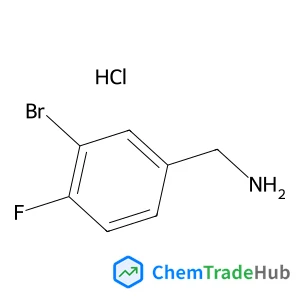
1-(3-Bromo-4-fluorophenyl)methanamine hydrochloride (1:1)
CAS Number:
202865-68-7
Molecular Formula:
C7H8BrClFN
Recommended Suppliers





Disclaimer
This page provides academic journal information for reference and research purposes only. We are not affiliated with any journal publishers and do not handle publication submissions. For publication-related inquiries, please contact the respective journal publishers directly.
If you notice any inaccuracies in the information displayed, please contact us at support@chemtradehub.com. We will promptly review and address your concerns.