












Rotationally resolved infrared spectroscopy of a jet-cooled phenyl radical in the gas phase
Literature Information
Publication Date
2008-10-03
DOI
10.1039/B813256A
Impact Factor
3.676
Authors
Erin N. Sharp, Melanie A. Roberts, David J. Nesbitt
View Original
Abstract
The first high-resolution IR spectra of a jet-cooled phenyl radical are reported, obtained via direct absorption laser spectroscopy in a slit-jet discharge supersonic expansion. The observed A-type band arises from fundamental excitation of the out-of-phase symmetric CH stretch mode (ν19) of b2 symmetry. Unambiguous spectral assignment of the rotational structure to the phenyl radical is facilitated by comparison with precision 2-line combination differences from Fourier transform microwave and direct absorption mm-wave measurements on the ground state [R. J. McMahon et al., Astrophys. J., 2003, 590, L61]. Least-squares fits to an asymmetric top Hamiltonian permit the upper-state rotational constants to be obtained. The corresponding gas-phase vibrational band origin at 3071.8904 (10) cm−1 is in remarkably good agreement with previous matrix isolation studies [A. V. Friderichsen et al., J. Am. Chem. Soc., 2001, 123, 1977], and indicates only a relatively minor red shift (≈0.9 cm−1) between the gas and Ar matrix phase environment. Such studies offer considerable promise for further high resolution IR study of other aromatic radical species of particular relevance to combustion phenomena and interstellar chemistry.
Related Literature
Theoretical study on the reaction mechanism and selectivity of acetylene semi-hydrogenation on Ni–Sn intermetallic catalysts
Tao Sun, Yu-Sen Yang, Pan Yin, Min Pu, Hong Yan, Min Wei
2018-12-12
Paper
DOI: 10.1039/C8CP06032K
Nucleation of pseudo hard-spheres and dumbbells at moderate metastability: appearance of A15 Frank–Kasper phase at intermediate elongations
Itziar Zubieta, Pablo Llombart, Carlos Vega, Eva G. Noya
2018-10-12
Paper
DOI: 10.1039/C8CP04964E
Evaluating chemical bonding in dioxides for the development of metal–oxygen batteries: vibrational spectroscopic trends of dioxygenyls, dioxygen, superoxides and peroxides
Petar M. Radjenovic, Laurence J. Hardwick
2019-01-08
Paper
DOI: 10.1039/C8CP04652B
Stationary polaron properties in organic crystalline semiconductors
Marcelo Lopes Pereira Junior, Rafael Timóteo de Sousa Júnior, Geraldo Magela e Silva
2019-01-14
Paper
DOI: 10.1039/C8CP06915H
Atomically thin NiB6 monolayer: a robust Dirac material
Xiao Tang, Weiguo Sun, Cheng Lu, Liangzhi Kou, Changfeng Chen
2018-11-28
Paper
DOI: 10.1039/C8CP05778H
Structure–property analysis of julolidine-based nonlinear optical chromophores for the optimization of microscopic and macroscopic nonlinearity
Jieyun Wu, Wen Wang, Nan Wang, Juan He, Guowei Deng, Zhonghui Li, Xiaoling Zhang, Hongyan Xiao, Kaixin Chen
2018-08-28
Paper
DOI: 10.1039/C8CP04470H
Origin of high thermoelectric performance with a wide range of compositions for BixSb2−xTe3 single quintuple layers
Zhen Li, Siyu Han, Yuanchun Pan, Jian Zhou, Huibin Xu
2018-12-10
Paper
DOI: 10.1039/C8CP06534A
DFT investigations for the catalytic reaction mechanism of methane combustion occurring on Pd(ii)/Al-MCM-41
Anis Gannouni, Carine Michel, Françoise Delbecq, Mongia Saïd Zina
2018-09-20
Paper
DOI: 10.1039/C8CP04178D
Influence of Mn co-doping on the magnetic properties of planar arrays of GaxFe4−xN nanocrystals in a GaN matrix
L. Del Bianco, F. Spizzo, Tian Li, R. Adhikari, A. Bonanni
2018-09-26
Paper
DOI: 10.1039/C8CP04475A
Molecular structure and ultrafast dynamics of sodium thiocyanate ion pairs formed in glymes of different lengths
Susith R. Galle Kankanamge, Daniel G. Kuroda
2018-12-06
Paper
DOI: 10.1039/C8CP06869K
You might also like
Compound Q&A
How is 3-(2-Bromoimidazo[2,1-b]thiazol-6-yl)propanoic acid hydrochloride (CAS: 1187830-80-3) typically synthesized?
3-(2-Bromoimidazo[2,1-b]thiazol-6-yl)propanoic acid hydrochloride is typically s...
1187830-80-33-(2-Bromoimidazo[2,...
Compound Q&A
How is 2-Isopropyl-1,3-dioxane-5-carboxylic acid (CAS: 116193-72-7) typically synthesized?
2-Isopropyl-1,3-dioxane-5-carboxylic acid is typically synthesized by the carbox...
116193-72-72-Isopropyl-1,3-diox...
Compound Q&A
What is Alisporivir (CAS: 254435-95-5)?
Alisporivir (CAS: 254435-95-5) is an antiviral medication used in the treatment ...
254435-95-5Alisporivir
Compound Q&A
What are the physical and chemical properties of [1,2,4]triazolo[3,4-a]phthalazine (CAS: 234-80-0)?
[1,2,4]triazolo[3,4-a]phthalazine (CAS: 234-80-0) is a crystalline compound with...
234-80-0[1,2,4]triazolo[3,4-...
Compound Q&A
What regulatory guidelines apply to (2S)-5-Hydroxy-2-(4-hydroxyphenyl)-4-oxo-3,4-dihydro-2H-chromen-7-yl methyl beta-D-glucopyranosiduronate (CAS: 1985597-72-5)?
Regulatory guidelines for (2S)-5-Hydroxy-2-(4-hydroxyphenyl)-4-oxo-3,4-dihydro-2...
1985597-72-5(2S)-5-Hydroxy-2-(4-...
Compound Q&A
Is 2,2-Difluorocyclohexanamine hydrochloride (CAS: 921602-83-7) safe?
2,2-Difluorocyclohexanamine hydrochloride is generally safe when handled under p...
921602-83-72,2-Difluorocyclohex...
Compound Q&A
What are the main uses of 3-Nitro-2-phenylthiophene (CAS: 18150-94-2)?
3-Nitro-2-phenylthiophene is primarily used in the synthesis of other organic co...
18150-94-23-Nitro-2-phenylthio...
Compound Q&A
What is 1-(Trifluoroacetyl)-4-piperidinecarbonitrile (CAS: 77940-79-5)?
1-(Trifluoroacetyl)-4-piperidinecarbonitrile (CAS: 77940-79-5) is a colorless to...
77940-79-51-(Trifluoroacetyl)-...
Compound Q&A
What is the market or research trend for 1,3,6,8-Tetranitro-9H-carbazole (CAS: 4543-33-3)?
Research and market trends for 1,3,6,8-Tetranitro-9H-carbazole (CAS: 4543-33-3) ...
4543-33-31,3,6,8-Tetranitro-9...
Compound Q&A
How should waste containing Dibenzo[b,d]thiophen-1-ylboronic acid (CAS: 1245943-60-5) be handled?
Waste containing Dibenzo[b,d]thiophen-1-ylboronic acid (CAS: 1245943-60-5) shoul...
1245943-60-5Dibenzo[b,d]thiophen...
Source Journal
Physical Chemistry Chemical Physics

CiteScore:
5.5
Self-citation Rate:
10.3%
Articles per Year:
3036
Physical Chemistry Chemical Physics (PCCP) is an international journal co-owned by 19 physical chemistry and physics societies from around the world. This journal publishes original, cutting-edge research in physical chemistry, chemical physics and biophysical chemistry. To be suitable for publication in PCCP, articles must include significant innovation and/or insight into physical chemistry; this is the most important criterion that reviewers and Editors will judge against when evaluating submissions. The journal has a broad scope and welcomes contributions spanning experiment, theory, computation and data science. Topical coverage includes spectroscopy, dynamics, kinetics, statistical mechanics, thermodynamics, electrochemistry, catalysis, surface science, quantum mechanics, quantum computing and machine learning. Interdisciplinary research areas such as polymers and soft matter, materials, nanoscience, energy, surfaces/interfaces, and biophysical chemistry are welcomed if they demonstrate significant innovation and/or insight into physical chemistry. Joined experimental/theoretical studies are particularly appreciated when complementary and based on up-to-date approaches.
Recommended Compounds
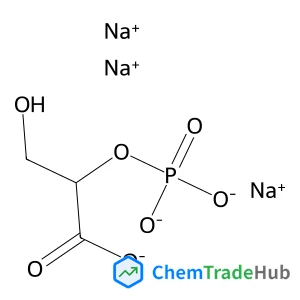
Sodium (1R)-1-carboxy-2-hydroxyethyl phosphate hydrate (2:1:1)
CAS Number:
70195-25-4
Molecular Formula:
C3H7Na2O8P
Recommended Suppliers




Disclaimer
This page provides academic journal information for reference and research purposes only. We are not affiliated with any journal publishers and do not handle publication submissions. For publication-related inquiries, please contact the respective journal publishers directly.
If you notice any inaccuracies in the information displayed, please contact us at support@chemtradehub.com. We will promptly review and address your concerns.