


Time-resolved EPR investigation of [70]fulleropyrrolidine nitroxide isomers
Literature Information
Publication Date
2008-11-12
DOI
10.1039/B813238K
Impact Factor
3.676
Authors
Fosca Conti, Carlo Corvaja, Filippo Busolo, Giovanni Zordan, Michele Maggini, Stefan Weber
View Original
Abstract
A novel [70]fulleropyrrolidine functionalized with a nitroxide radical has been synthesized. After pulsed photoexcitation, time-resolved electron paramagnetic resonance (EPR) spectra have been recorded in liquid solution at standard X-band (9.5 GHz) and W-band (95 GHz) microwave frequencies. The spectra exhibit strongly electron spin polarized ground and excited states, the latter being arising from the spin coupling of the nitroxide’s electron spin with the fullerene’s excited triplet state. The EPR parameters such as g-values and hyperfine coupling constants have been discussed in terms of the spin Hamiltonian for excited doublet, triplet and quartet states. On the basis of the strength of the exchange interaction between the fullerene triplet and the radical group, two, out of a possible four [70]fulleropyrrolidine isomeric monoadducts, have been characterized.
Recommended Journals

European Journal of Wood and Wood Products

Science

Molecular Pharmacology

Fibre Chemistry

Organic Preparations and Procedures International

Journal of Physics and Chemistry of Solids

Proceedings of the National Academy of Sciences of the United States of America

Journal of Catalysis

Pure and Applied Chemistry

Science Progress
Related Literature
Catalyst-free iodine-mediated living radical polymerization under irradiation over a wide visible-light spectral scope
Xiaodong Liu, Lifen Zhang, Zhenping Cheng, Xiulin Zhu
2016-04-25
Paper
DOI: 10.1039/C6PY00444J
Polycarbonate-based biodegradable copolymers for stimuli responsive targeted drug delivery
Mutyala Naidu Ganivada, Pawan Kumar, Pintu Kanjilal, Himadri Dinda, Jayasri Das Sarma, Raja Shunmugam
2016-05-25
Paper
DOI: 10.1039/C6PY00615A
Benzylic viologen dendrimers: a review of their synthesis, properties and applications
Kathiresan Murugavel
2014-07-15
Review Article
DOI: 10.1039/C4PY00718B
The enhanced actuation response of an ionic polymer–metal composite actuator based on sulfonated polyphenylsulfone
Yongjun Tang, Chao Chen, Yun Sheng Ye, Zhigang Xue, Xingping Zhou, Xiaolin Xie
2014-07-07
Paper
DOI: 10.1039/C4PY00663A
Enhanced drug toxicity by conjugation of platinum drugs to polymers with guanidine containing zwitterionic functional groups that mimic cell-penetrating peptides
Robert H. Utama, Hongxu Lu, Martina H. Stenzel
2014-08-07
Paper
DOI: 10.1039/C4PY00802B
Synthesis and biomedical applications of functional poly(α-hydroxyl acid)s
Yun Yu, Jiong Zou, Chong Cheng
2014-07-10
Review Article
DOI: 10.1039/C4PY00667D
Unanticipated bright blue fluorescence produced from novel hyperbranched polysiloxanes carrying unconjugated carbon–carbon double bonds and hydroxyl groups
2016-05-03
Paper
DOI: 10.1039/C6PY00654J
You might also like
Compound Q&A
Are there alternatives to 1-(4-Chlorophenyl)-N-hydroxymethanimine (CAS: 3848-36-0) in synthesis?
When considering alternatives to 1-(4-Chlorophenyl)-N-hydroxymethanimine (CAS: 3...
3848-36-01-(4-Chlorophenyl)-N...
Compound Q&A
How should (1R,9S,10S,12S,14E,16S,19R,20R,21S,22R)-3,9,21-Trihydroxy-5,10,12,14,16,20,22-heptamethyl-23,24-dioxatetracyclo[17.3.1.1~6,9~.0~2,7~]tetracosa-2,5,7,14-tetraen-4-one (CAS: 183202-73-5) be stored?
This compound should be stored in a cool, dry place away from direct sunlight. I...
183202-73-5(1R,9S,10S,12S,14E,1...
Compound Q&A
How is 3-(4-Bromophenyl)-5-(2-fluorophenyl)-1,2,4-oxadiazole (CAS: 419553-16-5) typically synthesized?
3-(4-Bromophenyl)-5-(2-fluorophenyl)-1,2,4-oxadiazole is synthesized through a m...
419553-16-53-(4-Bromophenyl)-5-...
Compound Q&A
How is 5-Chloro-2-(4-chlorophenyl)-4-methyl-6-[3-(1-piperidinyl)propoxy]pyrimidine (CAS: 1639220-19-1) typically synthesized?
5-Chloro-2-(4-chlorophenyl)-4-methyl-6-[3-(1-piperidinyl)propoxy]pyrimidine (CAS...
1639220-19-15-Chloro-2-(4-chloro...
Compound Q&A
What industries use 2-Chloro-4-(difluoromethoxy)pyridine (CAS: 1206978-15-5)?
2-Chloro-4-(difluoromethoxy)pyridine is used in the pharmaceutical industry for ...
1206978-15-52-Chloro-4-(difluoro...
Compound Q&A
What regulatory guidelines apply to 3-Chloro-6-methylpyridazine (CAS: 1121-79-5)?
3-Chloro-6-methylpyridazine (CAS: 1121-79-5) is classified under the Globally Ha...
1121-79-53-Chloro-6-methylpyr...
Compound Q&A
Are there alternatives to Methyl 4,5-dimethyl-2-nitrobenzoate in synthesis?
Several alternatives can be used in the synthesis of Methyl 4,5-dimethyl-2-nitro...
90922-74-0Methyl 4,5-dimethyl-...
Compound Q&A
Are there alternatives to (2E,2'E)-3,3'-(1,4-Phenylene)bisacrylaldehyde in synthesis?
Alternatives to (2E,2'E)-3,3'-(1,4-Phenylene)bisacrylaldehyde include other acry...
63405-68-5(2E,2'E)-3,3'-(1,4-P...
Compound Q&A
What is 3-Amino-5-chloropyridin-2-ol hydrochloride (CAS: 1261906-29-9)?
3-Amino-5-chloropyridin-2-ol hydrochloride is an organic compound with the CAS n...
1261906-29-93-Amino-5-chloropyri...
Compound Q&A
What precautions should be taken when handling 6,7-Difluoro-2,3-dihydro-4H-chromen-4-one (CAS: 1092349-93-3)?
When handling 6,7-Difluoro-2,3-dihydro-4H-chromen-4-one, it is essential to wear...
1092349-93-36,7-Difluoro-2,3-dih...
Source Journal
Physical Chemistry Chemical Physics

CiteScore:
5.5
Self-citation Rate:
10.3%
Articles per Year:
3036
Physical Chemistry Chemical Physics (PCCP) is an international journal co-owned by 19 physical chemistry and physics societies from around the world. This journal publishes original, cutting-edge research in physical chemistry, chemical physics and biophysical chemistry. To be suitable for publication in PCCP, articles must include significant innovation and/or insight into physical chemistry; this is the most important criterion that reviewers and Editors will judge against when evaluating submissions. The journal has a broad scope and welcomes contributions spanning experiment, theory, computation and data science. Topical coverage includes spectroscopy, dynamics, kinetics, statistical mechanics, thermodynamics, electrochemistry, catalysis, surface science, quantum mechanics, quantum computing and machine learning. Interdisciplinary research areas such as polymers and soft matter, materials, nanoscience, energy, surfaces/interfaces, and biophysical chemistry are welcomed if they demonstrate significant innovation and/or insight into physical chemistry. Joined experimental/theoretical studies are particularly appreciated when complementary and based on up-to-date approaches.
Recommended Compounds
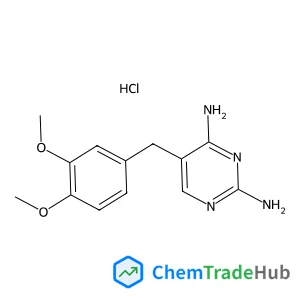
5-(3,4-Dimethoxybenzyl)-2,4-pyrimidinediamine hydrochloride (1:1)
CAS Number:
2507-23-5
Molecular Formula:
C13H17ClN4O2

Recommended Suppliers




Disclaimer
This page provides academic journal information for reference and research purposes only. We are not affiliated with any journal publishers and do not handle publication submissions. For publication-related inquiries, please contact the respective journal publishers directly.
If you notice any inaccuracies in the information displayed, please contact us at support@chemtradehub.com. We will promptly review and address your concerns.