













Dynamic surface rearrangement and thermal stability of nitrogen functional groups on carbon nanotubes
Literature Information
Publication Date
2008-09-11
DOI
10.1039/B812769G
Impact Factor
6.222
Authors
Rosa Arrigo, Michael Hävecker, Robert Schlögl, Dang Sheng Su
View Original
Abstract
Dynamic surface rearrangement and thermal stability of N-functional groups on carbon nanotubes (CNTs), obtained by functionalization of pristine CNTs with NH3, were studied by temperature-programmed XPS and MS: a link between the stability of the functional group and decomposition temperature have been established and a conversion into graphitic nitrogen was observed.
Related Literature
Nanostructuring and macroscopic behavior of type V deep eutectic solvents based on monoterpenoids
Lorena Zamora, Cristina Benito, Alberto Gutiérrez, Rafael Alcalde, Noor Alomari, Ahmad Al Bodour, Mert Atilhan, Santiago Aparicio
2021-12-09
Paper
DOI: 10.1039/D1CP04509A
Appraising the potency of small molecule inhibitors and their graphene surface-mediated organizational attributes on uric acid–melamine clusters
Krishna Gopal Chattaraj, Sandip Paul
2021-11-29
Paper
DOI: 10.1039/D1CP03695E
Elucidating the promotion of Na2CO3 in CO2 capture by Li4SiO4
Zhen Wang, Qian Xu, Kun Peng, Zirui Wang, Xingli Zou, Hongwei Cheng, Xionggang Lu
2021-11-16
Paper
DOI: 10.1039/D1CP04507E
Theoretical insights into TM@PHEs as single-atom catalysts for water splitting based on density functional theory
Yongzhen Jiang, Wenxu Zou, Yadong Li, Yingxiang Cai
2021-12-01
Paper
DOI: 10.1039/D1CP03340A
Questioning the orbital picture of magnetic spin coupling: a real space alternative
A. Martín Pendás, E. Francisco
2021-09-13
Paper
DOI: 10.1039/D1CP03485E
Dual fluorescence of 2-(2′-hydroxyphenyl) benzoxazole derivatives via the branched decays from the upper excited-state
Zhe Tang, Haiyun Han, Junxia Ding, Panwang Zhou
2021-11-17
Paper
DOI: 10.1039/D1CP03546K
The determination of the HOR/HER reaction mechanism from experimental kinetic data
Karen Chan
2021-11-25
Perspective
DOI: 10.1039/D1CP04134G
Photoinduced quasi-2D to 3D phase transformation in hybrid halide perovskite nanoplatelets
Mrinmoy Roy, Vikram, Bhawna, Aftab Alam, M. Aslam
2021-11-16
Paper
DOI: 10.1039/D1CP03529K
Molecular simulations on the stability and dynamics of bulk nanobubbles in aqueous environments
Yi Lu, Lei Yang, Yangmin Kuang, Yongchen Song, Jiafei Zhao, Amadeu K. Sum
2021-11-25
Paper
DOI: 10.1039/D1CP03325E
Analytically and empirically consistent characterization of the resistive switching mechanism in a Ag conducting-bridge random-access memory device through a pseudo-liquid interpretation approach
Yeon-Joon Choi, Suhyun Bang, Tae-Hyeon Kim, Kyungho Hong, Sungjoon Kim, Sungjun Kim, Seongjae Cho, Byung-Gook Park
2021-11-09
Paper
DOI: 10.1039/D1CP04637C
You might also like
Compound Q&A
What are the main uses of 1-(3-Aminophenyl)-3-[(3R)-1-(3,3-dimethyl-2-oxobutyl)-2-oxo-5-(2-pyridinyl)-2,3-dihydro-1H-1,4-benzodiazepin-3-yl]urea (CAS: 155412-88-7)?
This compound is mainly used as an intermediate in the synthesis of antipsychoti...
155412-88-71-(3-Aminophenyl)-3-...
Compound Q&A
How should waste containing 1-(D-Ribofuranosyl)-1,4-dihydro-3-pyridinecarboxamide (CAS: 19132-12-8) be handled?
Waste containing 1-(D-Ribofuranosyl)-1,4-dihydro-3-pyridinecarboxamide (CAS: 191...
19132-12-81-(D-Ribofuranosyl)-...
Compound Q&A
What regulatory guidelines apply to 2-Methyl-2-propanyl 3-bromo-3-(hydroxymethyl)-1-azetidinecarboxylate (CAS: 2007919-81-3)?
2-Methyl-2-propanyl 3-bromo-3-(hydroxymethyl)-1-azetidinecarboxylate (CAS: 20079...
2007919-81-32-Methyl-2-propanyl ...
Compound Q&A
What is N-(4-Chloro-2-pyridinyl)acetamide (CAS: 245056-66-0)?
N-(4-Chloro-2-pyridinyl)acetamide (CAS: 245056-66-0) is a chemical compound with...
245056-66-0N-(4-Chloro-2-pyridi...
Compound Q&A
What is 5-Chloro-2-hydroxybenzoic acid (CAS: 321-14-2)?
5-Chloro-2-hydroxybenzoic acid, also known as 5-chlorosalicylic acid, is an arom...
321-14-25-Chloro-2-hydroxybe...
Compound Q&A
What precautions should be taken when handling 1,1-Dichloro-1-fluoroethane (CAS: 1717-00-6)?
When handling 1,1-Dichloro-1-fluoroethane (CAS: 1717-00-6), it is important to u...
1717-00-61,1-Dichloro-1-fluor...
Compound Q&A
What are the physical and chemical properties of Fmoc-(2S,3R)-3-phenylpyrrolidine-2-carboxylic acid (CAS: 281655-32-1)?
Fmoc-(2S,3R)-3-phenylpyrrolidine-2-carboxylic acid is a white crystalline solid ...
281655-32-1Fmoc-(2S,3R)-3-pheny...
Compound Q&A
What are the main uses of 4-Amino-5-bromo-2-pyridinecarboxylic acid (CAS: 1363381-01-4)?
4-Amino-5-bromo-2-pyridinecarboxylic acid is primarily used as a precursor in th...
1363381-01-44-Amino-5-bromo-2-py...
Compound Q&A
What precautions should be taken when handling (S)-tert-butyl 2-((2-(4-bromophenyl)-2-oxoethyl)carbamoyl)pyrrolidine-1-carboxylate (CAS: 1007881-98-2)?
Handling this compound should be done with personal protective equipment (PPE) i...
1007881-98-2(S)-tert-butyl 2-((2...
Compound Q&A
What precautions should be taken when handling 8-bromo-2,2-dimethyl-3,4-dihydro-2H-1,4-benzoxazin-3-one (CAS: 688363-73-7)?
When handling 8-bromo-2,2-dimethyl-3,4-dihydro-2H-1,4-benzoxazin-3-one, use prop...
688363-73-78-bromo-2,2-dimethyl...
Source Journal
Chemical Communications

CiteScore:
8.6
Self-citation Rate:
4.7%
Articles per Year:
2458
ChemComm publishes urgent research which is of outstanding significance and interest to experts in the field, while also appealing to the journal’s broad chemistry readership. Our communication format is ideally suited to short, urgent studies that are of such importance that they require accelerated publication. Our scope covers all topics in chemistry, and research at the interface of chemistry and other disciplines (such as materials science, nanoscience, physics, engineering and biology) where there is a significant novelty in the chemistry aspects. Major topic areas covered include: Analytical Chemistry Catalysis Chemical Biology and medicinal chemistry Computational Chemistry and Machine Learning Energy and sustainable chemistry Environmental Chemistry Green Chemistry Inorganic Chemistry Materials Chemistry Nanoscience Organic Chemistry Physical Chemistry Polymer Chemistry Supramolecular Chemistry
Recommended Compounds
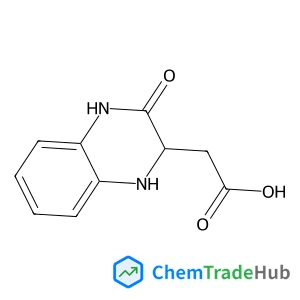
(3-Oxo-1,2,3,4-tetrahydro-2-quinoxalinyl)acetic acid
CAS Number:
136584-14-0
Molecular Formula:
C10H10N2O3
![2,6-Bis({(2R)-2-[hydroxy(diphenyl)methyl]-1-pyrrolidinyl}methyl)-4-methylphenol structure](https://static.chemtradehub.com/structs/877/877395-58-9-70bf.webp "2,6-Bis({(2R)-2-[hydroxy(diphenyl)methyl]-1-pyrrolidinyl}methyl)-4-methylphenol structure")
2,6-Bis({(2R)-2-[hydroxy(diphenyl)methyl]-1-pyrrolidinyl}methyl)-4-methylphenol
CAS Number:
877395-58-9
Molecular Formula:
C43H46N2O3
Recommended Suppliers






Disclaimer
This page provides academic journal information for reference and research purposes only. We are not affiliated with any journal publishers and do not handle publication submissions. For publication-related inquiries, please contact the respective journal publishers directly.
If you notice any inaccuracies in the information displayed, please contact us at support@chemtradehub.com. We will promptly review and address your concerns.