












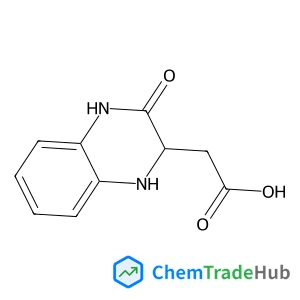
(3-Oxo-1,2,3,4-tetrahydro-2-quinoxalinyl)acetic acid
CAS Number:
136584-14-0
Molecular Formula:
C10H10N2O3
Yeon-Joon Choi, Suhyun Bang, Tae-Hyeon Kim, Kyungho Hong, Sungjoon Kim, Sungjun Kim, Seongjae Cho, Byung-Gook Park
A new physical analysis of the filament formation in a Ag conducting-bridge random-access memory (CBRAM) device in consideration of the existence of inter-atomic attractions caused by metal bonding is suggested. The movement of Ag atoms inside the switching layer is characterized hydrodynamically using the Young–Laplace equation during set and reset operations. Both meridional and azimuthal curvatures of the Ag filament protruding from the Ag electrode are accurately calculated to track down the exact shape of the Ag filament with change in the applied voltage. The second-order partial differential equation for the Ag filament geometry is derived from the equation of equilibrium between the electrostatic pressure and the Laplace one. The solution to the equation is numerically obtained, and furthermore, the abrupt set operation in the forming process, bipolar resistive-switching, and the threshold switching operation in the reset operations are successfully simulated in accordance with the numerical solutions. Also, it is demonstrated that the currents extracted from the suggested model show good agreement with the I–V characteristics measured from the fabricated Ag CBRAM device.
Daniël J. Bakker, Raimund Feifel, Anouk M. Rijs, Vitali Zhaunerchyk
DOI: 10.1039/C5CP07426F
Anatolii N. Rykov, Olga E. Grikina, Leonid S. Khaikin
DOI: 10.1039/C5CP07719B
Marcus D. Pohl, Viktor Colic
DOI: 10.1039/C5CP08000B
Kunisato Kuroi, Francielle Sato, Yusuke Nakasone, Kazunori Zikihara, Satoru Tokutomi, Masahide Terazima
DOI: 10.1039/C5CP07472J
Jyun-Yi Wu, Li-Jen Chen, Yan-Ping Chen, Shiang-Tai Lin
DOI: 10.1039/C5CP06419H
Qin Wang, Shunyong Hou, Liang Xu, Jianping Yin
DOI: 10.1039/C5CP06392B
Xin Zhou, Hao Dong, Ai-Min Ren
DOI: 10.1039/C5CP07260C
DOI: 10.1039/C5CP07724A
Christina Clare Fisher
DOI: 10.1039/C5CP07100C
J. Hyodo, H. Schraknepper, K. Tominaga
DOI: 10.1039/C5CP07192E
This compound is mainly used as an intermediate in the synthesis of antipsychoti...
Waste containing 1-(D-Ribofuranosyl)-1,4-dihydro-3-pyridinecarboxamide (CAS: 191...
2-Methyl-2-propanyl 3-bromo-3-(hydroxymethyl)-1-azetidinecarboxylate (CAS: 20079...
N-(4-Chloro-2-pyridinyl)acetamide (CAS: 245056-66-0) is a chemical compound with...
5-Chloro-2-hydroxybenzoic acid, also known as 5-chlorosalicylic acid, is an arom...
When handling 1,1-Dichloro-1-fluoroethane (CAS: 1717-00-6), it is important to u...
Fmoc-(2S,3R)-3-phenylpyrrolidine-2-carboxylic acid is a white crystalline solid ...
4-Amino-5-bromo-2-pyridinecarboxylic acid is primarily used as a precursor in th...
Handling this compound should be done with personal protective equipment (PPE) i...
When handling 8-bromo-2,2-dimethyl-3,4-dihydro-2H-1,4-benzoxazin-3-one, use prop...

Physical Chemistry Chemical Physics (PCCP) is an international journal co-owned by 19 physical chemistry and physics societies from around the world. This journal publishes original, cutting-edge research in physical chemistry, chemical physics and biophysical chemistry. To be suitable for publication in PCCP, articles must include significant innovation and/or insight into physical chemistry; this is the most important criterion that reviewers and Editors will judge against when evaluating submissions. The journal has a broad scope and welcomes contributions spanning experiment, theory, computation and data science. Topical coverage includes spectroscopy, dynamics, kinetics, statistical mechanics, thermodynamics, electrochemistry, catalysis, surface science, quantum mechanics, quantum computing and machine learning. Interdisciplinary research areas such as polymers and soft matter, materials, nanoscience, energy, surfaces/interfaces, and biophysical chemistry are welcomed if they demonstrate significant innovation and/or insight into physical chemistry. Joined experimental/theoretical studies are particularly appreciated when complementary and based on up-to-date approaches.
![Methyl 4-({[(2-methyl-2-propanyl)oxy]carbonyl}amino)bicyclo[2.2.2]octane-1-carboxylate structure](https://static.chemtradehub.com/structs/943/943845-74-7-b7e5.webp "Methyl 4-({[(2-methyl-2-propanyl)oxy]carbonyl}amino)bicyclo[2.2.2]octane-1-carboxylate structure")
![5-Methyl-4,5,6,7-tetrahydropyrazolo[1,5-a]pyrazin-2-amine structure](https://static.chemtradehub.com/structs/122/1227210-33-4-8d64.webp "5-Methyl-4,5,6,7-tetrahydropyrazolo[1,5-a]pyrazin-2-amine structure")
![1-[3-(4-Morpholinylsulfonyl)phenyl]methanamine structure](https://static.chemtradehub.com/structs/933/933989-32-3-51af.webp "1-[3-(4-Morpholinylsulfonyl)phenyl]methanamine structure")




