


Novel fluorescence enhancement IgE assay using a DNA aptamer
Literature Information
Publication Date
2009-03-12
DOI
10.1039/B812450G
Impact Factor
4.616
Authors
Jing-Lin He, Zai-Sheng Wu, Song-Bai Zhang, Guo-Li Shen, Ru-Qin Yu
View Original
Abstract
In this paper, we demonstrate a fluorescence immunoglobulin E (IgE) assay probe based on a DNA aptamer. A Texas red-labeled short DNA strand (T-DNA) complementary with part of the IgE aptamer sequence was used to produce the fluorescence enhancement effected upon the binding of IgE to the aptamer. Another short DNA strand labeled with dabcyl quencher (Q-DNA) complementary with part of the aptamer sequence nearby the T-DNA location was used to lower the background fluorescence. The IgE can be detected in the concentration range from 9.2 × 10⁻¹¹ to 3.7 × 10⁻⁸ mol L−1 with a detection limit of 5.7 × 10⁻¹¹ mol L−1.
Recommended Journals

Angewandte Chemie International Edition

Advanced Engineering Materials

Foundations of Chemistry

Molecules

Environmental Toxicology and Pharmacology

Photochemical & Photobiological Sciences

European Journal of Organic Chemistry

Coloration Technology

Mini-Reviews in Medicinal Chemistry

Nature Reviews Drug Discovery
Related Literature
Phase behaviour of a two-dimensional Lennard-Jones binary mixture Part II. Type III to Type I transition
Osvaldo H. Scalise, Moises Silbert
2002-02-12
Paper
DOI: 10.1039/B107990P
The effect of pressure on the liquid–liquid phase equilibrium of two polydisperse polyalkylsiloxane blends
Thomas Kraska, Leonid V. Yelash
2002-02-18
Paper
DOI: 10.1039/B109176J
Gibbs solution of the van der Waals–Maxwell problem and universality of the liquid–gas coexistence curve
Vitaly B. Rogankov, Leonid Z. Boshkov
2002-02-18
Paper
DOI: 10.1039/B107989C
The influence of concentration-dependent diffusivities on wave stability
Marc R. Roussel, Jichang Wang
2002-03-14
Paper
DOI: 10.1039/B109310J
Temperature, pressure and density dependencies of the solubilities of low-volatility organic compounds in compressed gases Part 1. Solution energies from solubility data for disperse dyestuffs up to 20 MPa
Dirk Tuma, Björn Wagner, Gerhard M. Schneider
2002-02-14
Paper
DOI: 10.1039/B109521H
Kinetic, infrared, and X-ray absorption studies of adsorption, desorption, and reactions of thiophene on H-ZSM5 and Co/H-ZSM5
Sara Y. Yu, Javier Garcia-Martinez, Wei Li, George D. Meitzner, Enrique Iglesia
2002-02-22
Paper
DOI: 10.1039/B108640P
Excited-state hydrogen detachment and hydrogen transfer driven by repulsive 1πσ* states: A new paradigm for nonradiative decay in aromatic biomolecules
A. L. Sobolewski, W. Domcke, C. Dedonder-Lardeux, C. Jouvet
2002-02-28
Invited Article
DOI: 10.1039/B110941N
2D gel permeation chromatography (2D GPC) correlation studies of the growth process for perfluoro-octyltriethoxysilanepolymer aggregates
Kenichi Izawa, Toshiaki Ogasawara, Hideki Masuda, Hirofumi Okabayashi, Charmian J. O'Connor, Isao Noda
2002-02-13
Paper
DOI: 10.1039/B107556J
Behavior of superoxide radicals formed on TiO2 powder photocatalysts studied by a chemiluminescent probe method
Yoshio Nosaka, Masatsugu Nakamura, Tsutomu Hirakawa
2002-02-14
Paper
DOI: 10.1039/B108441K
Closed loops of liquid–liquid immiscibility predicted by semi-empirical cubic equations of state and classical mixing rules
Ilya Polishuk, Jaime Wisniak, Hugo Segura
2002-02-13
Paper
DOI: 10.1039/B108834N
You might also like
Compound Q&A
What regulatory guidelines apply to 6-Bromo-2-methylimidazo[1,2-a]pyrimidine (CAS: 1111638-05-1)?
6-Bromo-2-methylimidazo[1,2-a]pyrimidine (CAS: 1111638-05-1) falls under various...
1111638-05-16-Bromo-2-methylimid...
Compound Q&A
Are there alternatives to 1-Pyrrolidineethanol, β-methyl-α-phenyl-, (αS,βR) (CAS: 123620-80-4) in synthesis?
While there are no direct alternatives, similar compounds like 1-Pyrrolidineetha...
123620-80-41-Pyrrolidineethanol...
Compound Q&A
Is 4-Methyl-2,6-bis(2-methyl-2-propanyl)phenyl methylcarbamate (CAS: 1918-11-2) safe?
4-Methyl-2,6-bis(2-methyl-2-propanyl)phenyl methylcarbamate (CAS: 1918-11-2) is ...
1918-11-24-Methyl-2,6-bis(2-m...
Compound Q&A
How should 2-(3-Bromo-4-fluorophenyl)-1,3-dioxolane (CAS: 77771-04-1) be stored?
2-(3-Bromo-4-fluorophenyl)-1,3-dioxolane (CAS: 77771-04-1) should be stored in a...
77771-04-12-(3-Bromo-4-fluorop...
Compound Q&A
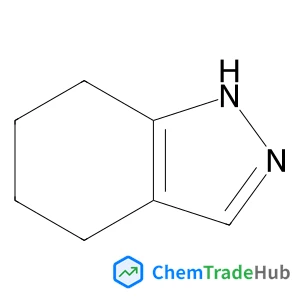
What are the physical and chemical properties of 4,5,6,7-Tetrahydro-1H-indazole hydrochloride (CAS: 18161-11-0)?
4,5,6,7-Tetrahydro-1H-indazole hydrochloride is a white crystalline solid with a...
18161-11-04,5,6,7-Tetrahydro-1...
Compound Q&A
What is (2R)-1-Methoxy-3-phenyl-2-propanamine (CAS: 59919-07-2)?
(2R)-1-Methoxy-3-phenyl-2-propanamine is a chiral organic compound with the CAS ...
59919-07-2(2R)-1-Methoxy-3-phe...
Compound Q&A
What industries use Ethyl 1-(1-phenylethyl)-1H-imidazole-5-carboxylate (CAS: 56649-47-9)?
Ethyl 1-(1-phenylethyl)-1H-imidazole-5-carboxylate is used in various industries...
56649-47-9Ethyl 1-(1-phenyleth...
Compound Q&A
What regulatory guidelines apply to 4-[(1E,3S)-1-(4-Hydroxyphenyl)-1,4-pentadien-3-yl]phenol (CAS: 17676-24-3)?
4-[(1E,3S)-1-(4-Hydroxyphenyl)-1,4-pentadien-3-yl]phenol (CAS: 17676-24-3) falls...
17676-24-34-[(1E,3S)-1-(4-Hydr...
Compound Q&A
What industries use (S)-3-Amino-5-phenylpentanoic acid hydrochloride (CAS: 331846-97-0)?
(S)-3-Amino-5-phenylpentanoic acid hydrochloride is primarily used in the pharma...
331846-97-0(S)-3-Amino-5-phenyl...
Compound Q&A
How is 7-methoxy-1-benzothiophene-2-carboxylic acid (CAS: 88791-07-5) typically synthesized?
7-Methoxy-1-benzothiophene-2-carboxylic acid is typically synthesized by reactin...
88791-07-57-methoxy-1-benzothi...
Source Journal
Analyst

CiteScore:
7.8
Self-citation Rate:
5.6%
Articles per Year:
653
Analyst publishes analytical and bioanalytical research that reports premier fundamental discoveries and inventions, and the applications of those discoveries, unconfined by traditional discipline barriers.
Recommended Compounds
Recommended Suppliers






Disclaimer
This page provides academic journal information for reference and research purposes only. We are not affiliated with any journal publishers and do not handle publication submissions. For publication-related inquiries, please contact the respective journal publishers directly.
If you notice any inaccuracies in the information displayed, please contact us at support@chemtradehub.com. We will promptly review and address your concerns.